
As global demand for PET bottles continues to rise across the beverage, food, and personal care sectors, manufacturers are prioritizing high-efficiency, automated bottling solutions to meet production targets and reduce operational costs. In response, Chinese machinery producers have advanced significantly in innovation, offering reliable, high-speed PET bottle blowing machines with smart automation features. This 2026 audit list highlights the top five Chinese manufacturers delivering cutting-edge performance, energy efficiency, and scalability—key differentiators for sourcing partners seeking competitive advantage in the evolving bottling landscape.
Top 5 Pet Bottle Blowing Machines From China Manufacturers (2026 Audit List)
(Ranked by Production Capability & Trust Score)
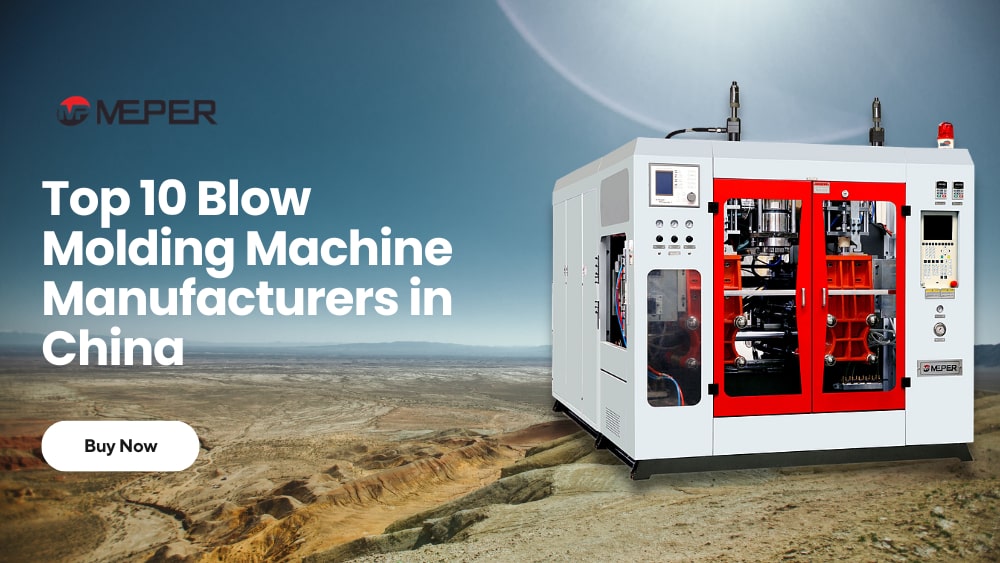
Professional Sourcing Guide: Pet Bottle Blowing Machines From China
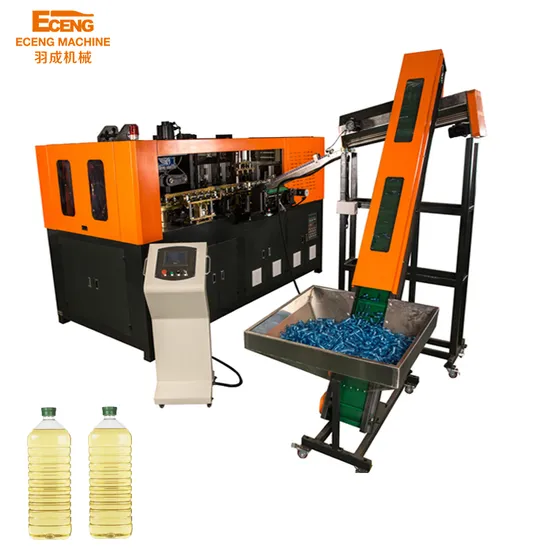
Global Market Trends for Chinese Pet Bottle Blowing Machines in 2026: High-Speed Production, Energy Efficiency, and Automation
High-Speed Production Driving Market Demand
In 2026, the global demand for PET bottle blowing machines from China will be significantly influenced by the growing need for high-speed production capabilities. As beverage, food, and personal care industries scale up to meet rising consumption across emerging and developed markets, manufacturers are prioritizing equipment that maximizes output and minimizes downtime.
Chinese manufacturers have made substantial advancements in high-speed rotary stretch blow molding machines, with top models achieving output rates exceeding 40,000 bottles per hour. These machines are increasingly being adopted in large-scale bottling facilities across Southeast Asia, Africa, the Middle East, and Latin America—regions where cost-effective, high-capacity solutions are critical.
Key drivers for high-speed adoption include:
– Increasing demand for single-serve and on-the-go packaging formats
– Expansion of contract bottling services requiring flexible, high-output equipment
– Urbanization and population growth in developing economies boosting bottled water and soft drink consumption
By 2026, Chinese OEMs such as Zhangjiagang City New Crown Machinery Co., Jiangsu Leiyuan Intelligent Equipment, and Tech-Long are expected to dominate the mid-to-high-speed segment, offering machines with enhanced preform handling, faster mold change systems, and improved cooling efficiency.
Energy Saving Technologies: The Rise of Servo Motor Integration
Energy efficiency is a central theme shaping the 2026 PET blowing machine market, with Chinese manufacturers leading the integration of servo motor technology to reduce operational costs and carbon footprint.
Servo-driven systems have largely replaced traditional hydraulic systems in new machines, offering up to 30–50% energy savings. These systems provide precise control over the blowing process—including preform heating, stretch rod movement, and high-pressure air injection—resulting in consistent bottle quality and reduced energy waste.
Key advantages of servo motor technology in 2026:
– Dynamic power adjustment based on production load
– Lower heat generation, reducing cooling requirements
– Quieter operation and reduced maintenance needs
– Compatibility with renewable energy systems and smart grids
Regulatory pressures in Europe and North America, such as the EU’s Ecodesign Directive, are pushing global buyers to prioritize energy-efficient machinery. Chinese exporters are responding by certifying their models under international energy standards (e.g., CE, UL) and emphasizing energy-saving features in marketing.
Additionally, integration with IoT-based energy monitoring platforms allows real-time tracking of power consumption, enabling predictive maintenance and further optimization. This trend positions Chinese-made servo-driven machines as competitive alternatives to European counterparts, especially in price-sensitive markets.
Advancements in Automation Level and Smart Manufacturing Integration
Automation is transforming the PET bottle blowing landscape, and by 2026, Chinese manufacturers will offer highly automated systems that align with Industry 4.0 principles. Fully automated PET blowing lines—from preform feeding to bottle inspection and packaging—are becoming standard in mid-to-high-end models.
Key automation features expected in 2026:
– Robotic arm integration for preform loading and finished bottle handling
– Vision inspection systems for real-time defect detection (e.g., wall thickness, contamination)
– Centralized control systems with HMI (Human-Machine Interface) dashboards
– Remote diagnostics and cloud-based monitoring via 5G connectivity
Chinese OEMs are partnering with domestic tech firms to embed AI-driven analytics into machine controllers, allowing predictive maintenance, adaptive process control, and production optimization. These smart features reduce labor costs, improve uptime, and ensure consistent product quality—critical for large beverage brands enforcing strict quality protocols.
Moreover, modular automation designs enable easy scalability, allowing small and medium enterprises (SMEs) to start with semi-automated lines and upgrade incrementally.
The automation trend is particularly strong in export markets where labor costs are rising (e.g., Turkey, Thailand, Mexico) or where hygiene and precision are paramount (e.g., pharmaceutical and premium beverage sectors).
Conclusion
By 2026, Chinese PET bottle blowing machines will be globally recognized for their high-speed output, energy-efficient servo motor systems, and advanced automation. These three pillars—speed, efficiency, and intelligence—will define competitiveness in the international market. Chinese manufacturers, through continuous innovation and cost-effective engineering, are well-positioned to capture a growing share of the global packaging machinery market, especially in regions undergoing industrial modernization and sustainable transformation.
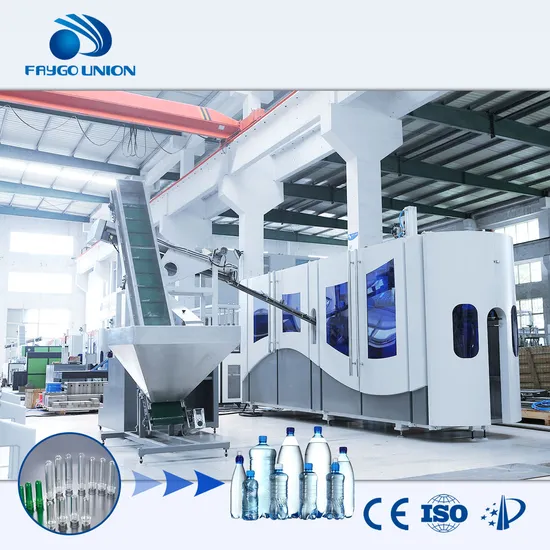
Key Quality Verification Points for Pet Bottle Blowing Machines from Chinese Manufacturers
When sourcing PET bottle blowing machines from Chinese manufacturers, verifying quality is crucial to ensure long-term performance and reliability. Focus on the following critical check points:
Mold Material (Aluminum vs. Steel)
Evaluate the mold material used in the machine, as it directly impacts durability, production volume, and maintenance costs:
– Steel Molds: Preferred for high-volume production due to superior durability, heat resistance, and longer lifespan. Ideal for bottles with complex designs or high clarity requirements.
– Aluminum Molds: Lighter and less expensive, suitable for prototypes or low-volume production. However, they wear faster and are less resistant to high-pressure cycles.
– Verification Tip: Request detailed specifications and material certifications (e.g., H13 steel or equivalent). Ask for photos or videos of the mold construction and inquire about mold hardness (HRC rating).
PLC Brand (Siemens vs. Mitsubishi)
The Programmable Logic Controller (PLC) is the machine’s brain—its brand reflects reliability and ease of maintenance:
– Siemens and Mitsubishi are industry leaders known for stable performance, user-friendly interfaces, and global technical support.
– Verify that the PLC is original and not a counterfeit or rebranded unit by asking for:
– Serial numbers and warranty cards.
– Firmware version and interface screenshots.
– Option to inspect during factory acceptance test (FAT).
– Avoid machines using generic or unbranded PLCs, as they often lead to programming issues and poor after-sales support.
Cycle Time Efficiency
Cycle time determines production output and efficiency—shorter cycle times mean higher productivity:
– Confirm the actual cycle time under real operating conditions, not just theoretical specifications.
– Request a live demonstration or video of the machine producing your specific bottle size (e.g., 500ml PET bottle).
– Compare claimed output (bottles per hour) with industry benchmarks (e.g., 1,000–2,000 bottles/hour for a 6-station machine).
– Ask about factors affecting cycle time: preform heating efficiency, stretch rod speed, and cooling system performance.
Spare Parts Availability
Reliable access to spare parts prevents costly downtime:
– Confirm the manufacturer maintains a stock of critical spare parts (seals, valves, heaters, grippers, molds).
– Ask for a detailed spare parts list and pricing upfront.
– Inquire about delivery time for common replacements—ideally within 7–14 days globally.
– Check if parts are standardized (easier to source locally) or proprietary (may require OEM sourcing).
– Verify whether the supplier has overseas warehouses or partners in your region for faster logistics.
By thoroughly evaluating these four key areas—mold material, PLC brand, cycle time efficiency, and spare parts availability—you can significantly reduce risks and select a high-quality PET bottle blowing machine from a trustworthy Chinese manufacturer.
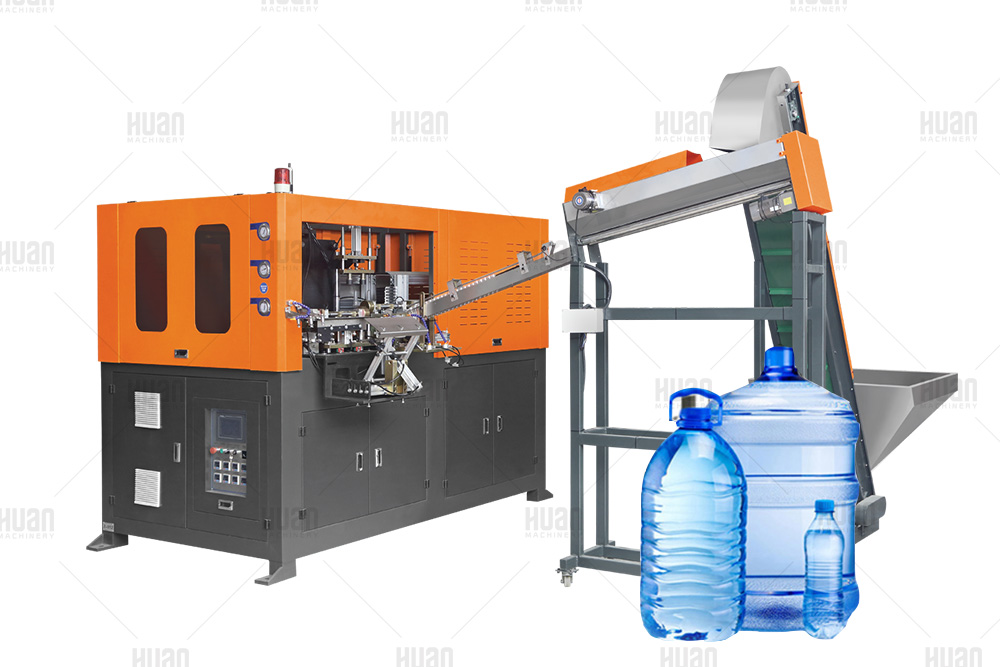
Configuration Guide for Pet Bottle Blowing Machines From China
When selecting a PET bottle blowing machine from China, proper configuration is critical to ensure efficiency, product quality, and long-term operational success. Below is a detailed guide covering key aspects: cavity number selection, bottle volume range, preform compatibility, and auxiliary equipment requirements.
Cavity Number Selection
The cavity number refers to the number of bottles a machine can produce per cycle. Choosing the right cavity count depends on your production volume, space, and budget.
- Low-Volume Production (1,000–5,000 bottles/hour):
A 1- to 4-cavity machine is ideal for small businesses or startups. It requires less floor space and lower initial investment. Suitable for niche markets or pilot production. - Medium-Volume Production (5,000–20,000 bottles/hour):
A 6- to 12-cavity machine offers a good balance between output and cost. These are commonly used in regional beverage or water bottling operations. - High-Volume Production (20,000+ bottles/hour):
16- to 36-cavity machines are recommended. These high-speed systems are designed for mass production and require robust infrastructure and maintenance support. - Considerations:
- Higher cavity machines increase output but also require more power, compressed air, and cooling.
- Downtime impacts more bottles per cycle in high-cavity machines—reliability is crucial.
- Confirm machine modularity: some Chinese models allow future cavity expansion.
Bottle Volume Range
PET blowing machines are typically designed to handle a specific range of bottle volumes. Ensuring compatibility with your intended bottle sizes is essential.
- Standard Volume Ranges:
- Small Bottles: 100 mL to 500 mL (e.g., water, juice shots, energy drinks)
- Medium Bottles: 500 mL to 1.5 L (e.g., mineral water, soft drinks)
- Large Bottles: 1.5 L to 5 L (e.g., water gallons, household cleaners)
- Machine Flexibility:
- Choose a machine with interchangeable molds and adjustable stretch rod settings.
- Verify the machine’s stroke length and mold base size can accommodate your tallest and widest bottles.
- Some Chinese machines come with quick mold-change systems to reduce downtime during product changeovers.
- Recommendation:
Select a machine with a volume range that covers your current and foreseeable future needs. Avoid machines that operate at the extreme edges of their capacity for better stability and bottle quality.
Preform Compatibility
PET preforms vary in size, weight, and neck finish. Your blowing machine must be compatible with your preform specifications.
- Key Parameters to Match:
- Preform Weight: Ensure the machine’s heating system (oven) and blowing pressure can handle your preform’s weight (e.g., 10g to 50g).
- Neck Finish (PCO 1881, 38mm, 28mm, etc.): Confirm the machine’s mold clamp system supports your preform’s neck ring type.
- Preform Height and Diameter: Check that the machine’s loader and transfer system can accommodate your preform dimensions.
- Heating System Compatibility:
- Infrared oven design should allow for even heating across your preform’s wall thickness.
- Adjustable lamp zones help optimize heating profiles for different preform types.
- Tip: Work with your preform supplier and machine manufacturer to conduct a trial run. Many Chinese manufacturers offer preform testing before delivery.
Auxiliary Equipment: Compressor & Chiller
Auxiliary equipment is essential for stable and efficient operation of PET blowing machines. Mismatched or undersized support systems can lead to poor bottle quality and machine failure.
Air Compressor Requirements
- Purpose: Provides high-pressure air (typically 25–40 bar) for the stretch-blow process.
- Specifications:
- Pressure: Minimum 30 bar (435 psi) output.
- Flow Rate: 0.3–0.6 m³/min per cavity (e.g., 12-cavity machine needs ~4–7 m³/min).
- Air Quality: Oil-free, dry air is mandatory. Use refrigerated or desiccant dryers to prevent moisture.
- Recommendation:
Use a dedicated oil-free screw compressor with a receiver tank and filtration system. Avoid using plant air unless it meets the required purity and pressure standards.
Chiller Requirements
- Purpose: Cools molds and machine hydraulics to maintain consistent cycle times and bottle clarity.
- Specifications:
- Cooling Capacity: ~1.5–2.5 kW per cavity (e.g., 12-cavity machine needs ~18–30 kW chiller).
- Temperature Control: Stable at 5–15°C, depending on bottle design and ambient conditions.
- Flow Rate: 2–3 L/min per cavity with closed-loop circulation.
- Recommendation:
Use a water-cooled chiller with precise temperature control and corrosion-resistant components. Ensure proper water treatment to prevent scaling in cooling channels. - Note:
Some Chinese machines come with integrated chillers or air-cooled options, but external industrial chillers offer better stability for continuous operation.
Summary
To configure a PET bottle blowing machine from China effectively:
– Match the cavity number to your production goals.
– Ensure the machine supports your bottle volume range and allows for future flexibility.
– Verify full compatibility with your preform specifications.
– Invest in properly sized, high-quality auxiliary equipment—especially oil-free compressors and industrial chillers.
Collaborate closely with the Chinese manufacturer during setup, and request technical documentation, training, and support to ensure smooth integration into your production line.
In conclusion, sourcing PET bottle blowing machines from China presents a compelling opportunity for cost-effective and high-performance solutions in beverage and packaging production. Chinese manufacturers offer advanced technology, scalability, and competitive pricing, making them a strategic choice for businesses worldwide. However, to ensure long-term operational success, it is essential to emphasize two critical factors during the procurement process: Factory Acceptance Testing (FAT) and comprehensive spare parts support.
Conducting a thorough FAT before shipment allows buyers to verify machine performance, quality, and compliance with technical specifications under real operating conditions. This step not only minimizes risks of post-installation issues but also ensures that the equipment meets production requirements from day one. Furthermore, reliable and timely access to spare parts is crucial for minimizing downtime and maintaining continuous production. Partnering with Chinese suppliers who offer robust after-sales service, clear spare parts supply chains, and technical support significantly enhances machine uptime and overall return on investment.
By prioritizing FAT procedures and securing dependable spare parts availability, businesses can confidently source PET blowing machines from China, achieving both operational efficiency and long-term sustainability in their production lines.






