
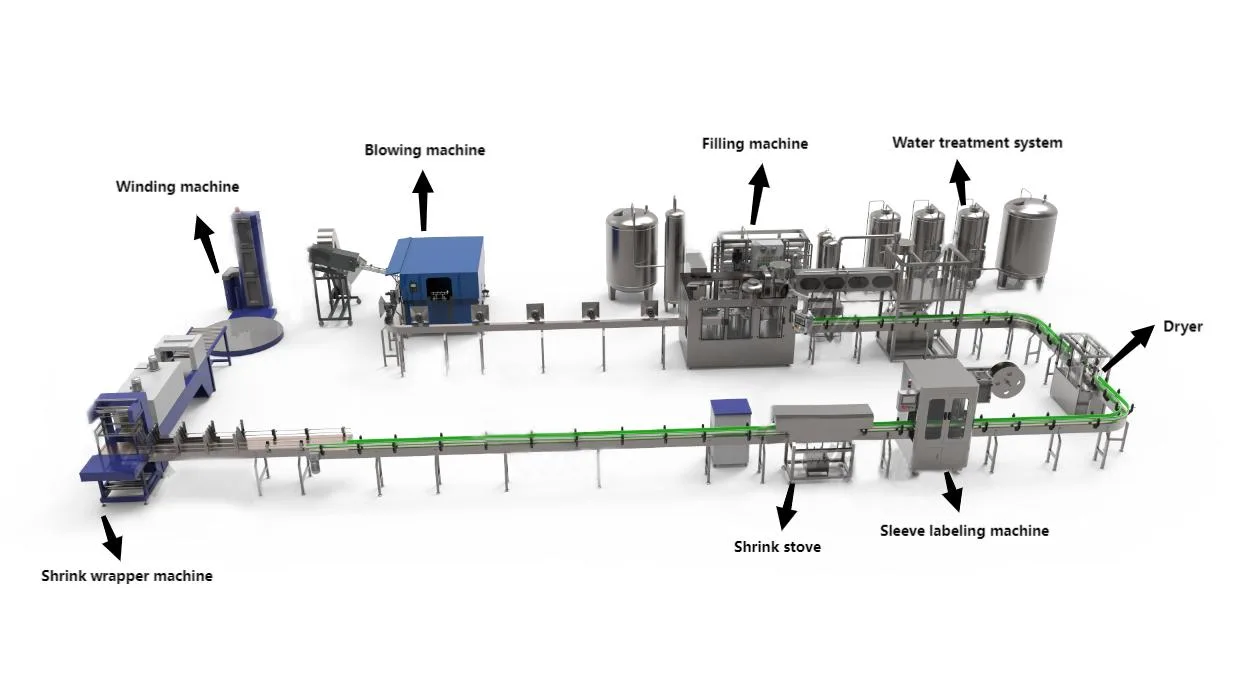
With global demand for bottled water projected to rise steadily through 2026, manufacturers are under increasing pressure to scale production efficiently while maintaining quality and sustainability standards. This surge has accelerated the shift toward fully automated water bottle assembly lines that integrate blow molding, filling, capping, and labeling in seamless, high-speed operations. As buyers and plant operators seek reliable, future-ready solutions, identifying trusted manufacturers with proven innovation and service support is critical. This 2026 audit list highlights the top 10 water bottle assembly line manufacturers delivering cutting-edge automation, operational efficiency, and scalability to meet evolving market demands.
Top 10 Hersteller von Wasserflaschen-Montageanlagen (2026 Audit-Liste)
(Rangfolge nach Produktionsfähigkeit und Vertrauensbewertung)
Professional Sourcing Guide: Water Bottle Assembly Line
2026 Global Market Trends for Water Bottle Assembly Line: Focus on High Speed, Energy Efficiency, and Automation
The global water bottle assembly line market is undergoing a significant transformation driven by escalating demand for bottled water and beverages, intense competition, sustainability imperatives, and advancements in industrial technology. By 2026, key trends will center on achieving unprecedented levels of performance, efficiency, and intelligence, with High-Speed Production, Energy-Saving Technologies (particularly Servo Motors), and elevated Automation Levels acting as primary growth drivers.
High-Speed Production: Meeting Demand with Precision and Reliability
The relentless global demand for bottled water, coupled with the need for manufacturers to maximize output and reduce unit costs, will make high-speed production a non-negotiable requirement. By 2026, leading assembly lines will push the boundaries of throughput:
- Throughput Targets: Lines capable of handling 60,000 to 100,000+ bottles per hour (BPH) for standard PET bottles (0.5L-1.5L) will become increasingly common for major brands and co-packers. High-capacity lines for larger formats or specific markets will exceed these figures.
- Integrated High-Speed Modules: The trend involves seamless integration of high-speed components: ultra-fast rotary blow molding machines, high-cycle filling valves (especially for carbonated beverages), rapid-capping heads (spindle, linear, or hybrid), and synchronized conveyors. Precision engineering and robust materials are critical to maintain stability and minimize downtime at these speeds.
- Focus on Uptime and Changeover: Speed is meaningless without reliability. Investment will shift towards predictive maintenance systems and designs that minimize mechanical wear. Furthermore, rapid changeover (SMED) technologies enabling quick format changes (bottle size, cap type) without significant downtime will be essential for flexibility and efficiency in high-speed environments.
- Auswirkungen: This focus drives the market towards integrated, turnkey solutions from major OEMs specializing in high-performance lines, consolidating market share among technologically advanced suppliers.
Energy Saving Technologies: Servo Motors Leading the Efficiency Revolution
Sustainability and rising energy costs are compelling manufacturers to drastically reduce the energy footprint of their operations. Servo motor technology is the cornerstone of this shift, replacing traditional pneumatic and hydraulic systems across the assembly line:
- Dominance of Servo Technology: By 2026, servo motors will be the de facto standard for critical motion control applications:
- Blow Molding: All-electric and hybrid-electric rotary stretch blow molding machines, using servos for preform handling, stretching rods, and mold movement, will dominate new installations due to their 30-50% lower energy consumption compared to pneumatic/hydraulic counterparts.
- Filling: Servo-driven filling valves and level control systems offer precise, energy-efficient filling with minimal product waste and lower compressed air dependency.
- Capping: Servo-controlled capping heads provide exact torque control, reducing cap damage and energy use compared to pneumatic systems.
- Labeling & Conveying: Servo motors enable precise registration, variable speed control, and energy recovery on labeling machines and main conveyors.
- Beyond Motors: Holistic Efficiency: Servo adoption is part of a broader energy-saving strategy:
- Regeneratives Bremsen: Servo systems can capture and feed energy back into the grid during deceleration.
- Optimized System Design: Integration of Variable Frequency Drives (VFDs) on motors, heat recovery from blow molding, LED lighting, and high-efficiency compressors complement servo-driven efficiency.
- Energy Monitoring: Integrated SCADA systems with real-time energy consumption dashboards will become standard, allowing for continuous optimization.
- Auswirkungen: The market will favor suppliers offering comprehensive “green line” solutions with demonstrable energy savings. Energy efficiency will be a key differentiator in procurement decisions.
Automation Level: Towards Intelligent, Self-Optimizing Lines
Automation is evolving beyond simple machine control towards full digital integration and intelligence, creating “smart factories” on the bottling floor:
- End-to-End Integration (Industry 4.0): By 2026, leading lines will feature deep integration via OPC UA, MTConnect, or similar protocols. The entire process – from preform feeder to palletizer – will be monitored and controlled by a central Manufacturing Execution System (MES) or Production Management System (PMS).
- Fortgeschrittene Robotik: Collaborative robots (cobots) will see increased deployment for tasks like pack handling, quality inspection (augmented by machine vision), and machine tending, improving flexibility and worker safety. Autonomous Mobile Robots (AMRs) will handle intra-factory material transport (preforms, caps, finished packs).
- Predictive & Prescriptive Maintenance: AI-powered analytics will process data from thousands of sensors (vibration, temperature, pressure, energy) to predict component failures vor they occur, minimizing unplanned downtime. Systems will move towards prescriptive maintenance, suggesting optimal repair schedules and spare part ordering.
- AI-Powered Optimization: Machine learning algorithms will continuously analyze production data (speed, quality, energy, downtime) to autonomously optimize machine parameters (e.g., blow pressure profiles, filling levels, line speed) in real-time for maximum OEE (Overall Equipment Effectiveness).
- Digital Twins: Virtual replicas of the physical line will be used for simulation, optimization, operator training, and troubleshooting, reducing commissioning time and improving performance.
- Auswirkungen: The market will bifurcate: high-end, fully integrated “smart lines” for large players, and more modular, scalable automation solutions for mid-sized manufacturers. Cybersecurity will become a paramount concern.
Conclusion: Convergence is Key
The 2026 water bottle assembly line market will be defined by the convergence of High-Speed, Energy-Efficient (Servo-Driven), and Highly Automated (Intelligent) systems. Success will depend on integrated solutions where servo motors enable both the high speeds required and the energy savings demanded, while advanced automation and AI unlock unprecedented levels of efficiency, quality, and reliability. Suppliers who can offer this holistic, future-proof technology stack will lead the market, driven by the dual pressures of operational excellence and environmental sustainability.
Quality Verification for Water Bottle Assembly Line Manufacturer
When evaluating a water bottle assembly line manufacturer, verifying quality across critical parameters ensures reliability, efficiency, and long-term operational success. Below are key check points to assess:
Material der Form (Aluminium vs. Stahl)
- Material Composition: Confirm whether molds are constructed from hardened steel (e.g., H13, P20) or aluminum (e.g., 6061-T6). Steel molds offer superior durability and longevity (100,000+ cycles), ideal for high-volume production.
- Surface Finish & Precision: Inspect mold surface finish (e.g., SPI or VDI 3400 standards) to ensure consistent bottle clarity and dimensional accuracy.
- Cooling Channel Design: Evaluate integrated cooling systems—steel molds typically allow more efficient thermal management, reducing cycle times and warpage.
- Documentation: Request material certificates (e.g., mill test reports) and mold design drawings to verify compliance with specifications.
PLC-Marke (Siemens vs. Mitsubishi)
- Brand Verification: Confirm the PLC brand used (Siemens S7-1500/1200 or Mitsubishi FX/Q series are industry benchmarks). Check model numbers on site or in technical documentation.
- System Integration: Assess compatibility with HMI, sensors, and drives—original brand components ensure stable communication and reduce integration issues.
- Programming & Diagnostics: Request access to PLC ladder logic or TIA Portal/ GX Works2 project files to verify structured programming and ease of troubleshooting.
- Support & Updates: Evaluate availability of firmware updates, technical support, and spare modules from the OEM or authorized distributors.
Zykluszeit-Effizienz
- Measured vs. Advertised Time: Conduct on-site time studies to validate the manufacturer’s quoted cycle time (e.g., 8–12 seconds per bottle). Measure from mold closing to ejection across multiple cycles.
- Production Rate Consistency: Monitor line performance over a sustained run (e.g., 1–2 hours) to identify fluctuations due to jams, cooling delays, or mechanical wear.
- Bottleneck Analysis: Identify constraints in preform loading, blow molding, filling, capping, or labeling stages using process flow analysis.
- OEE Calculation: Calculate Overall Equipment Effectiveness (Availability × Performance × Quality) to benchmark efficiency against industry standards (target >85%).
Verfügbarkeit von Ersatzteilen
- Parts List & Documentation: Request a complete spare parts list (SPL) with OEM part numbers, cross-references, and recommended stock levels.
- Überprüfung der Vorlaufzeit: Confirm average lead times for critical components (e.g., sealing heads, motors, sensors) and assess local/nearshore inventory options.
- Beziehungen zu den Lieferanten: Evaluate the manufacturer’s partnerships with component OEMs (e.g., ABB, SMC, Festo) to ensure authenticity and traceability.
- On-Site Stock Audit: Review the manufacturer’s in-house spare parts inventory or warehouse agreements to ensure quick turnaround during downtime.
By systematically checking these four areas—mold material, PLC brand, cycle time efficiency, and spare parts availability—you can ensure the water bottle assembly line meets high standards of quality, reliability, and long-term serviceability.
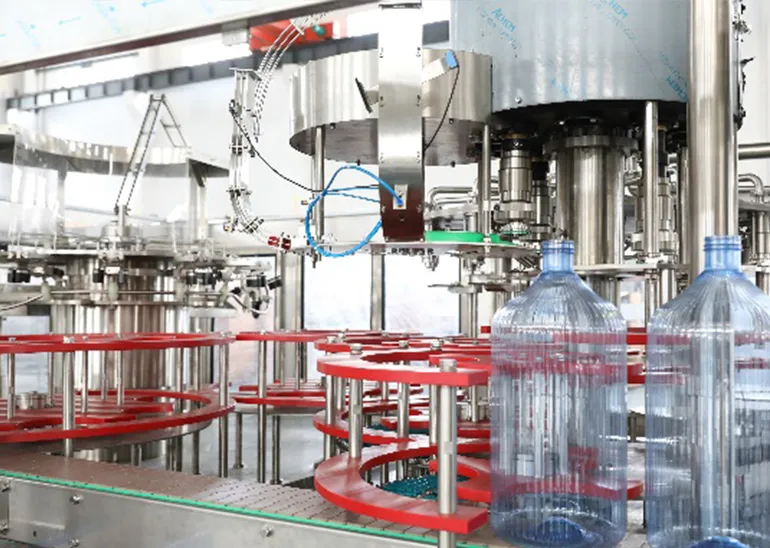
H2: Configuration Guide for Water Bottle Assembly Line
Selecting the appropriate configuration for a water bottle assembly line is critical to ensuring efficiency, product quality, and cost-effectiveness. This guide outlines key considerations in system setup, including cavity number selection, bottle volume range, preform compatibility, and auxiliary equipment requirements such as compressors and chillers.
Auswahl der Hohlraumnummer
The cavity number refers to the number of molds in the injection stretch blow molding (ISBM) machine and directly impacts production capacity.
- Low to Medium Output (2,000–10,000 bottles/hour): 2–4 cavities are typically sufficient, ideal for small-scale operations or startups.
- Medium to High Output (10,000–30,000 bottles/hour): 6–12 cavities are recommended to balance productivity and machine footprint.
- High-Volume Production (30,000+ bottles/hour): 16–24 cavities or more may be required, often used in large bottling plants.
Consider maintenance downtime, changeover frequency, and available floor space when selecting cavity count. Higher cavity numbers increase output but may require more robust auxiliary systems.
Volumenbereich der Flasche
The assembly line must accommodate the desired bottle sizes. Most ISBM systems are designed for a specific volume range:
- Standardbereich: 300 mL to 2,000 mL is common for drinking water bottles.
- Specialized Applications: Mini bottles (100–250 mL) or large jugs (3–5 L) may require customized molds and adjustments to the blowing process.
Ensure the machine and mold design support your target volume range. Some systems offer quick-change mold kits for flexibility across volumes.
Kompatibilität der Vorformlinge
Preforms are the test-tube-shaped precursors to bottles and must match the machine’s specifications:
- Hals-Finish: Confirm that the preform neck (e.g., 28mm, 38mm PCO) is compatible with the mold and capping equipment.
- Vorformling Gewicht und Abmessungen: Match preform weight (e.g., 18g for 500 mL bottle) and geometry to machine parameters.
- Material: Most lines use PET (polyethylene terephthalate) preforms; verify wall thickness and crystallinity for optimal blow performance.
Using preforms from certified suppliers ensures consistency and reduces defect rates.
Hilfseinrichtungen: Kompressor und Kältemaschine
Compressor
Compressed air is essential for the blow molding process, particularly for stretching and inflating preforms.
- Air Pressure: Typically 25–40 bar required, depending on bottle design.
- Luftqualität: Use oil-free, dry air to prevent contamination.
- Kapazität: Size the compressor to deliver continuous airflow at peak production (e.g., 1–3 m³/min per cavity). Consider a nitrogen booster system for high-barrier applications.
Kühler
Cooling is critical for mold temperature control to ensure dimensional stability and cycle time efficiency.
- Kühlleistung: Typically 1–2 kW per cavity; higher for larger molds or hot climates.
- Temperaturkontrolle: Maintain mold temperature between 8°C and 15°C for optimal PET crystallization.
- Wasserqualität: Use deionized or softened water to prevent scaling in cooling channels.
Ensure auxiliary systems are properly sized, integrated, and maintained to support uninterrupted production.
In conclusion, sourcing a water bottle assembly line from China presents a strategic opportunity to achieve cost efficiency, high production capacity, and access to advanced manufacturing technologies. However, to ensure long-term operational success and minimize downtime, it is imperative to prioritize rigorous Factory Acceptance Testing (FAT) before shipment. Conducting a comprehensive FAT enables verification of the equipment’s performance, functionality, and compliance with technical specifications under real operating conditions, thereby mitigating risks and ensuring quality assurance prior to installation at the destination site.
Equally critical is securing reliable spare parts support from the supplier. A readily available and well-organized spare parts supply chain is essential for timely maintenance and swift resolution of any mechanical issues that may arise during operation. When finalizing the sourcing agreement, it is strongly recommended to establish a clear spare parts provisioning plan, including a detailed list of critical components, lead times, and logistical support.
By emphasizing both a thorough FAT process and a robust spare parts support structure, companies can ensure seamless integration of the assembly line, sustain optimal productivity, and protect their investment over the equipment’s lifecycle.






