
With global demand for bottled water projected to rise steadily through 2026, manufacturers are under increasing pressure to adopt efficient, scalable bottling solutions. Automation, precision engineering, and sustainable production practices have become decisive factors in selecting reliable partners for water bottle production. This audit identifies the top 10 water bottle production equipment manufacturers leading the industry in innovation, performance, and integrated automation—helping sourcing professionals make informed decisions in an increasingly competitive market.
Top 10 Water Bottle Production Company Manufacturers (2026 Audit List)
(Ranked by Production Capability & Trust Score)
Professional Sourcing Guide: Water Bottle Production Company
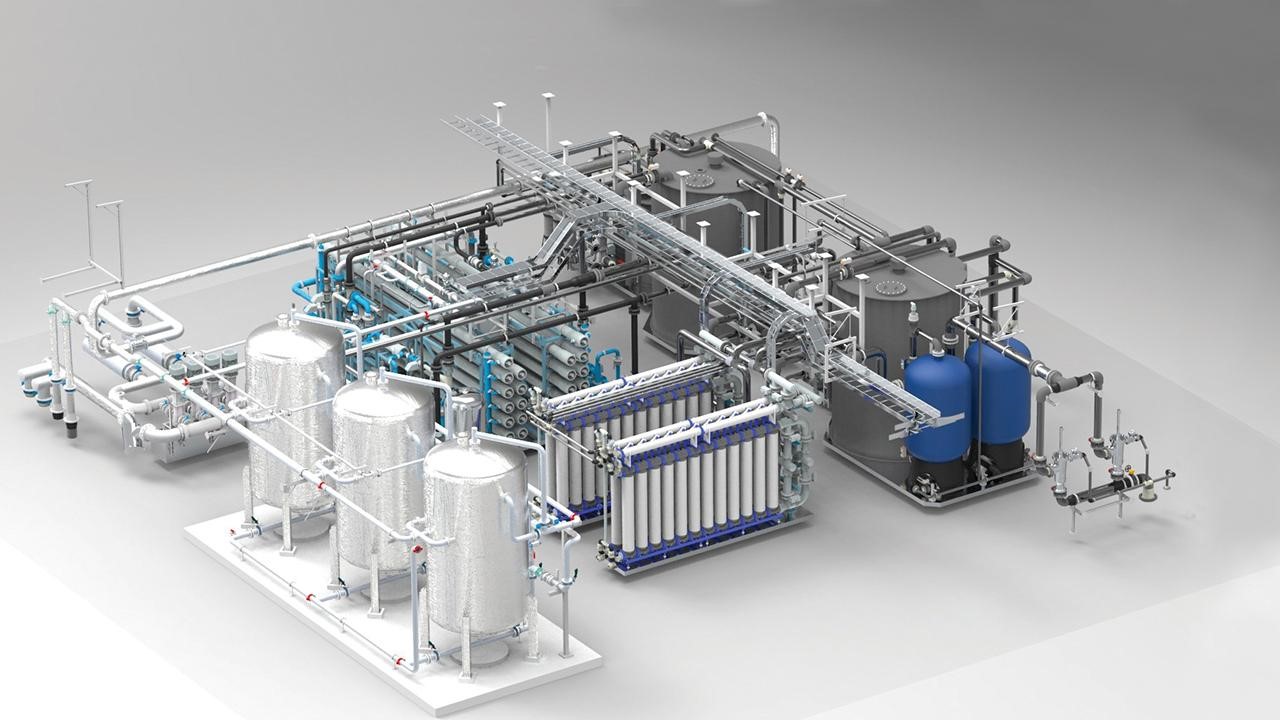
2026 Global Market Trends for Water Bottle Production: High-Speed Production, Energy Efficiency, and Automation
High-Speed Production Driving Market Competitiveness
By 2026, the global water bottle production industry is expected to face intensified competition fueled by rising demand for sustainable packaging and on-demand beverage consumption. High-speed production will be a critical differentiator, enabling manufacturers to meet growing volume requirements while maintaining cost efficiency.
Modern bottling lines are projected to operate at speeds exceeding 60,000 bottles per hour for standard 500ml PET containers. This leap in throughput is driven by advancements in blow molding technologies, such as stretch blow molding with rotary reheat systems, and integration of high-performance conveying and filling systems. Companies investing in modular, scalable high-speed lines will gain agility to adapt to fluctuating market demands and regional distribution needs.
Additionally, the shift toward lightweighting—reducing material use per bottle without compromising integrity—will further enhance production rates. Lighter bottles require less cooling time and reduce cycle times in molding processes, directly contributing to overall line speed. By 2026, high-speed lines optimized for lightweight, recyclable PET and bio-based resins will dominate in regions like North America, Europe, and East Asia.
Energy Saving Technologies: The Rise of Servo Motor Integration
Energy efficiency will be a central component of sustainable manufacturing strategies in 2026, with servo motor technology playing a transformative role in water bottle production. Unlike traditional hydraulic or fixed-speed electric systems, servo motors offer precise control, variable speed operation, and significantly lower energy consumption—reducing energy usage by up to 40–60% in blow molding and filling operations.
Servo-driven stretch blow molding machines are expected to become the industry standard by 2026. These systems use servo motors for preform handling, stretch rod movement, and mold actuation, enabling dynamic response to production variables and minimizing idle energy waste. The adoption of servo technology also reduces heat generation, lowering cooling requirements and improving machine longevity.
Moreover, regulatory pressures and corporate ESG (Environmental, Social, and Governance) commitments will accelerate the shift toward energy-efficient systems. In markets like the EU, where carbon taxation and energy performance directives are tightening, servo-based production lines will offer compliance advantages and operational cost savings. Leading equipment suppliers—including Sidel, Krones, and KHS—are already integrating full-servo solutions into next-generation bottling platforms, signaling a broader industry transition.
Automation Level: Towards Fully Integrated Smart Factories
Automation in water bottle production is set to reach unprecedented levels by 2026, moving beyond isolated robotic cells to fully integrated smart manufacturing ecosystems. The industry will increasingly adopt Industry 4.0 principles, combining IoT-enabled sensors, real-time data analytics, and AI-driven predictive maintenance to optimize production efficiency.
Key automation trends include:
- End-of-line automation: Robotic palletizing, case packing, and depalletizing systems will be standard, reducing labor dependency and minimizing human error.
- In-line quality control: Automated vision systems and AI-powered defect detection will ensure consistent product quality at high speeds, identifying micro-cracks, contamination, or dimensional deviations in real time.
- Digital twins and process simulation: Manufacturers will use digital replicas of production lines to test configurations, optimize changeovers, and forecast maintenance needs, reducing downtime.
- Autonomous material handling: Integration of AGVs (Automated Guided Vehicles) and AMRs (Autonomous Mobile Robots) for preform and finished goods transport will streamline logistics within production facilities.
By 2026, the most competitive water bottle producers will operate lights-out factories during off-peak hours, with minimal human intervention. This shift will be supported by cloud-based production monitoring platforms that enable remote supervision and control across global facilities.
In conclusion, the convergence of high-speed production, energy-saving servo technologies, and advanced automation will define the future of the water bottle manufacturing industry. Companies that proactively invest in these areas will not only reduce costs and environmental impact but also position themselves as leaders in a rapidly evolving global market.
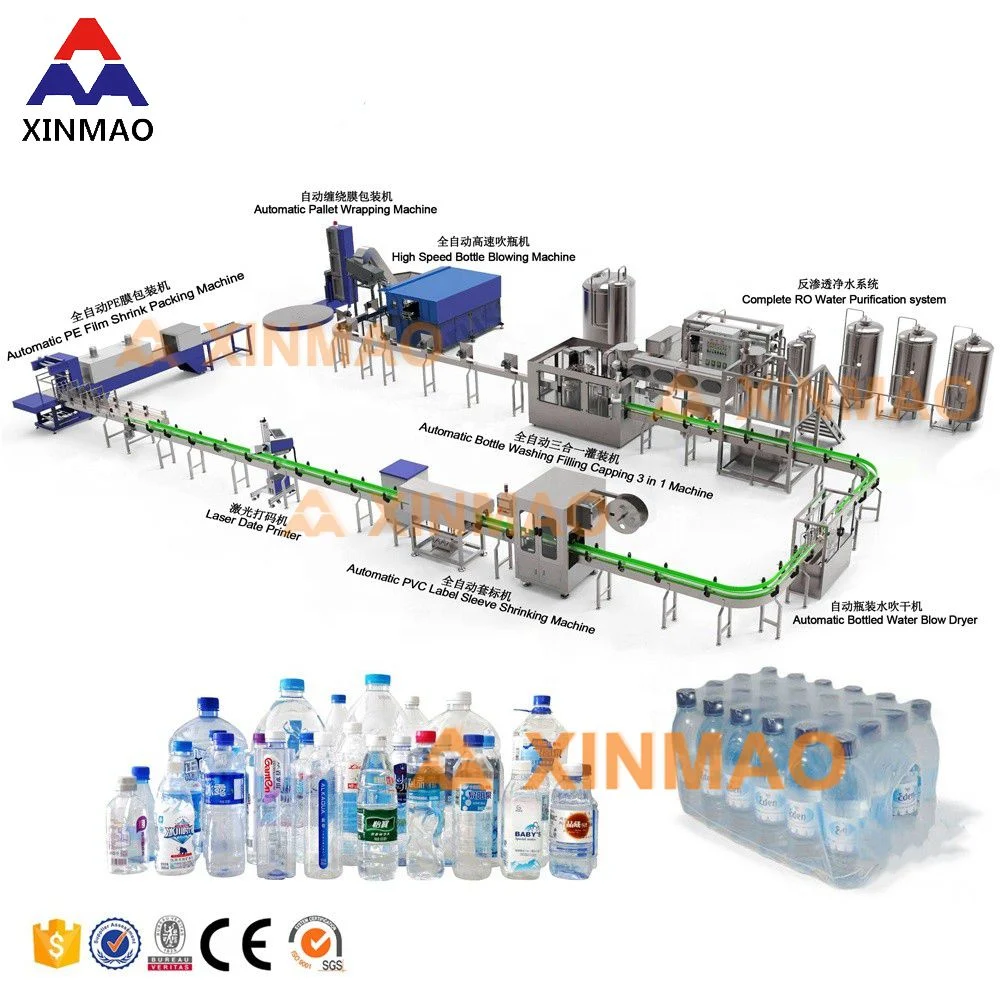
Key Quality Verification Checkpoints for Water Bottle Production Company Manufacturers
When evaluating a water bottle production company manufacturer, focusing on critical technical and operational aspects ensures long-term reliability and efficiency. Below are essential verification points to consider:
Mold Material (Aluminum vs. Steel)
- Steel Molds: Preferred for high-volume production due to superior durability, heat resistance, and longer lifespan. Verify the use of hardened tool steel (e.g., P20, H13, or S136) for consistent dimensional accuracy and resistance to wear and corrosion.
- Aluminum Molds: Suitable for prototyping or low-volume runs due to faster cooling and lower cost. However, they wear faster and are less suitable for high-cycle production.
- Verification Method: Request material certification (e.g., mill test reports), inspect mold construction documentation, and conduct on-site mold examination to confirm material type and heat treatment.
PLC Brand (Siemens vs. Mitsubishi)
- Siemens PLCs: Known for robust performance, strong integration with industrial automation systems, and excellent diagnostics. Widely used in Europe and global high-end machinery.
- Mitsubishi PLCs: Popular in Asia and known for reliability, ease of programming, and strong support for motion control applications.
- Verification Method: Check the control panel labels and software interface during machine operation. Request PLC model numbers and verify against official brand databases. Confirm firmware version and availability of programming software.
Cycle Time Efficiency
- Definition: The total time required to complete one full production cycle (clamping, injection, cooling, ejection, and opening).
- Target Benchmark: High-efficiency systems for standard PET water bottles typically achieve cycle times of 8–15 seconds, depending on bottle size and design.
- Verification Method: Conduct a live production run and time multiple consecutive cycles. Compare actual cycle time with manufacturer claims. Analyze machine logs or SCADA data for consistency and downtime events.
Spare Parts Availability
- Importance: Critical for minimizing downtime and ensuring continuous operation.
- Key Components to Check: Nozzles, heaters, ejector pins, seals, sensors, and hydraulic/pneumatic valves.
- Verification Method: Request a complete spare parts list (SPL) with part numbers and suppliers. Confirm lead times for critical components. Evaluate whether the manufacturer maintains a local or regional spare parts inventory or has a responsive supply chain. Check availability of third-party compatible parts if OEM parts are costly or slow to deliver.
By systematically verifying these four checkpoints—mold material, PLC brand, cycle time efficiency, and spare parts availability—you can effectively assess the quality, reliability, and long-term operational efficiency of a water bottle production manufacturer.
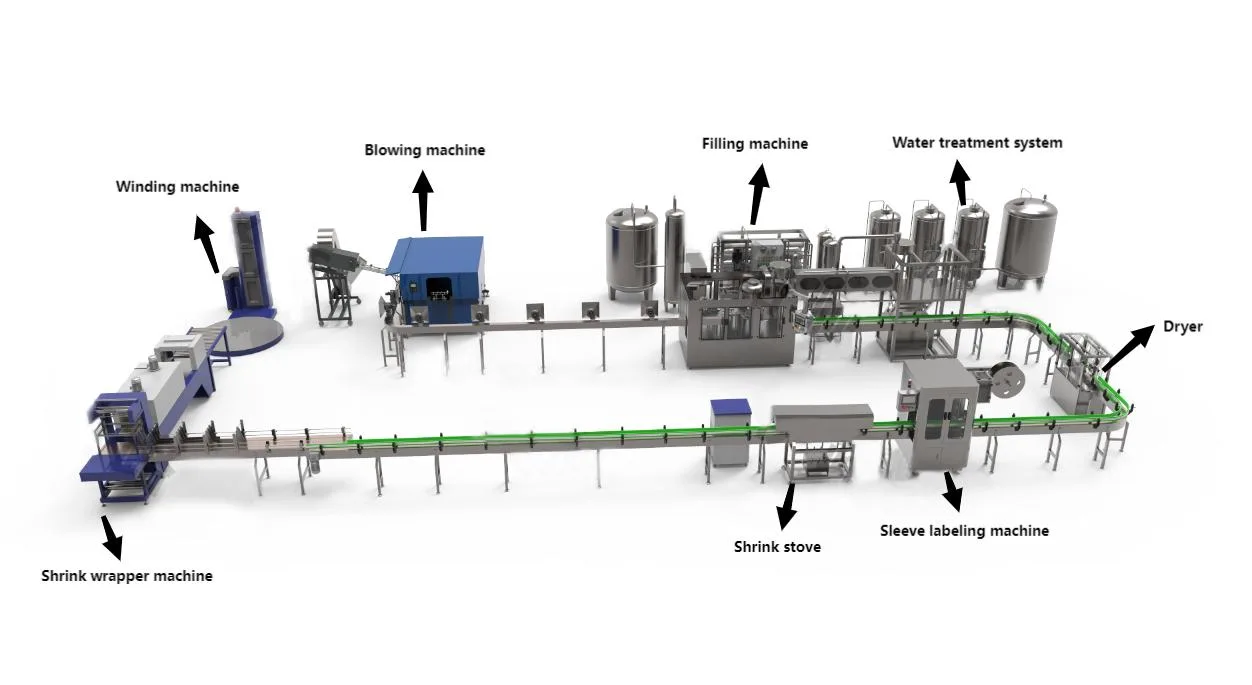
H2: Configuration Guide for Water Bottle Production Company
Setting up an efficient and reliable water bottle production line requires careful selection of injection molding equipment and auxiliary systems. Below is a comprehensive configuration guide covering key aspects such as cavity number selection, bottle volume range, preform compatibility, and auxiliary equipment requirements.
H2: Cavity Number Selection
The number of cavities in the mold directly affects production capacity, cycle time, and overall efficiency. Consider the following when selecting cavity count:
- Low to Medium Output (1,000 – 5,000 bottles/hour):
Use 1- to 4-cavity molds. Ideal for startups or small-scale operations with limited space and budget. - Medium to High Output (5,000 – 20,000 bottles/hour):
Opt for 8- to 16-cavity molds. Balances productivity and maintenance requirements. - High-Volume Production (20,000+ bottles/hour):
Choose 24- to 48-cavity (or higher) molds. Best suited for large-scale bottling plants with automated handling systems.
Note: Higher cavity molds require robust machines and precise temperature control to maintain uniform filling and cooling.
H2: Bottle Volume Range
The required bottle sizes determine mold design and machine specifications:
- Standard Volume Range:
Most water bottle lines handle volumes from 300 ml to 2,000 ml. - Common Sizes:
- 500 ml (personal use)
- 1,000 ml (1L)
- 1,500 ml (1.5L)
- 2,000 ml (2L)
- Mold Flexibility:
Multi-cavity molds can be designed for multiple sizes using interchangeable neck inserts (e.g., 38mm PCO for standard water bottles), allowing production flexibility.
Recommendation: Design molds with quick-change features to support frequent size changes in custom or regional markets.
H2: Preform Compatibility
Preform compatibility ensures seamless feeding and heating in the injection stretch blow molding (ISBM) process:
- Standard Preform Types:
- PET (Polyethylene Terephthalate) preforms
- Neck Finish: Typically 38mm PCO (Plastic Closure Organization) for water bottles
- Weight Range: 18g (for 500ml) to 45g (for 2L)
- Heating Requirements:
Preforms must be uniformly heated in the infrared oven. Ensure the machine’s loader and turntable support the preform dimensions and neck type. - Supplier Coordination:
Match preform material and design (wall thickness, gate type) with mold and machine specifications to avoid issues like incomplete blowing or stress cracking.
H2: Auxiliary Equipment (Compressor & Chiller)
Auxiliary systems are critical for stable, high-quality production.
Air Compressor:
– Purpose: Provides dry, oil-free compressed air for mold opening/closing, ejector pins, and blow molding (if using stretch blow molder).
– Capacity:
– 10–20 HP for 1–8 cavity molds
– 30–50 HP for 16+ cavity molds
– Air Quality: Must supply ISO 8573-1 Class 1 (oil-free, dry air) to prevent contamination.
– Pressure Requirement: 6–8 bar (87–116 psi)
Chiller Unit:
– Purpose: Cools the mold to maintain dimensional stability and reduce cycle time.
– Capacity:
– 1–3 RT (Refrigeration Tons) for small molds
– 5–10 RT for high-cavity or large molds
– Temperature Control: Maintain mold temperature at 10–15°C (50–59°F) for optimal PET crystallization and surface finish.
– Flow Rate: Ensure adequate coolant flow (e.g., 20–60 L/min) with closed-loop system to prevent scaling.
Recommendation: Use centralized or modular auxiliary systems with automatic monitoring and alarms for continuous operation.
Summary:
Selecting the right configuration—based on cavity number, bottle volume, preform compatibility, and auxiliary equipment—ensures optimal efficiency, quality, and scalability in water bottle manufacturing. Always consult with machine and mold suppliers to tailor the setup to your production goals.
In conclusion, sourcing water bottle production equipment from China presents a compelling opportunity to achieve cost-efficiency and high manufacturing capacity. However, ensuring long-term operational success hinges on two critical factors: a rigorous Factory Acceptance Test (FAT) and reliable spare parts support. Conducting a comprehensive FAT on-site in China allows for thorough validation of equipment performance, functionality, and compliance with technical specifications before shipment, minimizing risks of post-installation issues and costly delays. Equally vital is securing a robust spare parts supply chain—preferably with guaranteed availability and prompt delivery timelines—ensuring minimal downtime and sustained production efficiency. By prioritizing suppliers that offer transparent FAT protocols and dependable spare parts support, companies can maximize return on investment, maintain consistent product quality, and establish a resilient, long-term manufacturing partnership.






