
The global demand for mineral water continues to rise, driving the need for high-efficiency, automated bottling solutions across the beverage industry. As producers scale operations to meet consumer needs, the role of advanced bottle blowing technology has become increasingly critical—offering speed, precision, and sustainability in production. In this 2026 audit, we evaluate the top six mineral water bottle blowing machine manufacturers renowned for innovation, reliability, and integration of automation. These leading suppliers are shaping the future of PET container manufacturing, delivering turnkey solutions that optimize output and reduce operational costs in competitive markets.
Top 6 Mineral Water Bottle Blowing Machine Manufacturers (2026 Audit List)
(Ranked by Production Capability & Trust Score)
Professional Sourcing Guide: Mineral Water Bottle Blowing Machine
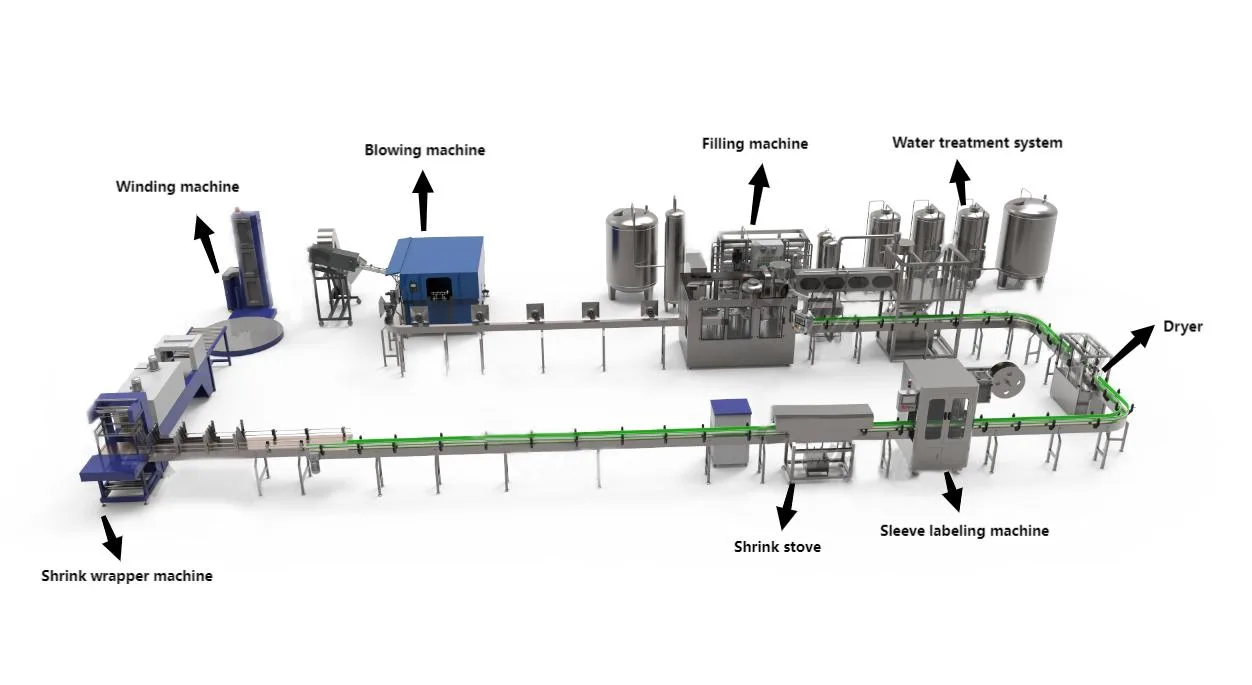
2026 Global Market Trends for Mineral Water Bottle Blowing Machines: Focus on High-Speed Production, Energy Saving Technologies (Servo Motor), and Automation Level
High-Speed Production: Driving Efficiency and Output Demands
By 2026, high-speed production capabilities will remain a dominant driver in the evolution of the mineral water bottle blowing machine market. As demand for bottled water continues to grow—especially in emerging economies and urban centers—manufacturers are prioritizing machines capable of producing 30,000 to 72,000 bottles per hour (BPH) and beyond.
Key trends include:
- Increased Adoption of Rotary Systems: High-speed rotary stretch blow molding machines are becoming standard in large-scale production facilities. These systems offer seamless integration with filling and capping lines, reducing bottlenecks and boosting overall throughput.
- Multi-Cavity Enhancements: Machines with 12 to 24 cavities are increasingly common, allowing parallel processing without sacrificing quality. Technological improvements in mold cooling and preform handling contribute to shorter cycle times.
- Demand from Private Label & Regional Brands: The rise of value-focused and regionally distributed bottled water brands is pushing OEMs to offer scalable, high-output solutions at competitive price points.
By 2026, the global push for faster turnaround and reduced lead times will make high-speed machines a critical competitive advantage, particularly in markets like Southeast Asia, Africa, and Latin America.
Energy Saving Technologies: Servo Motor Integration as a Standard Feature
Energy efficiency is a core strategic objective in the 2026 mineral water bottle blowing machine landscape, with servo motor technology leading the charge in reducing operational costs and environmental impact.
Key developments include:
- Widespread Adoption of Full-Servo Systems: Unlike traditional hydraulic or hybrid systems, fully electric servo-driven machines offer precise control, lower energy consumption (up to 30–50% reduction), and reduced heat generation. By 2026, full-servo machines are expected to capture over 60% of new installations in developed markets.
- Regenerative Energy Systems: Advanced servo motors now incorporate regenerative braking, capturing and reusing energy during deceleration phases—a feature increasingly highlighted in European and North American markets under ESG regulations.
- Compliance with Green Manufacturing Standards: With tightening energy regulations (e.g., EU Ecodesign Directive, ENERGY STAR), manufacturers such as Sidel, Krones, and SIPA are engineering machines with integrated energy monitoring and low-power idle modes.
The shift toward servo technology is not only driven by sustainability mandates but also by long-term cost savings, making it a de facto standard in new machine purchases by mid-2026.
Automation Level: Towards Smart and Autonomous Production
Automation is transforming mineral water bottle blowing from a labor-intensive process into a smart, data-driven operation. By 2026, the average automation level in new blowing machines will include advanced monitoring, predictive maintenance, and integration with Industry 4.0 platforms.
Notable automation trends:
- Integrated IoT and SCADA Systems: Modern machines are equipped with sensors and cloud-connected interfaces that monitor parameters such as pressure, temperature, and cycle time in real time. This enables remote diagnostics and performance optimization.
- AI-Powered Quality Control: Machine vision systems with AI algorithms detect preform defects, wall thickness inconsistencies, and cap alignment issues—reducing waste and ensuring compliance with food safety standards.
- Autonomous Material Handling: Robotics for preform feeding, finished bottle handling, and palletizing are increasingly bundled with blowing systems. Fully automated lines minimize human intervention and improve consistency.
- Digital Twins and Predictive Maintenance: Leading manufacturers offer digital twin models of blowing machines, allowing operators to simulate performance, anticipate wear, and schedule maintenance before failures occur.
By 2026, the integration of automation will no longer be a premium option but a baseline requirement for competitive manufacturing, particularly among bottling plants aiming for zero-downtime operations.
Conclusion
The 2026 global mineral water bottle blowing machine market is defined by a triad of innovation: high-speed production to meet growing demand, energy-saving servo motor technologies to reduce costs and emissions, and advanced automation to enable smart, resilient manufacturing. Companies that invest in these technologies today will be best positioned to lead in efficiency, sustainability, and operational agility in the coming years.
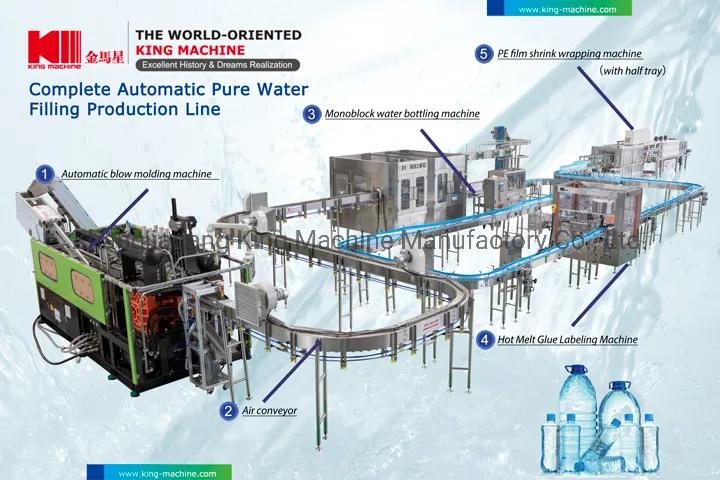
Key Quality Verification Points for Mineral Water Bottle Blowing Machine Manufacturers
When evaluating a mineral water bottle blowing machine manufacturer, focusing on critical components and performance metrics ensures long-term reliability and efficiency. Below are essential check points to verify quality:
Mold Material (Aluminum vs. Steel)
- Steel Molds: Preferred for high-volume production due to superior durability, heat resistance, and longer service life. Verify if the manufacturer uses hardened tool steel (e.g., P20, H13) for consistent bottle quality and reduced maintenance.
- Aluminum Molds: Lighter and offer faster heat transfer, suitable for prototypes or low-volume runs. However, they wear faster. Assess whether aluminum is justified based on your production needs.
- Verification Tip: Request material certification or third-party test reports for molds and inquire about expected mold life (e.g., 10+ million cycles for steel).
PLC Brand (Siemens vs. Mitsubishi)
- Siemens PLCs: Known for robust performance, excellent diagnostics, and integration with industrial networks. Widely trusted in automated machinery.
- Mitsubishi PLCs: Offer high-speed processing, strong motion control, and user-friendly programming, ideal for precision blow molding.
- Verification Tip: Confirm the exact PLC model used (e.g., Siemens S7-1200, Mitsubishi FX or Q Series) and ensure the HMI interface is intuitive. Ask for software backup and programming access rights.
Cycle Time Efficiency
- Standard Benchmark: High-efficiency machines achieve cycle times of 8–12 seconds per cycle for 500–1000 ml bottles, depending on station count (6–12 station machines common).
- Factors Affecting Efficiency: Preform heating uniformity, stretch rod speed, and high-pressure blowing control.
- Verification Tip: Request a live machine demonstration or video run at full capacity. Calculate output using:
(Number of stations × 3600) / Cycle time (seconds) = Bottles per hour.
Cross-check claimed output with actual test results.
Spare Parts Availability
- Critical Components: Verify ready availability of stretch rods, sealing gaskets, high-pressure valves, oven quartz lamps, and mold components.
- Local Support: Check if the manufacturer has a regional warehouse or authorized service partners to reduce downtime.
- Verification Tip: Ask for a detailed spare parts list with lead times and pricing. Inquire about preventive maintenance kits and whether wear-prone parts are included in the initial supply.
By thoroughly assessing these four key areas—mold material, PLC brand, cycle time efficiency, and spare parts availability—you can confidently select a reliable mineral water bottle blowing machine manufacturer that meets industrial quality and productivity standards.
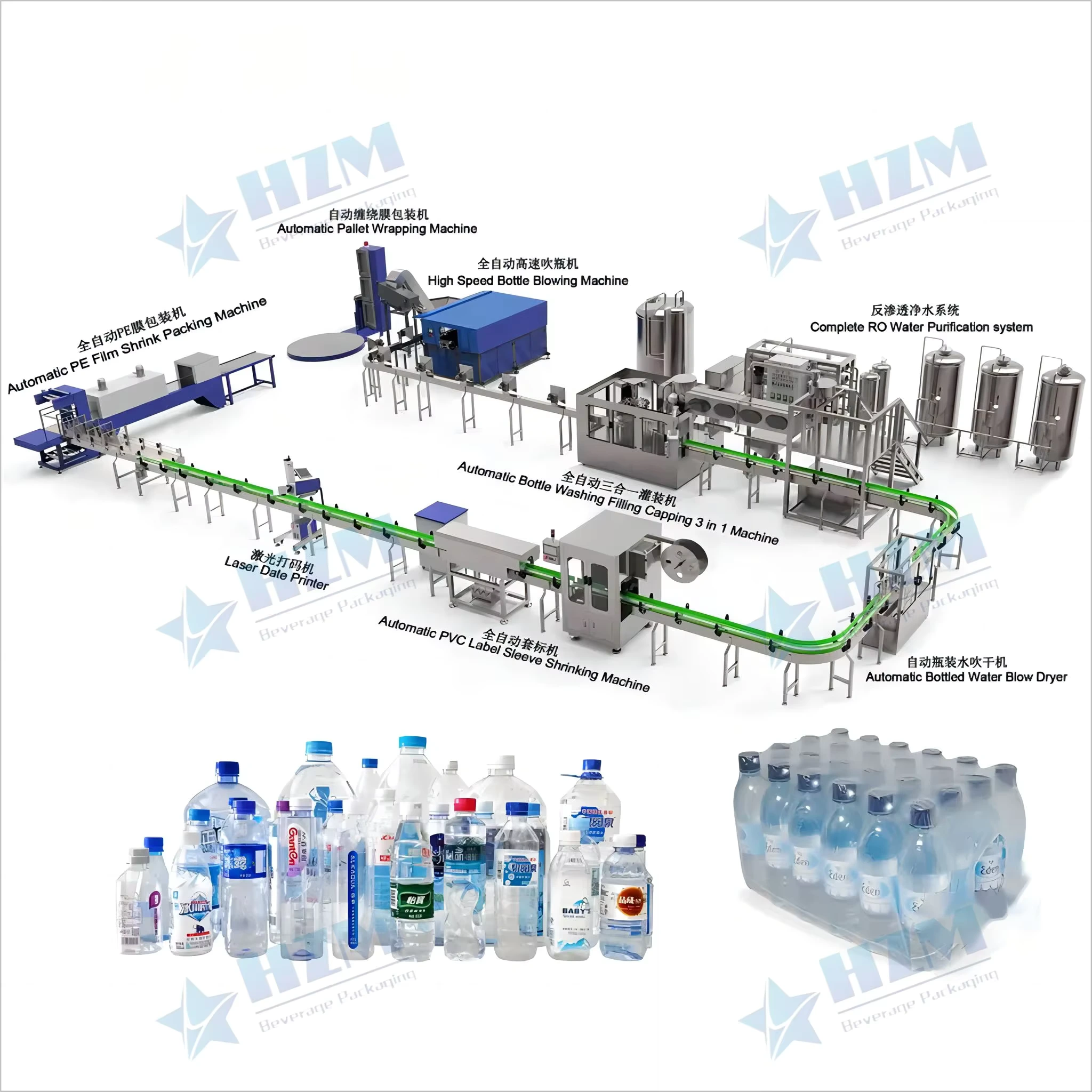
Configuration Guide for Mineral Water Bottle Blowing Machine
Cavity Number Selection
The cavity number refers to the number of bottles the machine can produce per cycle and is a critical factor in determining overall output. Selecting the appropriate cavity number depends on your production requirements and space constraints.
- Low-Volume Production (1–4 Cavities): Ideal for small-scale operations, startups, or facilities with limited space. Suitable for output ranges of 1,000–4,000 bottles per hour.
- Medium-Volume Production (6–12 Cavities): Best for mid-sized beverage producers needing 6,000–15,000 bottles per hour. Offers a balance between efficiency and footprint.
- High-Volume Production (16–32+ Cavities): Designed for large-scale mineral water bottling lines with demands exceeding 20,000 bottles per hour. Requires significant floor space and integration with high-speed conveyors and filling systems.
Consider future scalability when selecting cavity count. Machines with modular designs allow for cavity expansion as demand grows.
Bottle Volume Range
Mineral water blowing machines are typically configured to handle a specific range of bottle volumes. Ensure the machine supports the sizes you intend to produce.
- Standard Range: Most machines accommodate bottles from 300 ml to 2,000 ml.
- Custom Configurations: Some models can be adjusted for smaller (100 ml) or larger (5,000 ml) volumes with specialized molds and settings.
- Changeover Flexibility: Machines with quick mold change systems support multiple volume formats, enabling efficient switching between 500 ml, 1 L, and 1.5 L bottles.
Verify that the machine’s stretch rod sizes, mold clamping force, and blow pressure settings are compatible with your target bottle dimensions and wall thickness requirements.
Preform Compatibility
The blowing machine must be compatible with the preform specifications used in your production line.
- Preform Neck Finish: Ensure compatibility with standard PCO 1881, 26 mm, or 38 mm finishes commonly used in mineral water bottles.
- Preform Weight and Dimensions: Confirm that the machine’s preform loader and heating oven can accommodate your preform’s length, diameter, and weight (typically 18–45 grams for 500 ml–1.5 L bottles).
- Material Type: Most machines are designed for amorphous PET (APET) preforms. Verify compatibility with recycled PET (rPET) if sustainability is a priority.
- Preform Feeding System: Choose between vibratory bowl feeders or linear feeders based on preform design and production speed requirements.
Always consult with your preform supplier and machine manufacturer to ensure seamless integration.
Auxiliary Equipment: Compressor and Chiller
Proper auxiliary equipment is essential for stable and efficient operation of the blowing machine.
Air Compressor:
– Required Pressure: 30–40 bar for high-pressure blowing (depending on bottle design).
– Air Flow (CFM): Scales with cavity number—typically 100–600 CFM for 4–32 cavity machines.
– Air Quality: Use oil-free compressors with dryers and filters to prevent contamination. ISO 8573-1 Class 1 or 2 is recommended for food-grade applications.
– Storage: Include an air receiver tank (minimum 1,000 liters) to stabilize pressure during peak demand.
Chiller (for Mold Cooling):
– Cooling Capacity: Required based on output—approximately 1–2 kW per cavity. A 12-cavity machine may need a 15–25 kW chiller.
– Temperature Control: Maintain mold temperature at 8–12°C for optimal cycle time and bottle quality.
– Water Quality: Use softened or deionized water to prevent scaling in cooling channels.
– Flow Rate: Ensure sufficient flow (e.g., 2–4 L/min per mold half) for uniform cooling.
Integrate both compressor and chiller with the machine’s control system for monitoring and alarm functions, ensuring consistent performance and minimizing downtime.
In conclusion, sourcing a mineral water bottle blowing machine from China offers a compelling combination of cost-efficiency, advanced technology, and reliable manufacturing capabilities. However, to ensure long-term operational success and minimal downtime, it is essential to prioritize suppliers who offer comprehensive Factory Acceptance Testing (FAT) and robust spare parts support. Conducting a thorough FAT before shipment allows buyers to verify machine performance, calibration, and compliance with technical specifications under real operating conditions, significantly reducing the risk of post-installation issues. Additionally, partnering with a supplier that provides readily available, high-quality spare parts and responsive technical assistance ensures quick maintenance and sustained production efficiency. By emphasizing these critical factors—FAT validation and dependable spare parts availability—buyers can maximize machine reliability, extend equipment lifespan, and achieve a smooth integration into their production line, ultimately ensuring a sound return on investment.






