
As demand for high-speed, energy-efficient bottling solutions continues to rise across the food & beverage, pharmaceutical, and personal care sectors, automation has become a cornerstone of modern production. In 2026, fully automatic bottle blowing machines are no longer a luxury but a strategic necessity—enabling manufacturers to achieve precision, scalability, and reduced operational costs. With global bottling lines increasingly prioritizing uptime, sustainability, and integration with Industry 4.0 technologies, selecting the right machinery partner is critical. This curated audit identifies the top eight fully automatic bottle blowing machine manufacturers leading innovation, reliability, and performance in today’s competitive landscape.
Топ-8 производителей полностью автоматических машин для выдувания бутылок (список аудита 2026 года)
(Ранжировано по показателю производственных возможностей и доверия)

Professional Sourcing Guide: Fully Automatic Bottle Blowing Machine
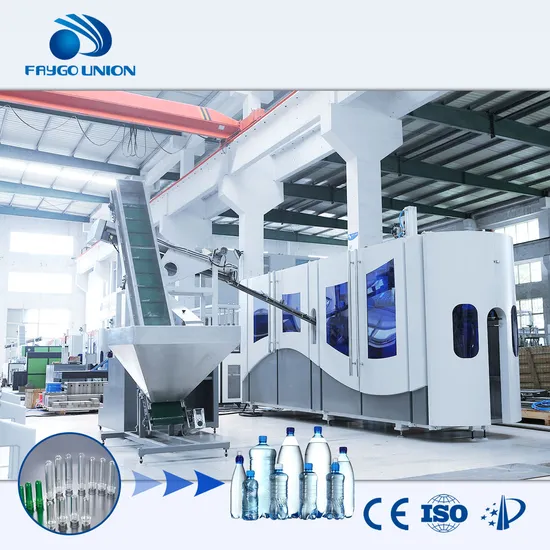
2026 Global Market Trends for Fully Automatic Bottle Blowing Machines: Focus on High Speed, Energy Efficiency, and Automation
The global market for Fully Automatic Bottle Blowing Machines (FABBM) is poised for significant evolution by 2026, driven by intensifying demands for efficiency, sustainability, and operational resilience. Key technological advancements in High-Speed Production, Energy-Saving Technologies (particularly Servo Motors), and elevated Automation Levels are converging to redefine the competitive landscape. This analysis examines these critical trends shaping the future of the industry.
H2: Dominance of High-Speed Production
High-speed production remains the paramount competitive differentiator in the FABBM market. By 2026, the race for throughput will accelerate, driven by:
* Consumer Demand & Scalability: The relentless growth in demand for PET bottles in beverages, personal care, and food sectors necessitates machines capable of producing hundreds of thousands, even millions, of bottles per day. Manufacturers seek machines with higher cavity counts (8-cavity, 12-cavity, and beyond) and faster cycle times to meet volume requirements and reduce unit costs.
* Advanced Process Optimization: Integration of sophisticated control systems and AI-powered predictive maintenance will minimize downtime and optimize cycle parameters in real-time, maximizing uptime and effective output. Faster preform loading, preform heating (using optimized IR oven designs), and bottle ejection mechanisms are key focus areas.
* Focus on Consistency at Speed: The challenge isn’t just raw speed, but consistent high quality at high speeds. Machines will feature enhanced precision in stretch rod control, blow pin actuation, and mold clamping to ensure uniform wall thickness and bottle strength even under demanding production rates. Machines capable of high speeds with low scrap rates (often below 1%) will be highly sought after.
* Market Impact: High-speed machines will be essential for large-scale beverage producers and contract packagers. This trend favors established manufacturers with proven high-speed platforms, pushing smaller players towards niche or mid-speed segments unless they can access or develop comparable technology.
H2: Critical Integration of Energy Saving Technologies: The Servo Motor Revolution
Energy efficiency, driven significantly by the adoption of servo motors, has transitioned from a “nice-to-have” to a core requirement by 2026, impacting both OPEX and ESG (Environmental, Social, Governance) compliance.
* Servo Motors as the Standard: Electro-mechanical servo drives for clamping, stretching, and ejection axes will become the dominant technology, replacing traditional hydraulic systems. Servo motors offer:
* Значительное снижение энергопотребления: Eliminate energy losses associated with constantly running hydraulic pumps and heat generation, leading to energy savings of 30-50% or more compared to hydraulic machines.
* Precision and Control: Enable finer control over motion profiles (speed, acceleration, force), improving bottle quality consistency and reducing mechanical stress.
* Reduced Maintenance & Cleaner Operation: No hydraulic fluid means lower maintenance costs (no leaks, filter changes, fluid disposal) and a cleaner production environment, crucial for food-grade applications.
* Quieter Operation: Significantly reduced noise levels compared to hydraulic pumps.
* Beyond Servos: Holistic Energy Management: Servos are the cornerstone, but the trend extends to integrated energy management:
* Advanced IR Oven Optimization: Precise, zoned, and adaptive infrared heating systems that adjust power based on preform characteristics and ambient conditions.
* Heat Recovery: Systems capturing waste heat from compressors or process air for reuse in preform drying or facility heating.
* Low-Pressure Blowing: Development and adoption of technologies enabling effective blowing at lower pressures (e.g., 25-30 bar vs. traditional 35-40 bar), reducing air compressor energy demand.
* Market Impact: Energy efficiency will be a major purchasing criterion. Regulations and carbon pricing will further incentivize adoption. Suppliers unable to offer efficient servo-driven solutions will face significant competitive disadvantage. Total Cost of Ownership (TCO) calculations will increasingly favor servo-electric machines despite potentially higher initial investment.
H2: Escalating Automation Levels: Towards Smart Factories
Automation in FABBM is moving far beyond basic machine operation towards integrated, intelligent systems forming part of Industry 4.0 and smart factory ecosystems.
* End-to-End Integration: Machines will feature seamless integration with upstream (preform feeding, inspection) and downstream (leak testing, labeling, packing, palletizing) systems via standardized communication protocols (OPC UA, MQTT). This enables continuous, unmanned production lines.
* Advanced Data Analytics & IIoT: Onboard sensors and IIoT connectivity will provide real-time monitoring of critical parameters (pressure, temperature, cycle times, energy consumption, quality metrics). Cloud-based platforms will enable:
* Предиктивное обслуживание: Analyzing machine data to predict component failures before they occur, minimizing unplanned downtime.
* Удаленный мониторинг и поддержка: OEM engineers can diagnose issues and provide support remotely, reducing service response times.
* Production Optimization: Using data to identify bottlenecks, optimize settings, and improve Overall Equipment Effectiveness (OEE).
* Enhanced Quality Control (QC): Integration of inline vision inspection systems directly into the blowing machine or immediate downstream will enable 100% automated bottle inspection for defects (wall thickness, contamination, shape, seal integrity) with instant rejection.
* User-Centric Interfaces: Intuitive HMI (Human-Machine Interface) with augmented reality (AR) support for setup, troubleshooting, and training will simplify operation and reduce skill requirements.
* Market Impact: High automation levels reduce labor dependency, improve consistency, enhance traceability, and provide valuable operational data. This is crucial for food safety compliance and meeting the demands of large, complex manufacturing networks. Suppliers offering comprehensive “automation packages” and data analytics services will gain a strong market position.
Заключение: By 2026, the global FABBM market will be characterized by machines that are faster, significantly more energy-efficient (primarily through servo-electric drives), and deeply integrated into automated, data-driven production systems. Success for manufacturers will depend on their ability to innovate and deliver solutions that simultaneously address these three interconnected pillars: maximizing output, minimizing environmental and operational costs, and enabling intelligent, resilient manufacturing. The convergence of these trends will define the next generation of bottle blowing technology.
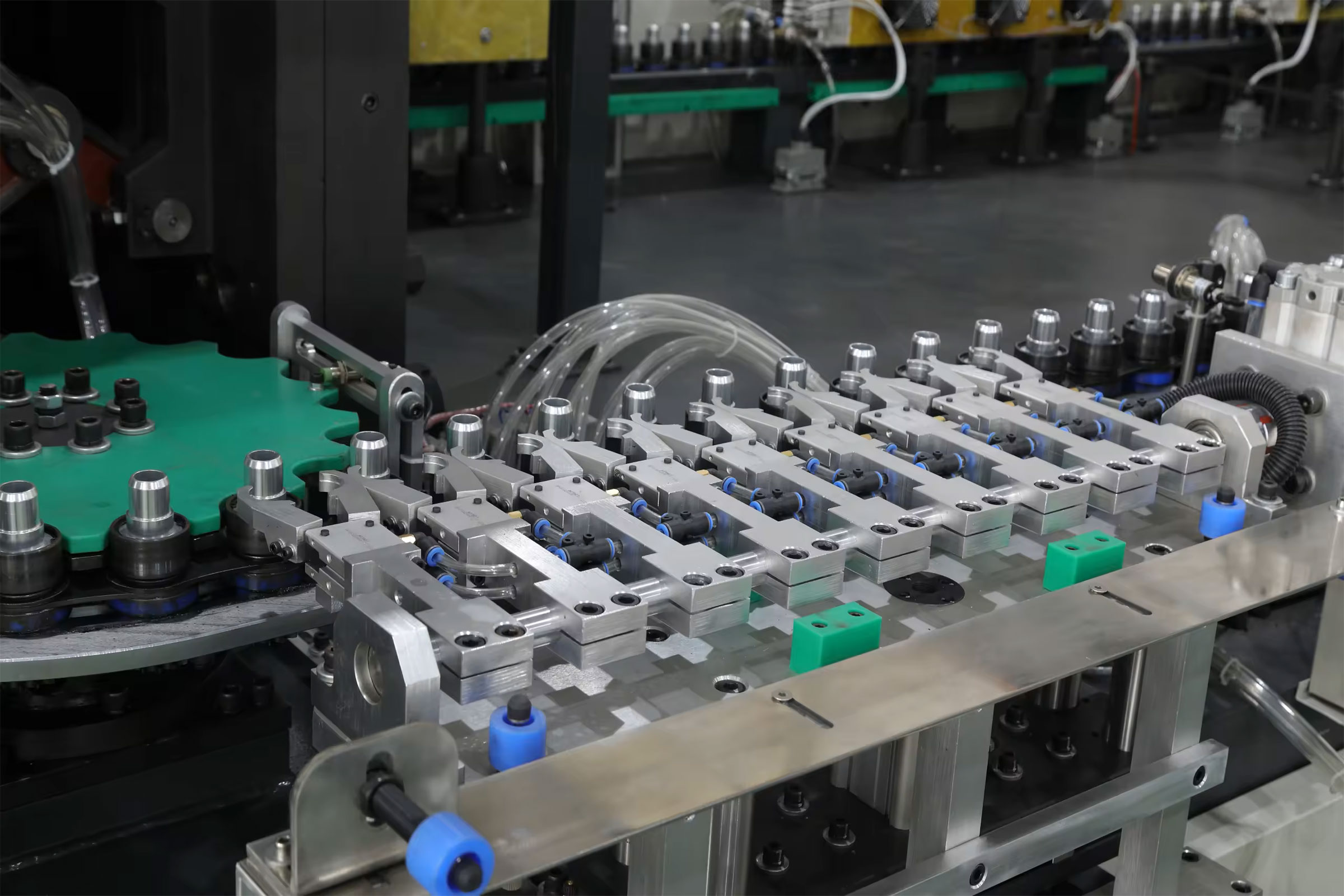
Key Quality Verification Points for Fully Automatic Bottle Blowing Machine Manufacturers
When evaluating a manufacturer of fully automatic bottle blowing machines, verifying quality is crucial to ensure long-term performance, reliability, and low maintenance costs. Focus on the following critical check points:
Материал пресс-формы (алюминий или сталь)
The mold material significantly impacts durability, production speed, and final product quality. Verify:
- Стальные формы: Preferred for high-volume production due to superior durability, heat resistance, and longer lifespan (typically 1–2 million cycles or more). Ideal for premium quality and consistent bottle finish.
- Алюминиевые формы: Suitable for prototyping or low-volume runs; lighter and faster in heat transfer but less durable (typically 100,000–500,000 cycles). Check if the manufacturer justifies aluminum use appropriately.
– Ensure the supplier specifies mold material grade (e.g., P20, H13 tool steel) and provides mold hardness (HRC) ratings.
– Request sample bottles produced with the molds to assess surface finish and dimensional accuracy.
Марка ПЛК (Siemens против Mitsubishi)
The PLC (Programmable Logic Controller) is the machine’s control center. Reputable brands ensure reliability and ease of maintenance:
– Confirm the use of Siemens или Mitsubishi PLCs, both known for stability, advanced diagnostics, and global service support.
– Avoid generic or unbranded PLCs, which may lead to programming issues and compatibility problems.
– Ask for the specific PLC model and verify firmware version and HMI (Human-Machine Interface) type.
– Check whether the manufacturer provides PLC programming documentation and remote monitoring capabilities.
Эффективность времени цикла
Cycle time directly affects production output and ROI. Evaluate:
– Request verified cycle time data under real production conditions (e.g., 12–18 seconds per 500ml bottle is typical for high-speed machines).
– Confirm whether the cycle time includes preform loading, blowing, cooling, and ejection.
– Ask for video demonstrations or on-site trial runs to validate manufacturer claims.
– Inquire about energy-saving features (e.g., servo-driven systems, optimized air pressure control) that improve efficiency.
Наличие запасных частей
Timely access to spare parts minimizes downtime. Assess:
– Whether the manufacturer maintains a local or regional inventory of critical spare parts (seals, valves, heaters, sensors, mold components).
– Ask for a detailed spare parts list with part numbers, expected lifespan, and replacement intervals.
– Confirm lead time for essential components—ideally under 7–14 days for standard items.
– Check if the supplier offers maintenance contracts, technical support, and training for in-house servicing.
By thoroughly verifying these four key areas—mold material, PLC brand, cycle time efficiency, and spare parts availability—you can confidently assess the quality and reliability of a fully automatic bottle blowing machine manufacturer.
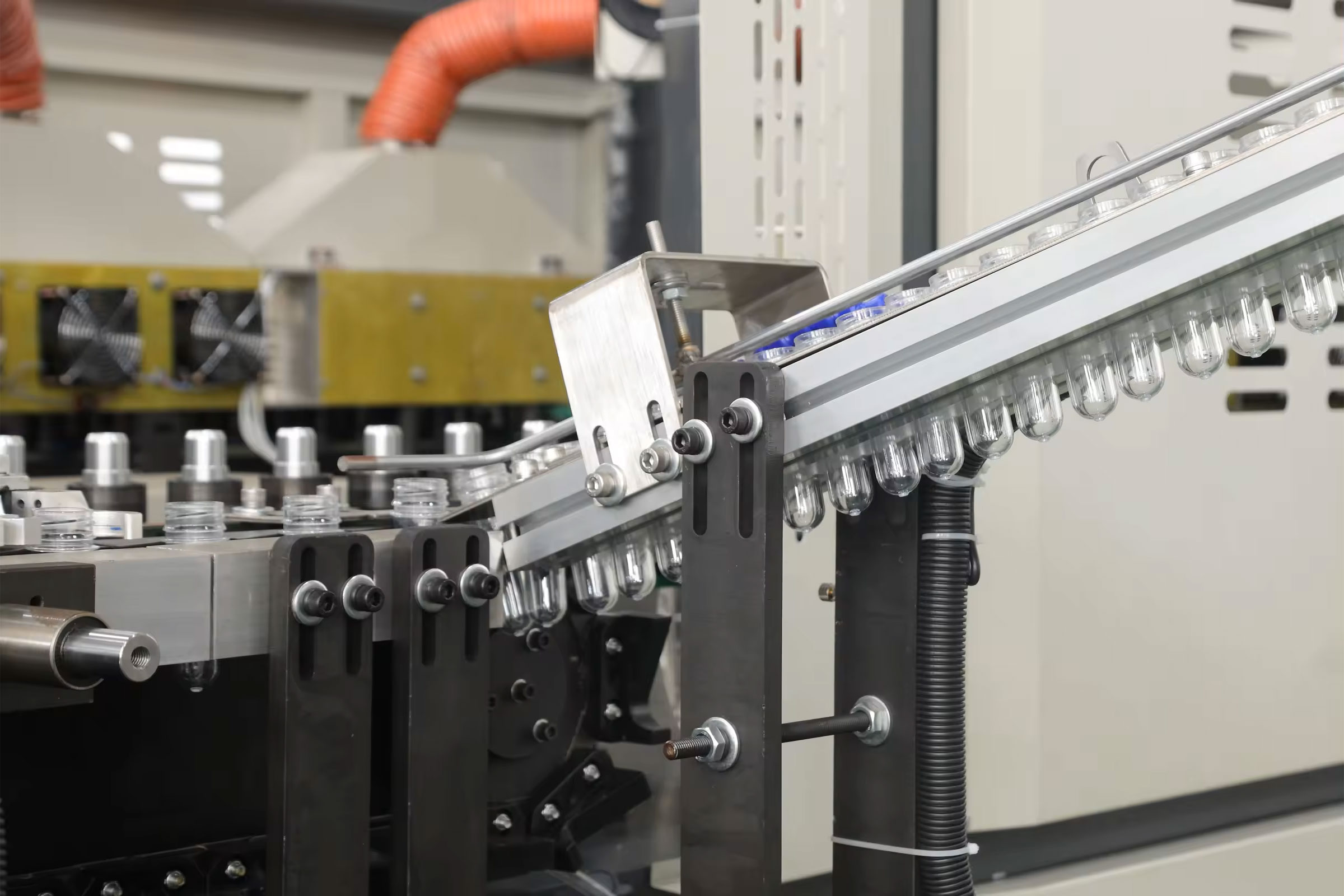
Configuration Guide for Fully Automatic Bottle Blowing Machine
Proper configuration of a fully automatic bottle blowing machine is essential for achieving optimal performance, efficiency, and product quality. Below are key considerations to guide your setup across critical areas.
Выбор номера полости
The cavity number refers to the number of bottles the machine can produce per cycle and directly impacts production capacity. Consider the following when selecting:
- Требования к производству: Match the cavity count to your hourly or daily output targets. For example, a 4-cavity machine may suffice for small-scale operations, while 12- or 24-cavity configurations are better suited for high-volume production.
- Machine Footprint and Cost: Higher cavity numbers require larger machines and higher investment. Assess available floor space and budget constraints.
- Changeover Flexibility: Machines with modular cavity designs allow easier scaling or reconfiguration for future demand changes.
- Cooling and Cycle Time: Ensure the machine’s cooling system and cycle time can support the selected cavity number without compromising bottle quality.
Диапазон объемов бутылок
The machine must be capable of producing bottles across your required size spectrum. Evaluate:
- Minimum and Maximum Capacity: Confirm the machine supports your smallest and largest bottle volumes (e.g., 100 ml to 2,000 ml).
- Stretch Rod and Mold Compatibility: Different volumes may require adjustments or更换 of stretch rods and molds. Verify the machine allows quick, tool-less changeovers.
- Preform-to-Bottle Expansion Ratio: Ensure the machine can handle the blow ratio (typically 3:1 to 4:1) required for your target bottle volumes without thinning or structural issues.
Совместимость форм
Preform specifications significantly influence machine setup and performance:
- Предварительная отделка горловины: The machine must match the preform’s neck size and thread type (e.g., 28mm PCO, 38mm AD). Verify compatibility with your preform supplier.
- Preform Length and Weight: Confirm the loading system (e.g., vibratory bowl or robotic arm) can handle your preform dimensions and weight variations.
- Тип материала: While most machines handle standard PET, verify compatibility with specialty resins (e.g., PETG, recycled PET) if used.
- Равномерность нагрева преформы: Ensure the infrared oven can evenly heat your preform design to avoid weak spots or inconsistent blow results.
Вспомогательное оборудование (компрессор/холодильник)
Auxiliary systems are critical for stable machine operation and bottle quality:
- Воздушный компрессор:
- Capacity and Pressure: Provide clean, dry air at 25–35 bar. Size the compressor to meet peak demand (typically 0.4–0.6 m³/min per cavity).
- Качество воздуха: Use refrigerated or desiccant dryers and filtration to prevent moisture and contaminants from affecting valves or seals.
- Chiller Unit:
- Мощность охлаждения: Required to maintain mold temperature (typically 10–15°C). Size based on heat load (approx. 1–1.5 kW per cavity).
- Temperature Stability: Precise temperature control improves cycle time and reduces stress whitening in bottles.
- Flow and Pressure: Ensure adequate coolant flow rate (3–5 L/min per mold half) and system pressure compatibility.
Примечание: Integrate central monitoring systems to synchronize the blowing machine with compressor and chiller for energy efficiency and real-time diagnostics.
In conclusion, sourcing a fully automatic bottle blowing machine from China offers a compelling combination of advanced technology, cost-efficiency, and scalable manufacturing capacity. To ensure long-term operational success and minimize downtime, it is essential to prioritize two critical factors: a comprehensive Factory Acceptance Test (FAT) and reliable spare parts support. Conducting a thorough FAT at the manufacturer’s facility allows for rigorous validation of machine performance, quality output, and compliance with technical specifications before shipment—providing confidence in the equipment’s readiness for integration into your production line. Furthermore, partnering with a supplier that offers readily available, genuine spare parts and responsive technical assistance ensures sustained uptime, reduces maintenance delays, and protects your investment over the machine’s lifecycle. By emphasizing these key elements—FAT verification and robust spare parts availability—buyers can secure a high-performance solution that delivers both immediate value and long-term reliability.






