
With rising global demand for sustainable packaging and high-speed production, the bottling industry is turning to advanced automation and energy-efficient solutions to meet evolving market needs. As brands prioritize output precision, reduced downtime, and lower operational costs, selecting the right bottle blowing machine manufacturer has become a strategic imperative. This 2026 audit identifies the top 10 manufacturers leading innovation in rotary and linear stretch blow molding technology, offering scalable, smart, and future-ready systems for beverage, pharmaceutical, and personal care producers worldwide.
Топ 10 производителей машин для выдувания бутылок (2026 аудиторский список)
(Ранжировано по показателю производственных возможностей и доверия)

Professional Sourcing Guide: Bottle Blowing Machine
2026 Global Market Trends for Bottle Blowing Machines: High Speed Production, Energy Saving Technologies, and Automation
High Speed Production Driving Market Growth
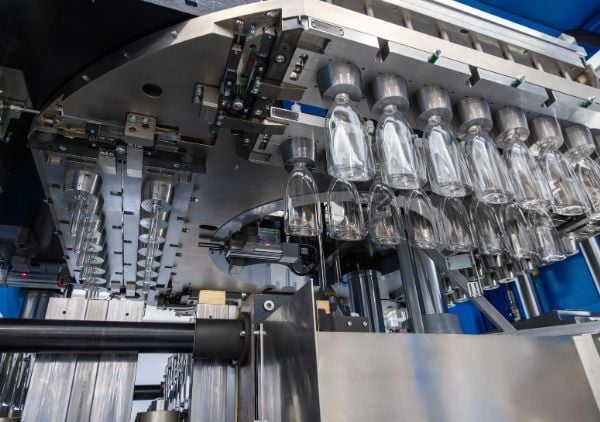
By 2026, the global bottle blowing machine market is expected to witness robust expansion, primarily fueled by increasing demand for high-speed production systems. Bottled water, beverages, pharmaceuticals, and personal care industries are under constant pressure to meet rising consumer demand, particularly in emerging markets across Asia-Pacific, Africa, and Latin America. As a result, manufacturers are investing heavily in high-output stretch blow molding machines capable of producing over 40,000 bottles per hour.
Advanced rotary and linear systems equipped with multi-cavity molds (up to 14 cavities) are becoming the standard in large-scale production facilities. These high-speed machines reduce cycle times through optimized heating, preform handling, and mold cooling systems. Additionally, integration of real-time monitoring and predictive maintenance technologies helps sustain peak efficiency and minimize downtime, further enhancing throughput. The trend toward high-speed production is especially prominent among PET container manufacturers serving the beverage industry, where rapid turnaround and consistent quality are critical competitive advantages.
Energy Saving Technologies: Servo Motor Adoption Accelerates
Energy efficiency has emerged as a key differentiator in the design and selection of bottle blowing machines, with servo motor technology at the forefront of this transformation. By 2026, the majority of new machines are expected to be fully servo-driven or hybrid-electric systems, replacing traditional hydraulic models that consume significantly more energy.
Servo motors offer precise control over clamping, blowing, and ejection processes, reducing energy consumption by up to 50% compared to hydraulic counterparts. This shift is driven not only by operational cost savings but also by growing regulatory pressure and corporate sustainability goals. Regions such as the European Union and North America are implementing stricter energy efficiency standards, pushing manufacturers to adopt greener technologies.
Moreover, servo systems generate less heat and noise, improving working conditions and reducing cooling requirements. Leading OEMs—including Sidel, Krones, and Bekum—are integrating advanced servo-electric platforms with intelligent energy recovery systems, such as regenerative braking and heat recapture from blow processes. These innovations position energy-saving technologies as a core value proposition in the 2026 market landscape.
Automation Level Reaches New Heights
Automation is rapidly reshaping the bottle blowing machine market, with fully integrated smart factories becoming a reality by 2026. The latest systems feature end-to-end automation, including automated preform feeding, in-line quality inspection, robotic handling, and seamless integration with upstream and downstream packaging lines.
Machine learning and AI-powered vision systems now enable real-time defect detection (e.g., wall thickness variation, contamination, or seal flaws), significantly reducing waste and ensuring product consistency. Data from production lines is aggregated into centralized SCADA or MES platforms, enabling remote monitoring, performance analytics, and proactive maintenance scheduling.
Furthermore, Industry 4.0 principles are being applied through IoT-enabled machines that communicate with ERP systems and digital twins for simulation and optimization. This level of automation not only boosts productivity but also reduces reliance on manual labor—addressing growing labor shortages in key manufacturing regions.
As a result, medium- and large-scale producers are increasingly adopting modular, scalable automation solutions that can be customized for specific production needs. By 2026, high automation levels are expected to become the benchmark for competitiveness, particularly in high-cost labor markets and industries requiring stringent hygiene standards, such as pharmaceuticals and food-grade packaging.
In conclusion, the 2026 global bottle blowing machine market will be defined by the convergence of high-speed production, energy-efficient servo technologies, and advanced automation. These trends are not only enhancing operational efficiency and sustainability but also redefining the technological standards of the industry.
Key Quality Verification Points for Bottle Blowing Machine Manufacturers
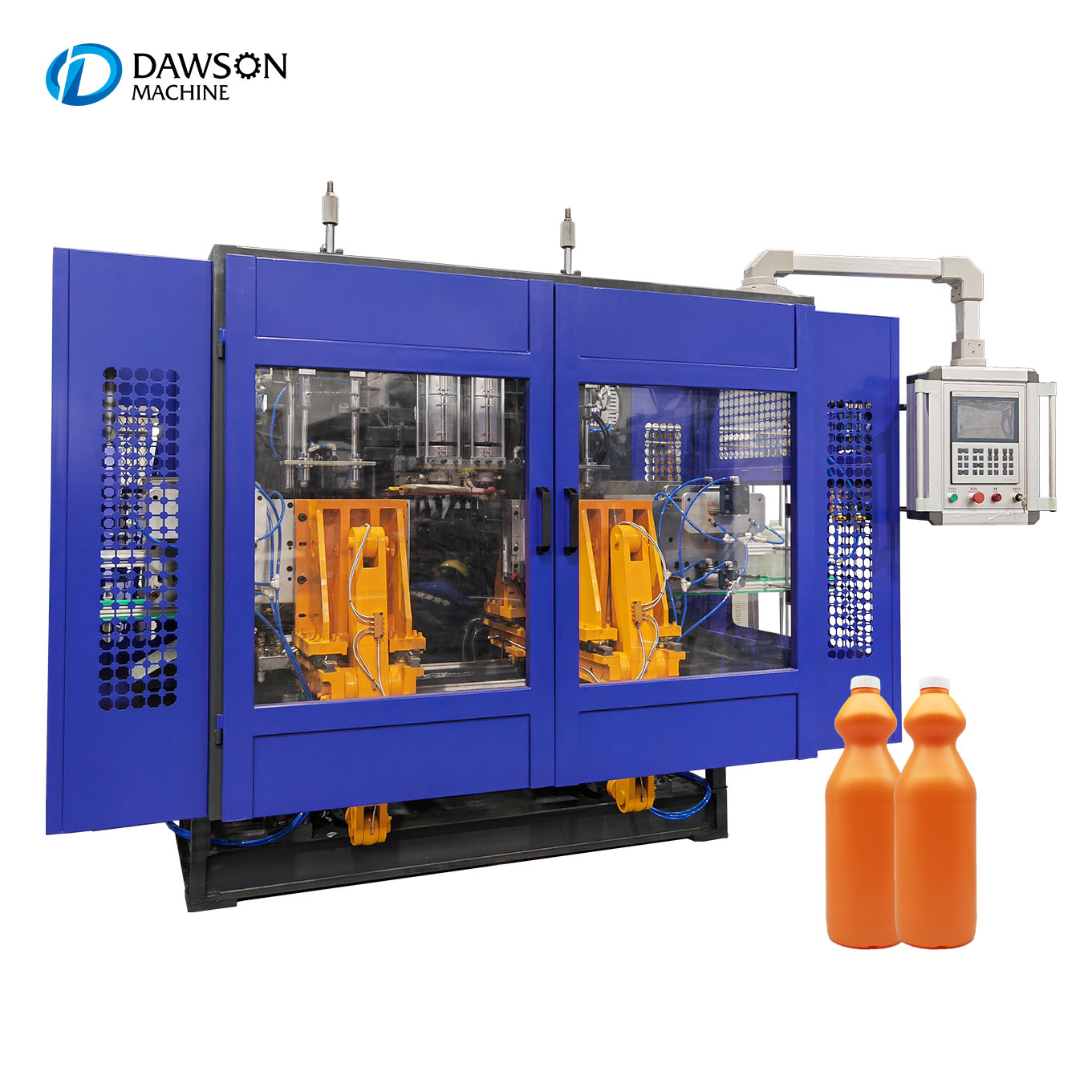
When evaluating a bottle blowing machine manufacturer, assessing quality is critical to ensure long-term performance, reliability, and return on investment. Below are four essential check points to verify:
Материал пресс-формы (алюминий или сталь)
The choice of mold material directly impacts the machine’s durability, production speed, and bottle quality. Verify the following:
- Стальные формы: Preferred for high-volume production due to superior durability, heat resistance, and longer lifespan. Ideal for PET bottles requiring precise dimensional stability.
- Алюминиевые формы: Lighter and offer faster cooling, suitable for prototyping or low-volume runs. However, they wear faster and are less resistant to abrasion.
- Совет по проверке: Request material certifications (e.g., AISI/SAE standards) and inquire about surface treatments (e.g., chrome plating) that enhance wear resistance. Ask for mold life expectancy under normal operating conditions.
Марка ПЛК (Siemens против Mitsubishi)
The Programmable Logic Controller (PLC) is the machine’s brain, affecting automation, reliability, and ease of maintenance.
- ПЛК Siemens: Known for robust performance, global support, and seamless integration with industrial networks. Commonly used in high-end machinery.
- ПЛК Mitsubishi: Offer excellent speed and reliability with strong presence in Asian markets; widely supported and cost-effective.
- Совет по проверке: Confirm the specific PLC model used and check for original factory seals. Ensure the manufacturer provides full programming access and documentation. Prefer OEM-standard brands over generic or unbranded PLCs.
Эффективность времени цикла
Cycle time determines production output and energy efficiency—critical for profitability.
- Бенчмарк: High-quality machines typically achieve cycle times of 8–12 seconds for standard 500ml bottles, depending on configuration.
- Совет по проверке: Request a live demonstration or video of the machine running at full capacity. Measure actual cycle time and compare it with the manufacturer’s claims. Evaluate consistency across multiple cycles and the machine’s ability to maintain performance under continuous operation.
Наличие запасных частей
Timely access to spare parts minimizes downtime and maintenance costs.
- Совет по проверке: Ask the manufacturer for a detailed spare parts list with part numbers and current lead times. Inquire about local distributor support or warehouse presence in your region. Confirm if commonly worn parts (e.g., seals, O-rings, valves) are standardized and readily available globally.
- Лучшая практика: Choose manufacturers who offer spare parts kits and maintenance contracts. Check online forums or user reviews for feedback on after-sales service responsiveness.
By thoroughly evaluating these four areas—mold material, PLC brand, cycle time efficiency, and spare parts availability—you can confidently assess the quality and long-term viability of a bottle blowing machine manufacturer.
Configuration Guide for Bottle Blowing Machine
Выбор номера полости
The cavity number refers to the number of bottles the machine can produce in a single cycle. Selecting the appropriate cavity number depends on your production requirements:
- Однополостные (1-полостные): Ideal for prototyping, small-scale production, or specialty bottles. Offers flexibility but lower output.
- 2 to 4 Cavities: Suitable for medium-volume production. Balances cost, space, and output efficiency.
- 6 to 12 Cavities: Recommended for high-volume production environments such as bottled water or beverage lines.
- 16+ Кариозные полости: Used in large-scale industrial operations requiring maximum throughput.
Соображения:
- Production Volume: Match cavity count to your hourly/daily output needs.
- Available Floor Space: Higher cavity machines require more floor area and robust infrastructure.
- Budget: Higher cavity machines have increased initial investment and maintenance costs.
- Changeover Frequency: Lower cavity machines offer quicker changeover for multiple SKUs.
Диапазон объемов бутылок
The blowing machine must be compatible with the intended bottle sizes. Most machines support a range of volumes, but performance varies at extremes.
- Typical Volume Range:
- Small: 100 ml to 500 ml (e.g., water, juice, personal care)
- Medium: 500 ml to 1.5 L (e.g., carbonated drinks, edible oil)
- Large: 1.5 L to 5 L (e.g., water jugs, home care products)
- Custom: Up to 10+ L (specialized industrial use)
Key Points:
– Verify machine specifications for minimum and maximum volume capabilities.
– Some machines use interchangeable molds and stretch rods to accommodate different volumes.
– Blowing pressure and cycle time may vary across volume ranges—optimize settings accordingly.
Совместимость форм
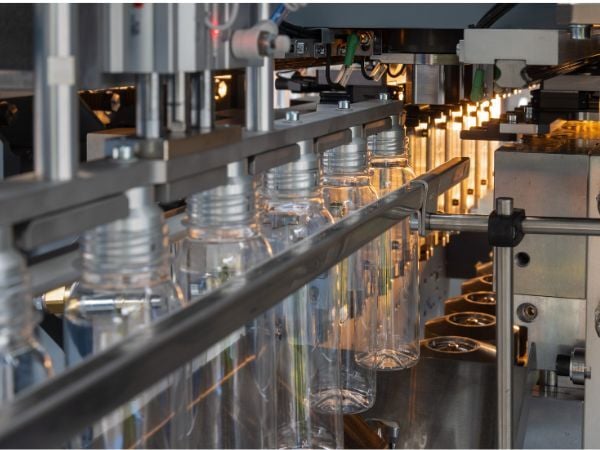
Preform compatibility ensures the machine can properly heat and blow the specific preforms used.
- Типы заготовок:
- Standard PET preforms (most common)
- Lightweight or eco-preforms
- Barrier preforms (e.g., with oxygen scavengers)
- Colored or custom-designed preforms
Compatibility Factors:
- Отделка горловины: Must match the mold and handling system (e.g., 28mm, 38mm PCO, etc.).
- Длина и вес заготовки: Machine must handle the preform dimensions and feed mechanism.
- Совместимость с системами отопления: Infrared oven must uniformly heat the preform wall thickness across the required range.
- Supplier Specifications: Confirm compatibility with preform suppliers’ technical data.
Verification: Always conduct test runs with actual preforms before full-scale production.
Вспомогательное оборудование: Компрессор и чиллер
Auxiliary systems are critical for stable and efficient operation of the bottle blowing machine.
Воздушный компрессор
- Цель: Supplies high-pressure, clean, dry air for the blowing process (typically 25–40 bar).
- Требования:
- Вместимость: Sized to meet peak air demand (CFM or m³/min) of the machine.
- Давление: Must deliver consistent pressure; use a high-pressure booster if needed.
- Качество воздуха: Must include filtration and drying systems to prevent moisture and oil contamination (ISO 8573-1 Class 1-2-1 recommended).
- Хранение: Include air receiver tanks to buffer pressure fluctuations.
Chiller (Process Cooling Unit)
- Цель: Охлаждение пресс-форм и деталей машин для поддержания стабильности размеров и постоянства цикла.
- Требования:
- Мощность охлаждения: Sized based on cavity count and cycle speed (typically 1–10+ RT).
- Контроль температуры: Maintain mold temperature between 10–15°C for optimal PET crystallization and cooling.
- Скорость потока и давление: Ensure sufficient coolant flow (GPM or L/min) and pressure to all mold circuits.
- Качество воды: Use treated, low-conductivity water to prevent scaling and corrosion.
Советы по интеграции:
– Install dedicated compressors and chillers for blowing machines to avoid interference with other plant systems.
– Use variable frequency drives (VFDs) on chillers and compressors for energy efficiency.
– Regular maintenance of auxiliary equipment is essential to prevent downtime.
In conclusion, sourcing a bottle blowing machine manufacturer from China offers a compelling combination of advanced technology, competitive pricing, and scalable production capacity. However, to ensure long-term operational efficiency and minimize downtime, it is critical to prioritize manufacturers that provide a comprehensive Factory Acceptance Test (FAT) and robust spare parts support. The FAT serves as a vital quality checkpoint, allowing buyers to verify machine performance, safety, and compliance with technical specifications before shipment, thereby reducing the risk of post-delivery issues. Equally important is reliable access to genuine spare parts and responsive after-sales service, which are essential for maintaining machine uptime and prolonging equipment lifespan. By selecting a manufacturer that excels in both FAT transparency and spare parts availability, businesses can secure a reliable, high-performing solution that supports sustained production goals and delivers lasting value on their investment.






