
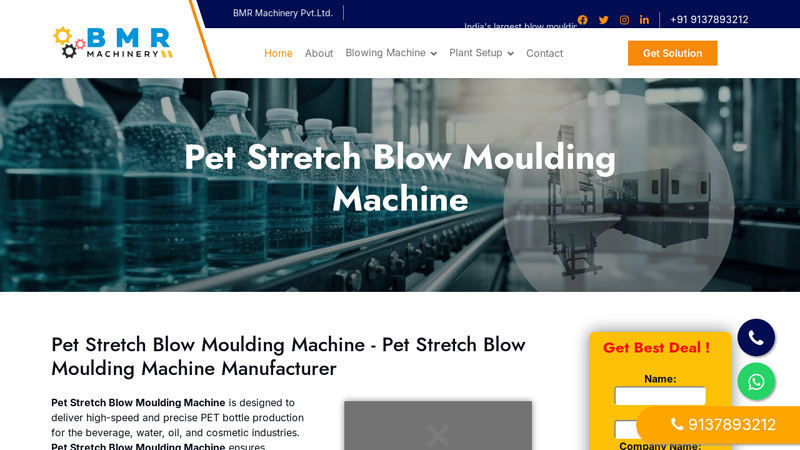
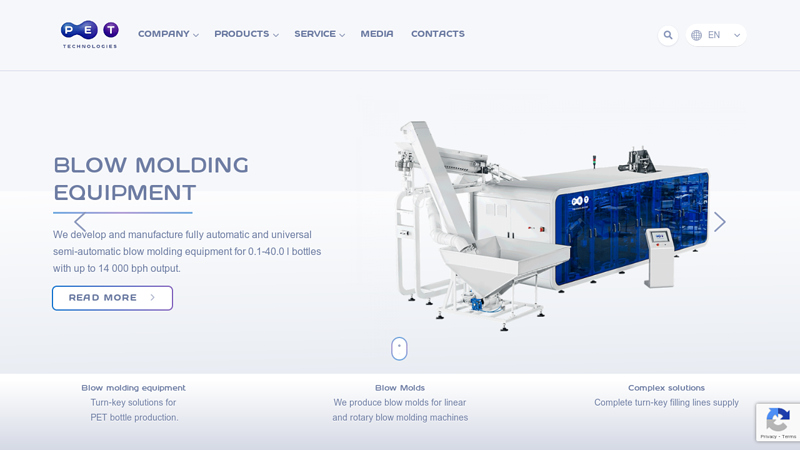
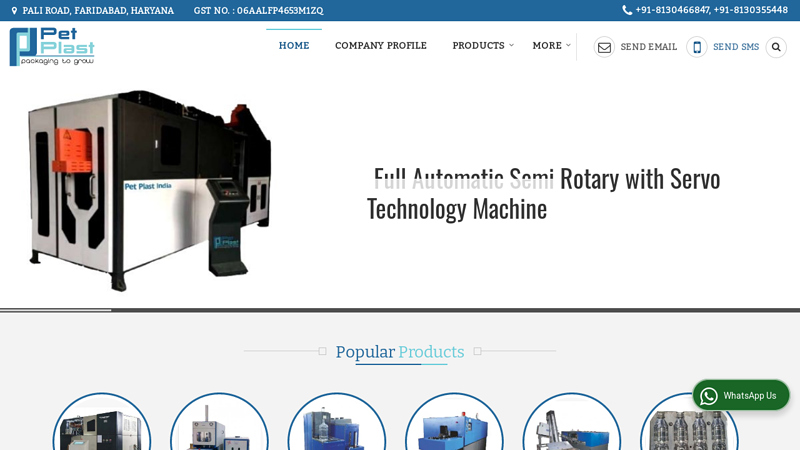
As global demand for PET bottles continues to rise across the beverage, food, and personal care industries, manufacturers are increasingly prioritizing high-efficiency, automated bottling solutions. In response, fully and semi-automatic PET bottle blowing machines have become critical investments—offering precision, speed, and scalability to meet evolving production needs. With automation driving productivity and consistency, sourcing the right machinery partner is more strategic than ever. This 2026 audit list highlights the top eight manufacturers leading innovation in semi and fully automatic blowing technology, delivering reliable performance and advanced features tailored for modern bottling operations.
Top 8 Fully & Semi Automatic Pet Bottle Blowing Machine Manufacturers (2026 Audit List)
(Ранжировано по показателю производственных возможностей и доверия)
Professional Sourcing Guide: Fully & Semi Automatic Pet Bottle Blowing Machine
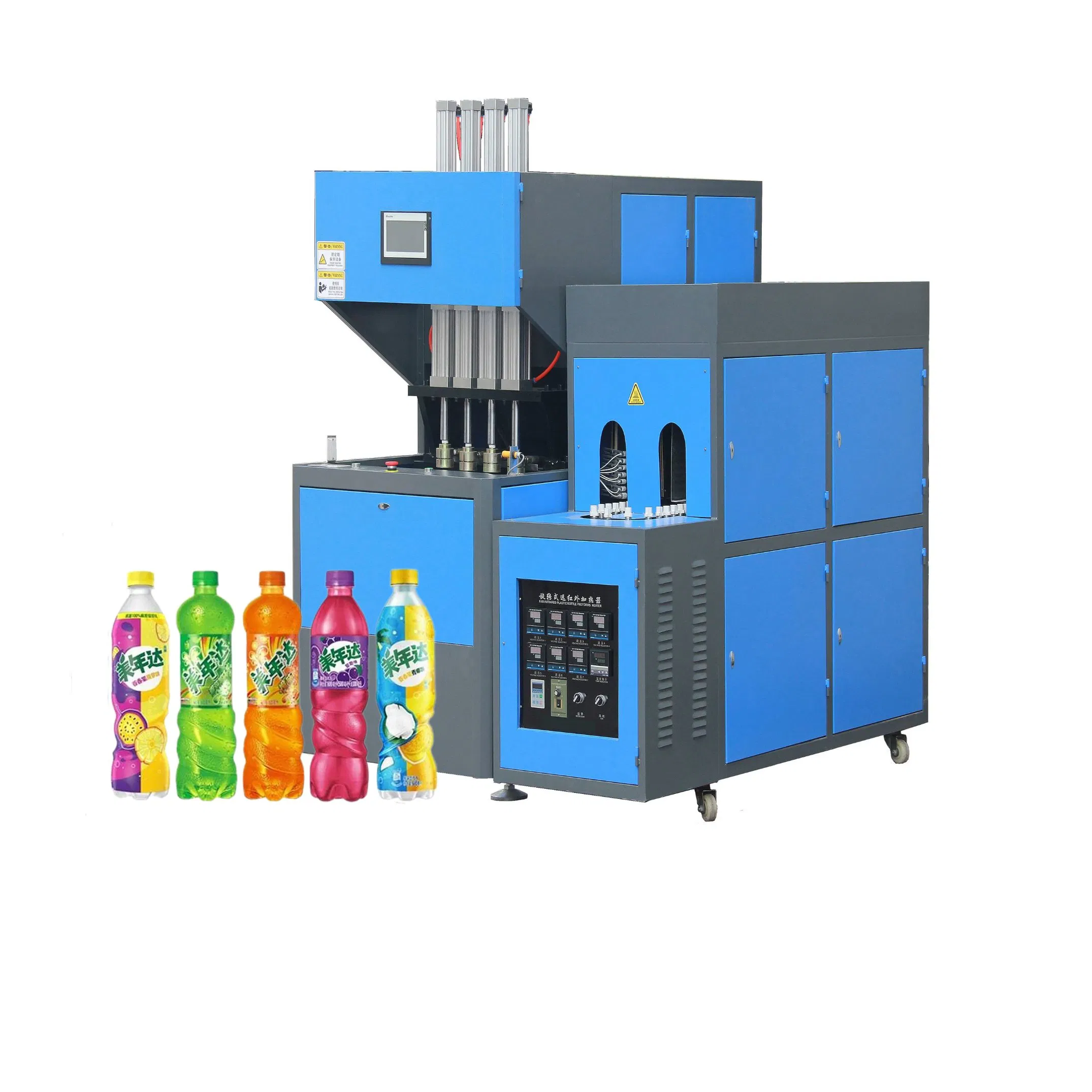
2026 Global Market Trends for Fully & Semi-Automatic Pet Bottle Blowing Machines
Высокоскоростное производство: Повышение эффективности и производительности
By 2026, high-speed production remains a dominant trend in the global market for fully and semi-automatic PET bottle blowing machines. Manufacturers across the beverage, food, pharmaceutical, and personal care industries are increasingly demanding equipment capable of higher output to meet rising global consumption and reduce unit production costs.
Modern fully automatic systems are achieving output rates exceeding 30,000 bottles per hour for standard 500ml containers, with advanced models reaching up to 72,000 bottles per hour. This surge in speed is achieved through innovations such as multi-cavity molds, rapid preform handling, and optimized heating and blowing cycles. For instance, rotary stretch blow molding machines with 12 to 24 cavities are being widely adopted in large-scale bottling plants.
Semi-automatic machines, while slower, are also evolving to support higher throughput—typically ranging from 2,000 to 10,000 bottles per hour—making them ideal for small to medium enterprises (SMEs) and niche markets. The trend toward modular designs allows manufacturers to scale up production incrementally, aligning with budget and demand fluctuations.
High-speed production is also being supported by intelligent process control systems that monitor and adjust parameters in real time, minimizing downtime and maximizing uptime. As competition intensifies, particularly in emerging markets, speed-to-market and production agility will remain key competitive differentiators.
Energy Saving Technologies: Servo Motor Integration and Efficiency Gains
Energy efficiency has become a critical performance metric in the design and operation of PET bottle blowing machines, with servo motor technology leading the charge in reducing energy consumption. By 2026, the integration of servo-driven systems across both fully and semi-automatic machines is expected to dominate the market, driven by environmental regulations, rising energy costs, and corporate sustainability goals.
Servo motors offer precise control over motion and pressure, significantly reducing energy waste compared to traditional hydraulic or pneumatic systems. Machines equipped with servo motors can achieve energy savings of up to 30–50%, particularly during idle cycles and high-speed operations. This efficiency translates into lower operational costs and reduced carbon footprints, which are increasingly important for end-users seeking green certifications.
Leading manufacturers such as Sidel, Krones, and SIPA are incorporating servo-electric drive systems across their high-end models. Additionally, advancements in regenerative braking and heat recovery systems are further enhancing energy performance. For semi-automatic machines targeting cost-sensitive markets, hybrid systems combining servo and pneumatic technologies offer a balanced solution, improving energy efficiency without drastically increasing upfront costs.
Governments and international bodies are expected to tighten energy performance standards by 2026, accelerating the adoption of energy-saving technologies. As a result, machines without servo-driven components may face market disadvantages, particularly in Europe and North America.
Automation Level: Advancing Toward Smart and Integrated Manufacturing
The level of automation in PET bottle blowing machines is undergoing a transformative shift, with the 2026 market poised for widespread adoption of smart, connected, and highly integrated systems. Fully automatic machines are increasingly equipped with Industry 4.0 capabilities, including IoT connectivity, predictive maintenance, and real-time data analytics.
Modern systems feature automated preform feeding, in-line quality inspection (using AI-powered vision systems), and seamless integration with upstream and downstream lines (such as fillers and labelers). This end-to-end automation minimizes human intervention, reduces labor costs, and improves consistency and quality. For example, automated reject handling and self-diagnostics reduce downtime and ensure continuous production.
Semi-automatic machines are also advancing, incorporating semi-automated features such as programmable logic controllers (PLCs), touch-screen interfaces, and remote monitoring. While not fully autonomous, these enhancements improve usability and reliability, making them suitable for operations transitioning toward full automation.
By 2026, cloud-based fleet management platforms will enable operators to monitor multiple machines across geographies, optimizing maintenance schedules and production planning. The integration of digital twins—virtual replicas of physical machines—will further enhance predictive analytics and training efficiency.
As labor availability declines in key markets and operational complexity increases, the demand for higher automation levels will continue to grow. Manufacturers investing in smart automation will gain significant advantages in productivity, flexibility, and responsiveness to market demands.
Заключение
The 2026 global market for fully and semi-automatic PET bottle blowing machines is being reshaped by three pivotal trends: high-speed production, energy-saving servo motor technologies, and escalating automation levels. These advancements are driven by the need for greater efficiency, sustainability, and competitiveness in a rapidly evolving packaging landscape. Companies that embrace these innovations will be best positioned to lead in an increasingly digital and eco-conscious market.
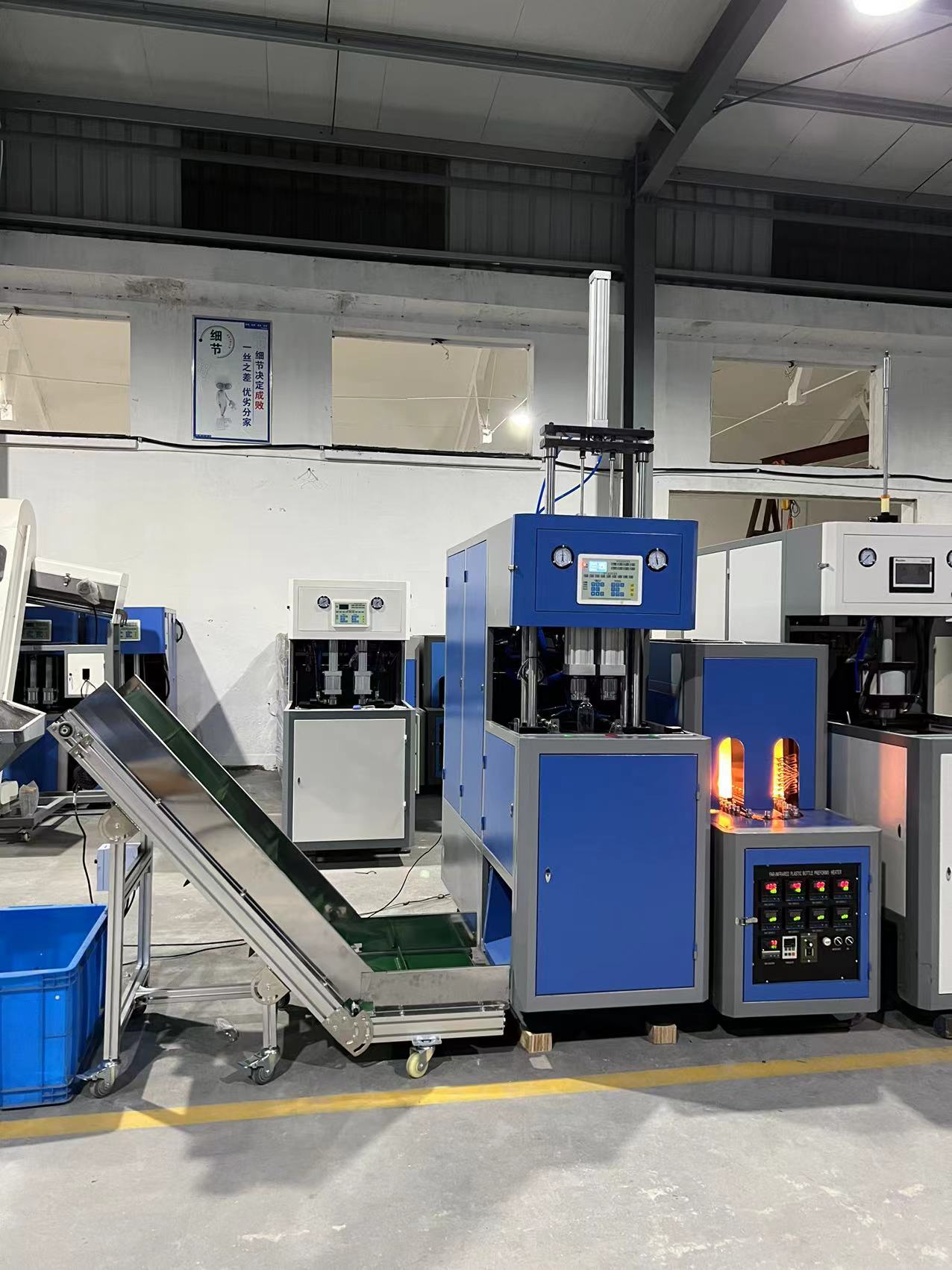
Quality Verification for Fully & Semi-Automatic PET Bottle Blowing Machine Manufacturers
When selecting a manufacturer for Fully or Semi-Automatic PET Bottle Blowing Machines, verifying quality is crucial. Focus on these key check points:
Материал пресс-формы (алюминий или сталь)
Evaluate the mold construction material, as it directly impacts durability, heat transfer, and cost:
* Steel Molds: Preferred for high-volume production due to superior durability, wear resistance, and longer lifespan. Ensure the manufacturer uses high-grade tool steel (e.g., P20, H13) with proper hardening and surface treatment.
* Aluminum Molds: Suitable for prototypes, short runs, or low-volume production. They offer faster cooling but are less durable. Verify the specific aluminum alloy used (e.g., 7075-T6) and surface coating (e.g., hard anodizing) for wear resistance.
* Verification: Request material certifications, inspect sample molds if possible, and confirm machining precision and surface finish specifications.
Марка ПЛК (Siemens против Mitsubishi)
The PLC (Programmable Logic Controller) is the machine’s brain; brand choice affects reliability and support:
* Siemens & Mitsubishi: Industry leaders offering robust, reliable, and widely supported PLCs. Their global service networks simplify troubleshooting and spare parts procurement.
* Verification: Confirm the exact PLC model number used (e.g., Siemens S7-1200, Mitsubishi FX5U) in the machine specification. Avoid generic or unbranded PLCs. Request documentation showing the PLC configuration and software platform.
Эффективность времени цикла
Cycle time determines production output and directly impacts operational costs:
* Specification vs. Reality: Verify the manufacturer’s claimed cycle time (seconds per bottle) under real-world conditions, not just ideal lab settings. Ask for test reports or video evidence from machines running your specific bottle size/shape.
* Consistency: Ensure the cycle time includes the complete process (preform loading, heating, blowing, ejection). Inquire about stability over extended runs and factors affecting it (e.g., bottle design, air pressure, preform temperature).
* Verification: Request independent performance test data or conduct an on-site trial with your preforms and target bottle. Compare actual output against the quoted cycle time.
Наличие запасных частей
Timely access to spare parts minimizes downtime and ensures long-term machine reliability:
* Local Stock: Confirm if the manufacturer or their authorized distributor maintains a local inventory of critical wear parts (seals, valves, sensors, heaters, oven components, mold parts).
* Global Support: For non-local suppliers, verify the lead time for essential spare parts shipping and the existence of a responsive technical support team.
* Documentation: Ensure comprehensive spare parts lists (with OEM part numbers where applicable) and easy-to-follow maintenance manuals are provided.
* Verification: Ask for a detailed list of commonly replaced parts, their estimated lifespan, and current stock/availability. Inquire about the process and typical lead time for ordering parts.
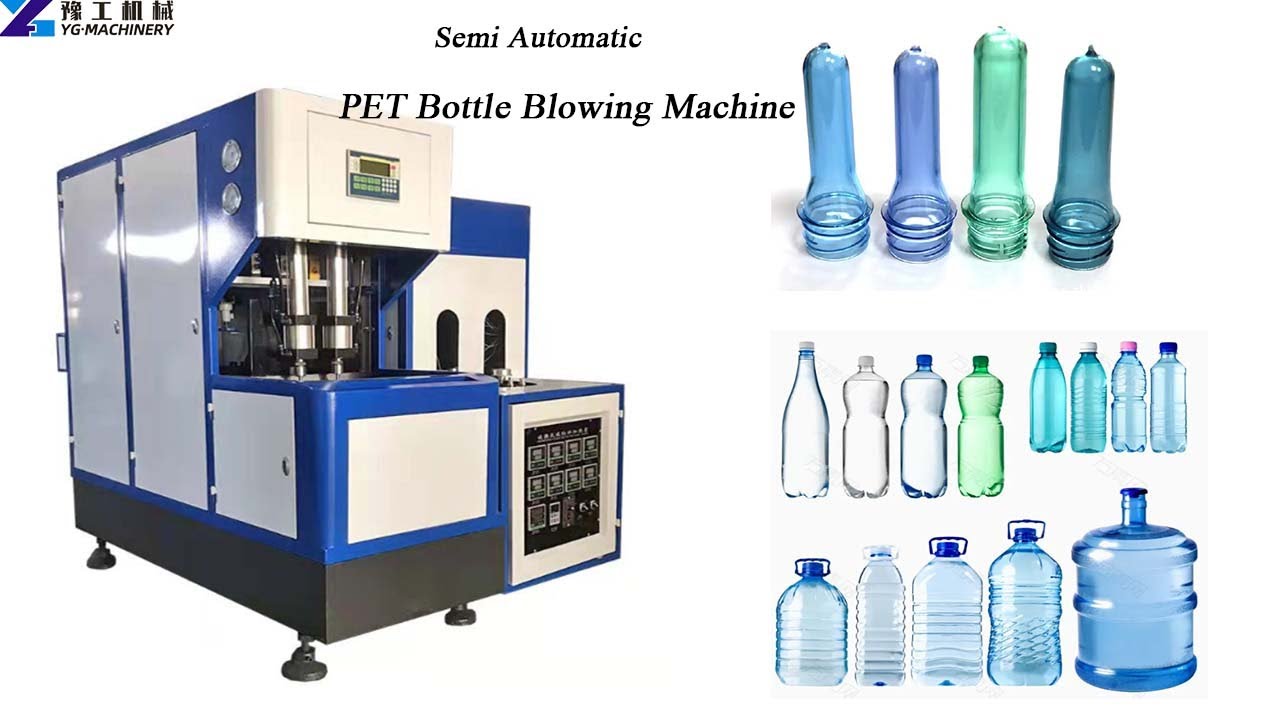
Configuration Guide for Fully & Semi Automatic Pet Bottle Blowing Machine
Выбор номера полости
The cavity number refers to the number of bottles that can be produced simultaneously in one cycle of the PET bottle blowing machine. Selecting the appropriate cavity count is crucial for matching production capacity with demand.
- Single Cavity (1-Cavity): Ideal for small-scale production, prototyping, or laboratories where output requirements are low. Suitable for testing new bottle designs.
- 2 to 4 Cavities: Recommended for medium production volumes, such as local beverage brands or contract bottlers producing multiple SKUs with moderate demand.
- 6 to 12 Cavities: Commonly used in high-volume operations like water, juice, or carbonated soft drink (CSD) bottling plants. Offers good balance between productivity and machine footprint.
- 16+ Кариозные полости: Designed for large-scale industrial applications with continuous high-output demands. Requires robust auxiliary systems and significant factory space.
Соображения:
– Higher cavity numbers increase output but also require larger compressors, chillers, and maintenance efforts.
– Match cavity selection with preform supply capacity and downstream packaging line speed.
Диапазон объемов бутылок
PET blowing machines are designed to handle a specific range of bottle volumes. Ensure the machine is compatible with your intended product portfolio.
- Small Volume (50ml – 500ml): Commonly used for energy drinks, pharmaceuticals, or sample bottles. Requires precise control over stretch rod speed and pressure.
- Medium Volume (500ml – 1.5L): Standard range for water, soft drinks, and juice bottles. Most machines are optimized for this range.
- Large Volume (1.5L – 5L+): Used for family-size or bulk packaging. Requires higher air pressure and longer blow cycles.
Гибкость машины:
– Choose a machine with interchangeable molds and adjustable stretch rods to support multiple bottle sizes.
– Verify the machine’s minimum and maximum mold height and diameter specifications.
Совместимость форм
Preform compatibility ensures that the PET preforms used can be properly loaded, heated, and blown in the machine.
- Отделка горловины: Confirm compatibility with standard neck finishes such as PCO 1881, 38mm, 28mm, 18mm, etc. The machine’s neck holder (chopper) must match the preform finish.
- Preform Weight & Wall Thickness: Machines must support the required preform weight (grams) and wall distribution to ensure proper stretching and blowing.
- Preform Supplier Consistency: Use preforms from reliable suppliers with consistent dimensions and material quality (e.g., intrinsic viscosity IV ≥ 0.80 dl/g).
- Совместимость с системами отопления: Infrared lamp zoning should be adjustable to suit different preform lengths and diameters for uniform heating.
Примечание: Fully automatic machines often include preform feeding systems (e.g., vacuum loaders), while semi-automatic models may require manual preform insertion.
Вспомогательное оборудование: Компрессор и чиллер
Auxiliary systems are critical for stable and efficient operation of PET bottle blowing machines.
Air Compressor Requirements
- Давление: Minimum 30–40 bar (435–580 psi) for high-pressure blowing.
- Воздушный поток: Typically 0.8–2.5 Nm³/min per cavity, depending on bottle size and cycle time.
- Качество воздуха: Must be clean, dry, and oil-free (ISO 8573-1 Class 1 or 2) to prevent contamination and valve clogging.
- Receiver Tank: Use a high-pressure storage tank (≥1000L) to buffer pressure fluctuations.
Рекомендация: Use a two-stage compressor with refrigerated and desiccant dryers for consistent air supply.
Требования к чиллерам
- Мощность охлаждения: 1–3 kW per cavity (e.g., 12 kW for a 6-cavity machine).
- Контроль температуры: Maintain mold temperature between 8°C–15°C for optimal crystallization and cycle time.
- Скорость потока: 2–4 L/min per cavity with a closed-loop system to prevent scaling and corrosion.
- Coolant: Use water-glycol mix in cold environments to prevent freezing.
Совет: Integrate the chiller with the machine’s control system for real-time monitoring and energy efficiency.
Заключение: Proper configuration of cavity number, bottle volume range, preform compatibility, and auxiliary equipment ensures reliable, high-quality production and maximizes return on investment. Always consult with the machine manufacturer for application-specific recommendations.
In conclusion, sourcing fully and semi-automatic pet bottle blowing machines from China offers a compelling combination of advanced technology, cost-efficiency, and scalability for beverage and packaging enterprises worldwide. Chinese manufacturers have established a strong reputation for delivering high-quality, reliable machinery that meets international standards. However, to ensure seamless integration and long-term operational success, two critical factors must be prioritized: Factory Acceptance Testing (FAT) and comprehensive spare parts support.
Conducting a thorough FAT before shipment is essential to verify machine performance, precision, and compliance with technical specifications under real operating conditions. This not only minimizes the risk of post-delivery issues but also ensures that the machine functions optimally from day one. Buyers are strongly encouraged to either attend the FAT in person or engage a trusted third-party inspector to witness the test and validate results.
Equally important is establishing a robust spare parts support system. Given the continuous operation demands of bottling lines, quick access to genuine spare parts significantly reduces downtime and maintenance costs. When sourcing from China, it is crucial to confirm that the supplier provides a detailed spare parts list, maintains adequate inventory, and offers responsive after-sales service, including prompt shipping and technical assistance.
By emphasizing FAT validation and securing reliable spare parts availability, businesses can maximize machine uptime, extend equipment lifespan, and achieve a strong return on investment. With the right due diligence and supplier partnership, sourcing pet bottle blowing machines from China becomes not only a cost-effective decision but a strategic advantage in building a resilient and efficient production line.






