
As demand for high-speed, energy-efficient bottling solutions continues to rise across the beverage, pharmaceutical, and personal care industries, automation has become a strategic imperative. Full servo bottle blowing machines are at the forefront of this shift, offering precise control, reduced energy consumption, and minimized downtime. With the global push toward smart manufacturing and sustainable production, sourcing from reliable, innovative manufacturers is more critical than ever. This 2026 audit highlights the top four full servo bottle blowing machine manufacturers excelling in performance, technology integration, and after-sales support—key partners for businesses aiming to optimize their bottling lines.
Os 4 principais fabricantes de máquinas de sopro de garrafas Full Servo (lista de auditoria de 2026)
(Classificado por Capacidade de Produção e Pontuação de Confiança)
Professional Sourcing Guide: Full Servo Bottle Blowing Machine
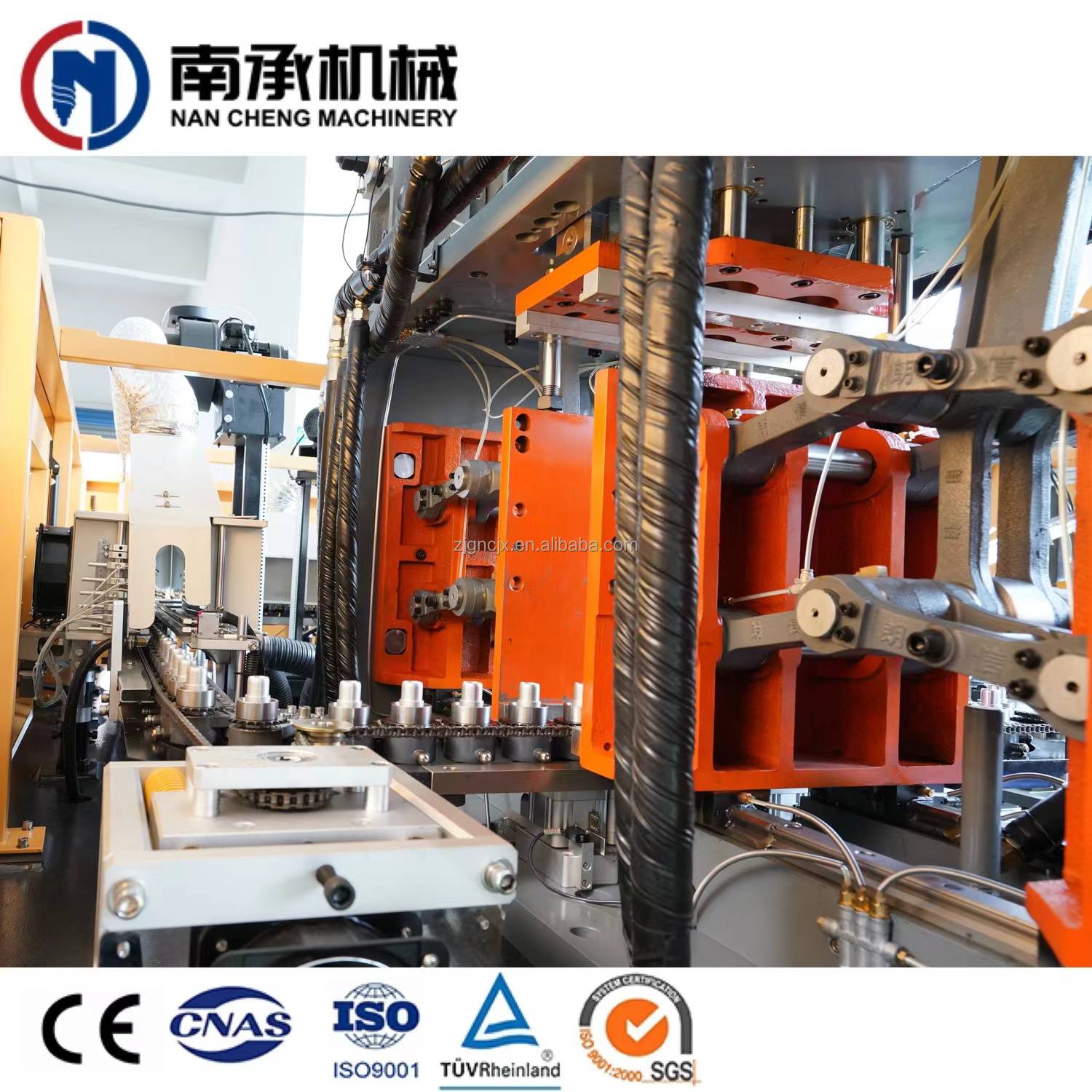
2026 Global Market Trends for Full Servo Bottle Blowing Machines
High-Speed Production Driving Market Growth
The global demand for full servo bottle blowing machines is set to surge by 2026, with high-speed production capabilities serving as a primary growth driver. Manufacturers across the beverage, pharmaceutical, and personal care sectors are increasingly prioritizing output efficiency to meet rising consumer demand and reduce time-to-market.
Modern full servo systems are now capable of producing over 20,000 bottles per hour on high-capacity models, with some advanced lines reaching up to 30,000 bottles per hour. This leap in speed is enabled by precise servo-controlled preform feeding, stretch rod movement, and mold actuation, reducing cycle times significantly compared to older hydraulic or hybrid systems.
The Asia-Pacific region, particularly China and India, is expected to lead adoption due to expanding packaged beverage markets and increasing investments in smart manufacturing. In Europe and North America, high-speed machines are being integrated into flexible production lines that support rapid product changeovers—crucial for meeting the demands of private-label and specialty beverage producers.
Advancements in Energy-Saving Technologies: The Role of Servo Motors
Energy efficiency is a critical factor shaping the 2026 market landscape for full servo bottle blowing machines. Servo motor technology has emerged as a cornerstone of energy-saving innovations, offering up to 40–60% reduction in energy consumption compared to traditional hydraulic systems.
Full servo machines use electric servos for all primary motions—clamping, blowing, stretching, and ejection—eliminating hydraulic oil systems and associated energy losses. Regenerative braking systems in advanced servos further enhance efficiency by recovering and reusing energy during deceleration phases.
Manufacturers are incorporating smart energy management systems that dynamically adjust motor power based on production load, ambient conditions, and bottle specifications. This adaptability ensures optimal energy use across varying production schedules, contributing to lower operational costs and reduced carbon footprints.
Regulatory pressures and corporate sustainability goals are accelerating adoption. For instance, the EU’s Green Deal and similar initiatives in Japan and South Korea are incentivizing manufacturers to upgrade to energy-efficient equipment. As a result, full servo machines are projected to capture over 65% of new installations by 2026, particularly in energy-sensitive markets.
Rising Automation Levels and Integration with Industry 4.0
Automation is transforming the full servo bottle blowing machine market, with 2026 trends highlighting a shift toward fully integrated, intelligent production ecosystems. These machines are no longer standalone units but key components of smart factories leveraging IoT, AI-driven analytics, and real-time monitoring.
Modern systems feature automated preform loaders, self-diagnostics, predictive maintenance alerts, and seamless integration with upstream/downstream equipment (e.g., injection molding, labeling, and packing machines). This level of automation reduces labor requirements, minimizes human error, and ensures consistent product quality.
Leading manufacturers are offering machines with built-in SCADA systems and cloud connectivity, enabling remote monitoring and centralized control across multiple production sites. AI-powered software analyzes production data to optimize machine settings, detect anomalies, and suggest maintenance schedules—boosting uptime and overall equipment effectiveness (OEE).
The push for automation is especially strong in labor-constrained regions like Germany, Japan, and the U.S., where manufacturers aim to maintain competitiveness through digital transformation. By 2026, over 70% of new full servo installations are expected to include advanced automation and Industry 4.0-ready features, positioning these machines at the forefront of next-generation packaging solutions.
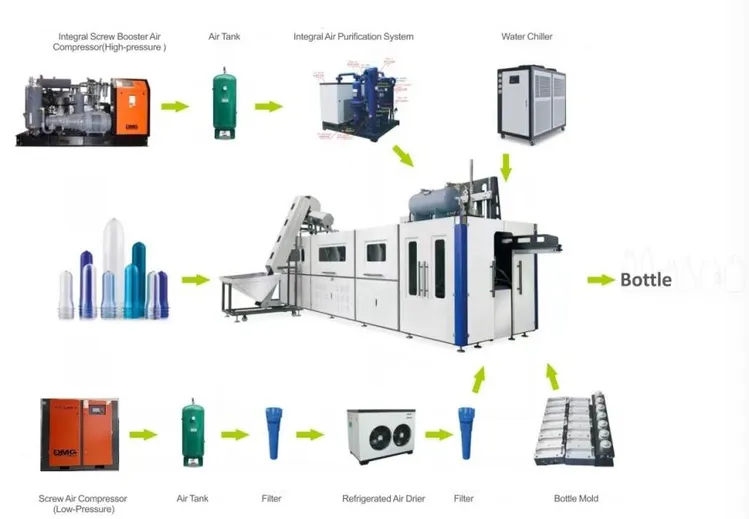
Key Quality Verification Points for Full Servo Bottle Blowing Machine Manufacturers
When evaluating a Full Servo Bottle Blowing Machine manufacturer, verifying quality is essential for long-term performance and reliability. Focus on the following critical check points:
Material do molde (Alumínio vs. Aço)
Assess the type of mold material used, as it directly impacts durability, production volume, and maintenance:
- Moldes de aço: Preferred for high-volume production due to superior durability, resistance to wear, and longer lifespan. Ideal for PET bottles requiring precise dimensional stability.
- Moldes de alumínio: Lighter and offer faster cooling, suitable for prototypes or low-volume runs. However, they are less durable and more prone to damage.
- Sugestão de verificação: Request material certification (e.g., ISO or ASTM) and inspect mold hardness ratings (e.g., HRC for steel). Ensure the manufacturer offers steel molds as standard for industrial use.
Marca de PLC (Siemens vs. Mitsubishi)
The PLC (Programmable Logic Controller) is the machine’s control center—its brand reflects system reliability and serviceability:
- PLCs Siemens: Known for robust performance, excellent diagnostics, and global technical support. Widely used in high-end machinery.
- PLCs Mitsubishi: Also reliable with strong integration capabilities and good availability of engineers worldwide.
- Sugestão de verificação: Confirm the exact PLC model and firmware version. Ask for system interface screenshots and check if the manufacturer provides full programming access and documentation. Ensure spare modules are available locally.
Eficiência do tempo de ciclo
Cycle time directly affects production output and energy consumption:
– Request documented cycle time data for standard bottle sizes (e.g., 500ml PET bottle).
– Compare claimed cycle times with actual field performance—ask for video demonstrations or customer references.
– Evaluate energy recovery systems and servo drive responsiveness, which influence consistent cycle performance.
- Sugestão de verificação: Conduct a live trial or request third-party performance reports. Ensure cycle time includes preform loading, blowing, and ejection phases.
Disponibilidade de peças sobressalentes
Timely access to spare parts minimizes downtime and ensures continuous operation:
– Confirm the manufacturer maintains a comprehensive inventory of critical components (e.g., stretch rods, sealing rings, servo motors, molds).
– Ask about lead times for key spare parts and whether they have regional warehouses or distribution partners.
– Check if parts are standardized (e.g., using off-the-shelf bearings or valves) to reduce dependency on OEMs.
- Sugestão de verificação: Request a full spare parts list with part numbers and pricing. Evaluate after-sales service response time and availability of technical support engineers.
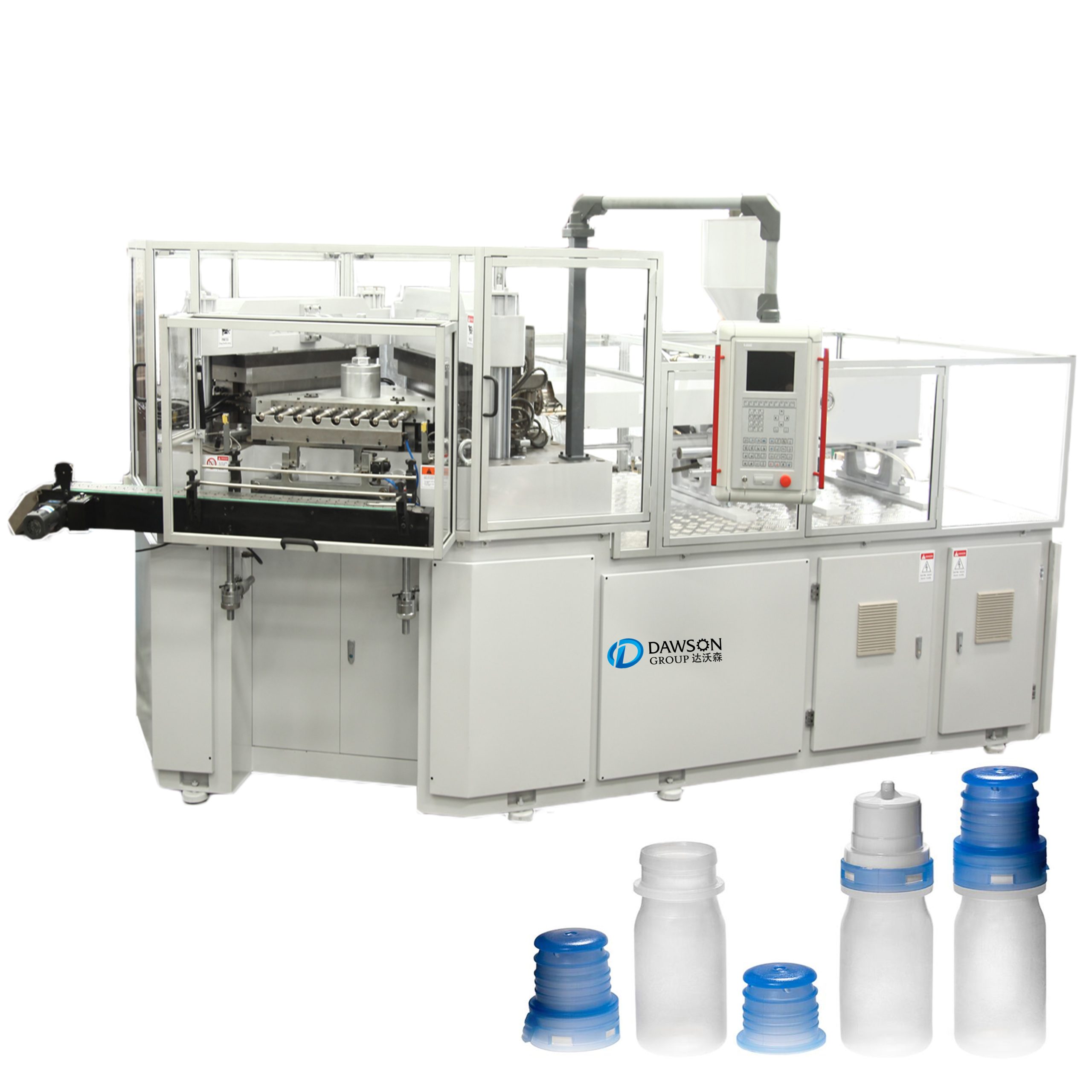
Configuration Guide for Full Servo Bottle Blowing Machine
Seleção do número da cavidade
The cavity number determines the machine’s output capacity and should be selected based on your production requirements. Full servo bottle blowing machines are typically available in configurations ranging from 1 to 12 cavities.
- 1–4 Cavities: Ideal for small-scale production, R&D facilities, or pilot runs. Offers flexibility and lower initial investment.
- 6–8 Cavities: Suitable for medium-volume production, providing a balance between output and machine footprint.
- 10–12 Cavities: Designed for high-volume manufacturing, maximizing throughput for commercial bottling lines.
Consider factors such as desired output (bottles per hour), available floor space, and line integration when selecting the cavity count. Higher cavity machines require more robust auxiliary systems and consistent preform feeding.
Gama de volumes de garrafas
Full servo blowing machines support a wide range of bottle volumes, typically from 50 ml to 5,000 ml, depending on the model and configuration.
- Small Bottles (50–500 ml): Commonly used for water, beverages, and personal care products. Requires precision in stretch rod control and low-pressure blowing.
- Medium Bottles (500–2,000 ml): Standard for bottled water, soft drinks, and edible oils. Optimized cycle times and energy efficiency are critical.
- Large Bottles (2,000–5,000 ml): Used for bulk water, industrial containers, and household chemicals. Requires higher air pressure and extended blowing cycles.
Ensure the machine model is rated for your target bottle volume. Adjustable mold bases and servo-driven stretch rods allow flexibility across volume ranges within the machine’s specifications.
Compatibilidade de pré-formas
Preform compatibility is essential for seamless operation. The machine must accommodate the following preform characteristics:
- Acabamento do braço: Standardized neck sizes (e.g., PCO 1881, 26 mm, 38 mm) must match the machine’s mold and handling system.
- Peso e comprimento da pré-forma: The servo-driven loader and gripping system must be adjustable to handle various preform dimensions.
- Material Type: Designed primarily for PET (Polyethylene Terephthalate), including virgin and recycled (rPET) materials. Confirm thermal stability and crystallization requirements.
- Preform Oven Compatibility: Infrared oven settings must be configurable for different preform wall thicknesses and colors to ensure uniform heating.
Verify preform specifications with machine manufacturers to ensure compatibility and optimal blowing performance.
Auxiliary Equipment (Compressor / Chiller)
Proper auxiliary equipment is critical for stable and efficient operation of full servo blowing machines.
Compressor de ar
- Requirement: Clean, dry, oil-free compressed air at 25-40 bar (depending on bottle size and output).
- Capacidade: Minimum 0.6–1.2 m³/min per cavity. Total air demand increases with cavity count and cycle speed.
- Qualidade do ar: Must meet ISO 8573-1 Class 1 or better to prevent contamination and ensure valve longevity.
- Recomendação: Use a refrigerated or desiccant air dryer and filtration system upstream of the machine.
Chiller (Sistema de arrefecimento)
- Objetivo: Cools molds and high-pressure air to ensure consistent bottle quality and dimensional stability.
- Capacidade: Typically 1–3 kW per cavity; total capacity depends on machine size and ambient conditions.
- Temperature Range: Maintain mold temperature between 8-15°C for optimal cycle time and crystallization control.
- Meio de arrefecimento: Deionized water or water-glycol mix to prevent scaling and corrosion.
- Caudal: Ensure adequate flow (e.g., 5–10 L/min per cavity) with stable pressure.
Integrate the compressor and chiller with the machine’s control system for synchronized operation, energy efficiency, and real-time monitoring.
In conclusion, sourcing a full servo bottle blowing machine from China offers a compelling combination of advanced technology, cost efficiency, and scalability for modern production needs. However, ensuring a successful investment hinges on key factors such as rigorous quality validation and long-term operational support. Conducting a comprehensive Factory Acceptance Test (FAT) is essential to verify the machine’s performance, precision, and compliance with technical specifications before shipment. A well-documented FAT not only minimizes potential risks but also ensures that the equipment operates reliably upon installation. Equally critical is the availability of prompt and consistent spare parts support. Partnering with reputable Chinese manufacturers who provide genuine spare parts, technical documentation, and responsive after-sales service ensures minimal downtime and sustained machine efficiency. By prioritizing suppliers that offer thorough FAT procedures and reliable spare parts access, companies can secure a high-performing, durable solution that supports long-term productivity and operational excellence in their bottling operations.






