
As demand for sustainable, high-speed packaging escalates across the FMCG sector, manufacturers are turning to advanced blow molding solutions to streamline detergent bottle production. With rising emphasis on automation, energy efficiency, and precision engineering, selecting the right machinery partner is critical for maintaining competitive advantage. This 2026 audit highlights the top four detergent bottle blow molding machine manufacturers excelling in innovation, reliability, and integrated automation—key drivers shaping the future of industrial-scale bottling operations.
Os 4 principais fabricantes de máquinas de moldagem por sopro para garrafas de detergente (lista de auditoria de 2026)
(Classificado por Capacidade de Produção e Pontuação de Confiança)
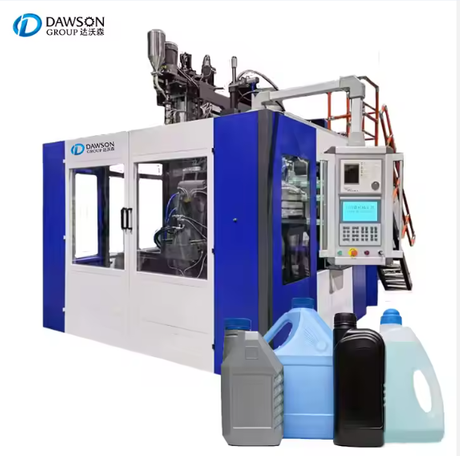

Professional Sourcing Guide: Detergent Bottle Blow Molding Machine
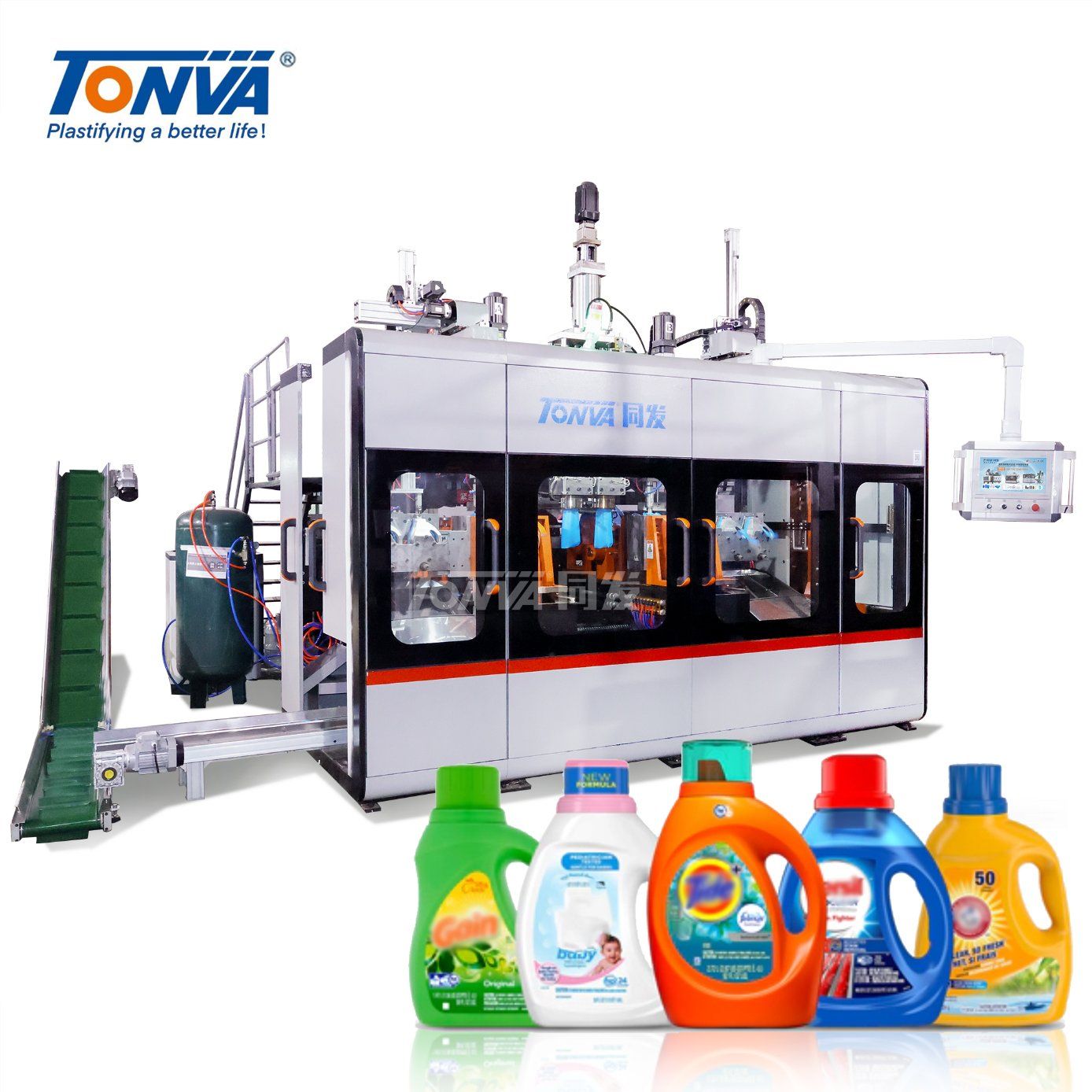
2026 Global Market Trends for Detergent Bottle Blow Molding Machine: Focus on High Speed Production, Energy Saving Technologies (Servo Motor), and Automation Level
A produção de alta velocidade impulsiona o crescimento do mercado
The global detergent bottle blow molding machine market is projected to experience significant growth by 2026, with high-speed production capabilities emerging as a central competitive differentiator. Manufacturers are increasingly investing in machines capable of producing over 20,000 bottles per hour, driven by rising demand from the expanding consumer goods and household cleaning sectors. High-speed systems are being optimized through advanced parison control, rapid mold cooling, and optimized preform handling, enabling continuous production with minimal downtime.
In regions such as Asia-Pacific and Latin America, where detergent consumption is rising due to urbanization and increased hygiene awareness, packaging facilities are upgrading to high-output blow molding lines to meet volume demands. OEMs are responding with modular machine designs that allow scalability and quick changeovers between bottle sizes, supporting flexible manufacturing. By 2026, it is anticipated that high-speed machines (≥15,000 bottles/hour) will account for over 45% of new installations in the detergent packaging segment, particularly in large-scale production plants.
Energy Saving Technologies: Adoption of Servo Motor Systems
Energy efficiency has become a critical factor in the design and selection of blow molding machines, with servo motor technology playing a pivotal role in reducing operational costs and carbon footprints. By 2026, over 70% of new detergent bottle blow molding machines are expected to be equipped with full-servo or hybrid servo-hydraulic drive systems. These systems offer precise control over clamping, extrusion, and blowing motions, reducing energy consumption by up to 40% compared to traditional hydraulic systems.
Servo motors also contribute to quieter operation, lower heat generation, and extended machine life, making them ideal for continuous production environments. Leading manufacturers such as Kautex, Sidel, and Bekum are integrating intelligent servo drives with real-time energy monitoring and regenerative braking features. In Europe and North America, where energy regulations are tightening under sustainability mandates (e.g., EU Green Deal), the adoption of servo-based machines is being accelerated through government incentives and corporate ESG commitments.
Automation Level: Integration of Smart Manufacturing and IIoT
Automation is transforming the detergent bottle blow molding landscape, with a clear shift toward fully integrated, smart production lines by 2026. Modern machines are increasingly equipped with advanced automation features, including robotic handling, automatic mold changing (AMC), in-line leak and weight testing, and real-time quality inspection via machine vision systems.
The integration of Industrial Internet of Things (IIoT) platforms enables predictive maintenance, remote monitoring, and data-driven optimization of production parameters. For example, cloud-connected blow molding machines can detect anomalies in parison thickness or pressure deviations and automatically adjust settings to maintain product consistency. This level of automation not only improves product quality but also reduces labor dependency and minimizes waste.
By 2026, over 60% of new installations in developed markets are expected to include Industry 4.0-compliant automation systems. Emerging markets are following suit, supported by declining costs of sensors, robotics, and AI-driven process control software. The convergence of automation with energy-efficient servo systems and high-speed operation is setting a new benchmark for productivity and sustainability in the detergent packaging industry.
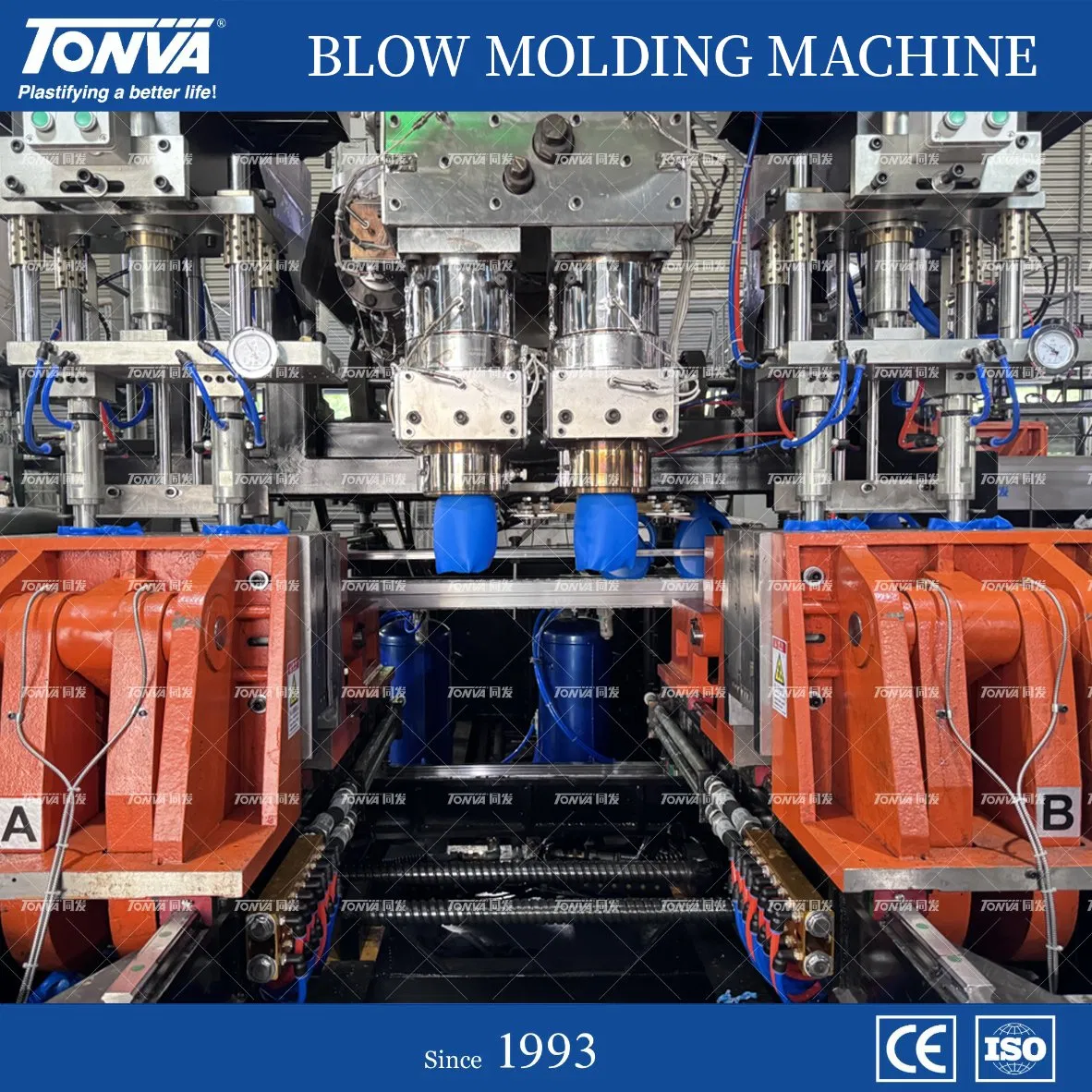
Key Quality Verification Points for Detergent Bottle Blow Molding Machine Manufacturers
When evaluating a detergent bottle blow molding machine manufacturer, focusing on critical components and performance metrics ensures reliability, efficiency, and long-term operability. Below are essential check points to verify quality:
Material do molde (Alumínio vs. Aço)
- Moldes de aço: Preferred for high-volume, long production runs due to superior durability, wear resistance, and longer lifespan. Verify if the manufacturer uses hardened tool steel (e.g., P20, H13) suitable for continuous operation.
- Moldes de alumínio: Suitable for prototypes or low-volume production due to faster cooling and lower cost, but less durable. Confirm the aluminum grade (e.g., 7075-T6) and whether it meets your production demands.
- Sugestão de verificação: Request material certificates or specifications for molds and inquire about expected mold life (number of cycles) under standard operating conditions.
Marca de PLC (Siemens vs. Mitsubishi)
- PLCs Siemens: Known for robust performance, excellent integration, and global service support. Ensure the model used (e.g., S7-1200 or S7-1500) is suitable for complex automation tasks.
- PLCs Mitsubishi: Widely used in industrial machinery for reliability and ease of programming (e.g., FX or Q series). Confirm software compatibility and availability of technical documentation.
- Sugestão de verificação: Ask for the exact PLC model installed, check firmware version, and confirm whether the programming interface is user-accessible for troubleshooting and adjustments.
Eficiência do tempo de ciclo
- Standard Benchmark: For detergent bottles (typically 500ml–5L), cycle times should range between 8–15 seconds depending on bottle size, wall thickness, and machine configuration.
- Consistency & Repeatability: Request production trial data or video demonstrating stable cycle times over a minimum 8-hour run. Look for automatic parameter optimization features.
- Sugestão de verificação: Compare claimed cycle time with actual performance during a factory acceptance test (FAT), including pre-blow, blow, and ejection phases.
Disponibilidade de peças sobressalentes
- Local Support: Confirm whether the manufacturer or its authorized distributor stocks critical spare parts (seals, o-rings, valves, heaters, mold components) locally or regionally.
- Prazo de execução: Ask for average delivery time for common wear parts and high-cost items like stretch rods or servo motors.
- Documentação: Ensure a comprehensive spare parts list with OEM part numbers, 3D drawings, and maintenance schedules is provided.
- Sugestão de verificação: Request a list of top 10 most frequently replaced parts and verify availability through a sample order or distributor inquiry.
By thoroughly assessing these four key areas—mold material, PLC brand, cycle time efficiency, and spare parts availability—you can confidently evaluate the quality and reliability of a detergent bottle blow molding machine manufacturer.
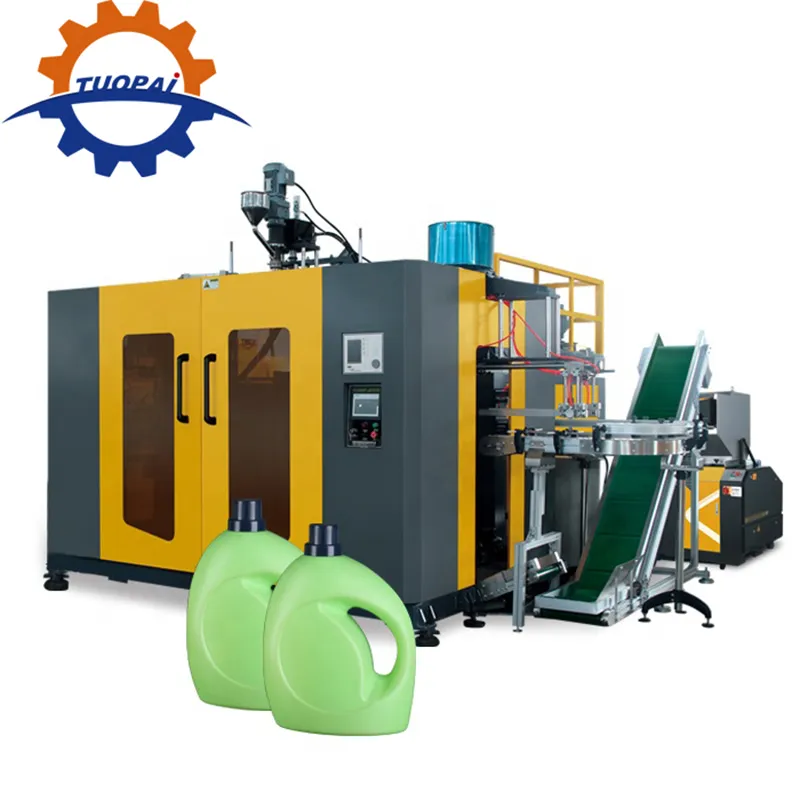
Configuration Guide for Detergent Bottle Blow Molding Machine
Seleção do número da cavidade
The cavity number determines how many bottles are produced per cycle and directly impacts production capacity and machine footprint. Selection depends on output requirements, bottle size, and factory layout.
- Cavidade única (1-cavidade): Ideal for low-volume production, prototyping, or large-container manufacturing (e.g., 5–20 L bottles). Offers flexibility and lower initial investment.
- Double to Four Cavities (2–4 cavities): Suitable for medium-volume production of standard detergent bottles (0.5–5 L). Balances output and machine size efficiently.
- Six to Twelve Cavities (6–12 cavities): Recommended for high-volume operations, such as mass production of 0.5–2 L household detergent bottles. Maximizes output but requires larger space and higher auxiliary system capacity.
Selection Tip: Match cavity count with downstream packaging line speed to avoid bottlenecks.
Gama de volumes de garrafas
Detergent blow molding machines are typically designed to handle a specific volume range. Ensure the machine’s configuration supports your product portfolio.
- Small Volume (100 mL – 1 L): Requires precision molds and high cycle rates. Common for liquid hand soap or concentrated detergents.
- Medium Volume (1 L – 5 L): Most common range for household laundry and surface cleaners. Standard machine configurations usually support this range.
- Large Volume (5 L – 20 L): Requires heavy-duty machines with robust locking force and extended blow pressure. Often single or dual cavity due to longer cycle times.
Nota: Machines with adjustable mold bases and programmable stretch rod control offer broader volume adaptability.
Compatibilidade de pré-formas
The machine must be compatible with the preform specifications (size, weight, neck finish) used in production.
- Padronização do acabamento do pescoço: Ensure the machine’s mold mount and take-out system support standard neck finishes (e.g., 28mm, 38mm PCO, or ASTM threads common in detergent bottles).
- Faixa de peso da pré-forma: Verify the machine can handle preform weights typically used (e.g., 15–60g depending on bottle size and resin type).
- Resin Compatibility: Most detergent bottles use PET or HDPE. Confirm the machine is configured for the intended resin, including proper heater oven settings (for PET reheat) or extrusion screw design (for HDPE).
Melhores práticas: Use preforms from qualified suppliers with consistent dimensions to ensure reliable feeding and blowing performance.
Equipamento auxiliar (Compressor/Chiller)
Proper auxiliary systems are critical for stable operation and product quality.
Compressor de ar:
- Objetivo: Supplies high-pressure air (25–40 bar) for bottle blowing.
- Capacidade: Size the compressor based on cavity count and cycle time. General rule: 0.6–1.0 m³/min per cavity at 30+ bar.
- Qualidade do ar: Use oil-free compressors with dryers and filters to prevent contamination, especially critical for food-safe or pharmaceutical-grade detergents.
Chiller Unit:
- Objetivo: Cools molds to maintain dimensional stability and shorten cycle times.
- Capacidade: Typically 1–2 kW per cavity. For a 6-cavity machine, a 6–12 kW chiller is recommended.
- Controlo da temperatura: Maintain mold temperature between 10–15°C for PET; HDPE may require slightly higher settings. Precision control improves bottle clarity and consistency.
Integration Tip: Ensure compressors and chillers are equipped with pressure/temperature sensors that interface with the machine’s PLC for automated process monitoring and alarms.
In conclusion, sourcing a detergent bottle blow molding machine from China presents a compelling opportunity in terms of cost-efficiency, technological capability, and access to a robust manufacturing ecosystem. However, ensuring long-term operational success hinges on key factors such as thorough Factory Acceptance Testing (FAT) and reliable spare parts support. Conducting a comprehensive FAT—encompassing performance verification, safety checks, quality validation, and operator training—is essential to confirm that the machine meets all technical specifications and production requirements before shipment. This step significantly reduces the risk of post-installation issues and ensures a smoother commissioning process on-site.
Equally critical is securing a dependable spare parts supply chain. Given the operational intensity of blow molding machines, timely access to genuine spare parts minimizes downtime and extends the machine’s service life. Therefore, it is highly advisable to partner with Chinese manufacturers who offer structured spare parts packages, clear documentation, and responsive after-sales support. By prioritizing vendors who provide transparent FAT procedures and long-term spare parts availability, buyers can safeguard their investment, enhance production reliability, and achieve optimal return on investment over the machine’s lifecycle.






