
As global demand for packaged beverages, healthcare, and consumer goods continues to rise, the need for high-efficiency, automated PET bottle blowing solutions has never been more critical. With sustainability and production speed shaping industry priorities, bottling companies are increasingly turning to advanced manufacturing technologies to optimize output and reduce operational costs. This 2026 audit list highlights the top 10 PET bottle blowing machine manufacturers delivering innovation, reliability, and scalability to meet evolving market demands.
Top 10 Pet Bottle Blowing Manufacturers (2026 Audit List)
(Ranked by Production Capability & Trust Score)



Professional Sourcing Guide: Pet Bottle Blowing
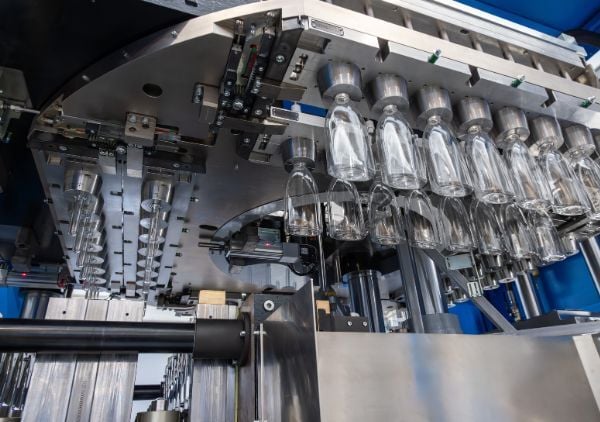
2026 Global Market Trends for Pet Bottle Blowing: Focus on High-Speed Production, Energy Saving Technologies (Servo Motors), and Automation Level
High-Speed Production: Driving Efficiency and Output
The global PET bottle blowing market is poised for significant transformation by 2026, with high-speed production emerging as a critical competitive differentiator. Market demand, driven by the beverage, food, personal care, and pharmaceutical industries, continues to intensify, necessitating faster production cycles and increased throughput. By 2026, high-speed stretch blow molding machines capable of producing over 70,000 bottles per hour are expected to dominate new installations, especially in large-scale manufacturing hubs across Asia-Pacific, North America, and Western Europe.
Advancements in linear and rotary machine designs, coupled with optimized heating and cooling systems, are enabling shorter cycle times while maintaining bottle quality. Equipment manufacturers such as Sidel, Krones, and KHS are leading the charge with next-generation platforms that integrate rapid preform handling, precision stretch rod actuation, and high-frequency valve technologies. Additionally, the rise of lightweighting initiatives—using less PET material per bottle—has reduced cooling times and further facilitated faster production speeds.
Market analysts project that the demand for high-speed systems will grow at a CAGR of 6.5% through 2026, fueled by brand owners’ need to reduce unit production costs and respond quickly to fluctuating consumer demand. Regional expansion in emerging economies, particularly in India, Southeast Asia, and Africa, will also accelerate the adoption of high-output lines to meet local packaging demands.
Energy Saving Technologies: The Rise of Servo Motor Integration
Energy efficiency remains a top priority for PET bottle manufacturers amid rising energy costs and tightening environmental regulations. By 2026, servo motor technology will be a standard feature in over 80% of new PET blowing machines, replacing traditional hydraulic systems. Servo-driven machines offer precise control over motion, pressure, and timing, resulting in energy reductions of up to 30–50% compared to conventional systems.
Servo motors contribute to energy savings primarily through regenerative braking, on-demand power delivery, and reduced heat generation. Unlike hydraulic systems that run continuously and dissipate energy as heat, servo motors operate only when needed and return excess energy to the grid. This not only lowers electricity consumption but also reduces cooling requirements, extending machine lifespan and minimizing maintenance.
Beyond energy savings, servo technology enhances process repeatability and product consistency. The precise torque and speed control enable gentle handling of preforms and optimized blow pressures, reducing defects and material waste. Leading OEMs are now offering fully electric or hybrid-electric blow molding systems that combine servo motors with advanced process monitoring, positioning these machines as the future of sustainable PET production.
The global push toward carbon neutrality and circular economy goals—such as the EU’s Green Deal and corporate ESG commitments—will further accelerate the adoption of energy-efficient technologies. By 2026, regulatory incentives and lifecycle cost analysis will make servo-driven systems the default choice for new investments.
Automation Level: Toward Smart, Integrated Production Lines
Automation is reshaping the PET bottle blowing landscape, with a clear trajectory toward fully integrated, data-driven manufacturing ecosystems by 2026. The integration of Industry 4.0 principles—such as IoT connectivity, AI-powered analytics, and robotic handling—is enabling unprecedented levels of operational control, predictive maintenance, and uptime optimization.
Modern PET blowing lines are increasingly equipped with automated preform loaders, robotic bottle handling, inline quality inspection systems, and real-time process monitoring. Vision systems and machine learning algorithms detect defects such as wall thickness variations, contamination, or dimensional inaccuracies at production speed, minimizing scrap and ensuring compliance with stringent quality standards.
Furthermore, the use of digital twins and remote diagnostics allows operators to simulate production scenarios, optimize parameters, and troubleshoot issues without halting operations. Cloud-based platforms enable centralized monitoring of multiple production sites, facilitating global supply chain coordination and rapid response to market changes.
By 2026, it is estimated that over 60% of new PET blowing systems will include advanced automation features, with fully autonomous “lights-out” factories becoming viable for high-volume producers. Collaborative robots (cobots) are also being deployed for tasks such as palletizing and changeover support, improving flexibility and reducing labor dependency.
The automation trend is particularly strong in labor-constrained markets like Japan, Germany, and the U.S., where manufacturers face rising wages and skilled labor shortages. However, even in cost-sensitive regions, the long-term ROI of automation—through reduced waste, higher OEE (Overall Equipment Effectiveness), and improved safety—is driving adoption.
Conclusion
By 2026, the global PET bottle blowing market will be defined by three interlinked trends: high-speed production to meet growing demand, energy-saving servo motor technologies to enhance sustainability, and advanced automation to improve efficiency and quality. These developments are not only responding to economic and environmental pressures but are also enabling a new era of intelligent, resilient, and scalable manufacturing. Companies that embrace these innovations will gain a decisive competitive advantage in the evolving global packaging landscape.
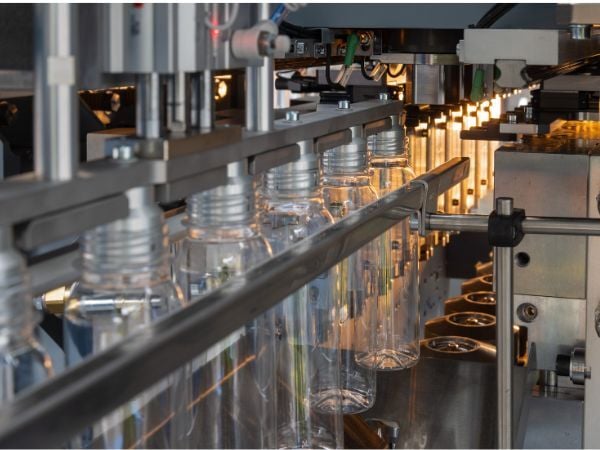
Key Quality Verification Points for Pet Bottle Blowing Machine Manufacturers
When evaluating a PET bottle blowing machine manufacturer, focusing on critical technical and operational aspects ensures reliability, efficiency, and long-term performance. Below are the essential check points to verify quality:
Mold Material (Aluminum vs. Steel)
The choice of mold material significantly impacts durability, production speed, and final product quality:
- Steel Molds: Preferred for high-volume production due to superior durability, resistance to wear, and longer lifespan. Ideal for bottles requiring high precision and consistent wall thickness.
- Aluminum Molds: Lighter and offer faster cooling, beneficial for prototypes or low-to-medium production runs. However, they wear faster and are less suitable for abrasive materials or long production cycles.
- Verification Tip: Request material certification (e.g., HRC hardness reports for steel) and inspect mold surface finish. Ensure the manufacturer uses appropriate coatings (e.g., chrome plating) for corrosion resistance.
PLC Brand (Siemens vs. Mitsubishi)
The Programmable Logic Controller (PLC) is the brain of the machine—reliability and support matter:
- Siemens: Known for robust industrial automation solutions, excellent diagnostics, and global service support. Common in high-end machines.
- Mitsubishi: Offers reliable performance, user-friendly interfaces, and strong integration with servo systems. Widely used and supported in Asia and globally.
- Verification Tip: Confirm the exact PLC model used (e.g., Siemens S7-1200, Mitsubishi FX5U), check for original branding and firmware, and verify availability of local technical support and training.
Cycle Time Efficiency
Cycle time directly affects production capacity and cost-efficiency:
- Evaluate the manufacturer’s stated cycle time under real-world conditions (e.g., 12–18 seconds per 500ml bottle is typical for efficient systems).
- Request test runs or video demonstrations with your bottle design to validate actual output.
- Check for energy-saving features such as optimized blowing profiles, quick mold change systems, and low-pressure stretch blow technology.
- Verification Tip: Compare theoretical vs. actual output over a sustained run (e.g., 8-hour test) and assess bottle quality consistency (weight, clarity, dimensional accuracy).
Spare Parts Availability
Minimizing downtime is critical—spare parts must be accessible and affordable:
- Confirm the manufacturer maintains an in-stock inventory of critical wear components (stretch rods, sealing rings, valves, O-rings, heaters).
- Check if parts are standardized or proprietary—standard parts reduce lead time and cost.
- Evaluate the manufacturer’s global distribution network or local代理商 presence for quick delivery.
- Verification Tip: Request a spare parts list with pricing and lead times. Ask for references from existing customers regarding spare parts support responsiveness.
By thoroughly assessing these four key areas—mold material, PLC brand, cycle time efficiency, and spare parts availability—you can confidently select a high-quality PET bottle blowing machine manufacturer that meets your production demands and long-term operational goals.
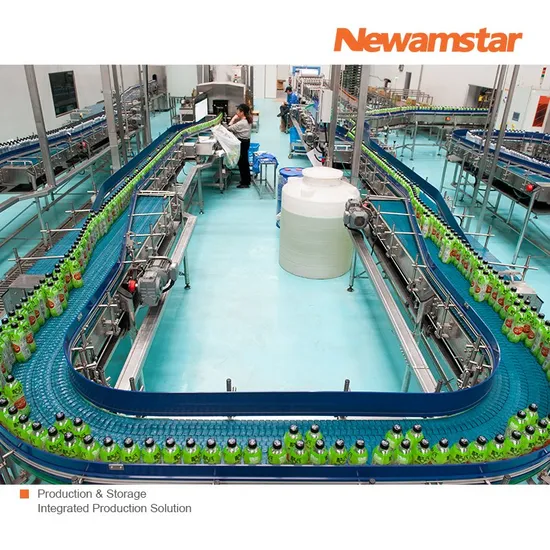
Configuration Guide for Pet Bottle Blowing
Cavity Number Selection
The cavity number refers to the number of bottles produced per cycle in a stretch blow molding machine. Selection depends on production volume, bottle size, and operational efficiency.
– Single Cavity (1-cavity): Suitable for prototyping, small production runs, or very large bottles. Offers high flexibility but low output.
– Double to Four Cavity (2–4 cavities): Ideal for medium-volume production of standard-sized bottles (e.g., 0.5L to 2L). Balances cost, footprint, and output.
– Six to Twelve Cavity (6–12 cavities): Recommended for high-volume manufacturing (e.g., water, carbonated soft drinks). Maximizes output but requires larger machine footprint and auxiliary systems.
– 12+ Cavities: Used in large-scale industrial applications. Requires extensive infrastructure and high automation.
Considerations:
– Higher cavity machines demand uniform heating and precise timing.
– Match cavity count to downstream packaging line speed.
Bottle Volume Range
The machine must support the desired bottle capacity to ensure compatibility and performance.
– Typical Range: Most standard systems handle bottles from 50 mL to 5 liters.
– Small Bottles (50–500 mL): Require precise preform handling and high-speed cycling. Commonly used for water, juice shots, and cosmetics.
– Medium Bottles (0.5–2 L): Most common range; optimized for beverage production with balanced cycle times.
– Large Bottles (2–5 L+): Require specialized molds, extended blowing cycles, and higher air pressure. Used for water dispensers and bulk liquids.
Note: Confirm machine specifications support minimum and maximum volumes. Machines are often optimized for specific ranges (e.g., 500–2000 mL).
Preform Compatibility
Preform compatibility ensures seamless feeding, heating, and blowing. Key factors include:
– Preform Dimensions: Match neck finish (e.g., PCO 1881, 28 mm, 38 mm), length, and body diameter to mold and machine grippers.
– Preform Weight: Machines are rated for specific preform weight ranges (e.g., 18–30 g for 500 mL bottles). Verify preform weight aligns with machine capability.
– Material Grade: Typically crystallizable PET (amorphous preforms). Confirm resin compatibility with drying and heating systems.
– Supplier Consistency: Use preforms from qualified suppliers with tight dimensional tolerances to prevent jamming or uneven blowing.
Tip: Always conduct trials with actual preforms before full production.
Auxiliary Equipment: Compressor & Chiller
Compressor (High-Pressure Air Supply)
Required to stretch and blow preforms into bottles.
– Air Pressure: Typically 25–40 bar (360–580 psi). Higher for crystalline bottles (e.g., hot-fill).
– Air Flow: Depends on cavity number and cycle time. Estimate 1–2 Nm³/min per cavity.
– Air Quality: Use oil-free, dry air with filtration (ISO 8573-1 Class 1.1.1) to prevent contamination.
– Receiver Tank: Install a buffer tank (10–20% of compressor output) to stabilize pressure during peak demand.
Selection Guide:
– Single/dual cavity: 3–5 HP compressor
– 6–12 cavity: 10–25 HP with multi-stage compression
Chiller (Mold Cooling System)
Maintains mold temperature for consistent cycle times and bottle quality.
– Cooling Capacity: ~1.5–2.5 kW per cavity (e.g., 12 kW for 6-cavity machine).
– Temperature Range: 5–15°C (41–59°F), depending on bottle type and production speed.
– Flow Rate: Ensure sufficient coolant flow (e.g., 20–40 L/min) with closed-loop system.
– Water Quality: Use demineralized or treated water to prevent scaling and corrosion.
Note: Pair chiller with a reliable pump and filtration system. Oversizing by 20% ensures stability during peak loads.
Final Recommendation:
Integrate all components—cavity count, volume, preform specs, compressor, and chiller—based on production goals. Conduct a full system audit and pilot run to verify performance and efficiency.
In conclusion, sourcing PET bottle blowing machines from China presents a compelling combination of cost-effectiveness, advanced manufacturing capabilities, and access to innovative technology. However, to ensure long-term operational efficiency and minimize downtime, it is essential to prioritize suppliers who offer comprehensive Factory Acceptance Testing (FAT) and reliable spare parts support. Conducting a rigorous FAT before shipment allows buyers to verify machine performance, quality, and compliance with technical specifications under real operating conditions, significantly reducing the risk of post-delivery issues. Equally important is establishing a sustainable supply chain for spare parts—choosing a manufacturer with a robust global or local spare parts network ensures quick replacements and continuous production. By focusing on these critical factors, companies can mitigate risks, enhance machine uptime, and achieve a strong return on investment when sourcing PET blow molding equipment from China.






