
As global demand for efficient, high-output bottling solutions continues to rise—driven by growth in beverages, pharmaceuticals, and personal care industries—manufacturers are prioritizing automation, energy efficiency, and precision in their production lines. At the heart of this evolution lies the bottle blowing machine, a critical component in modern packaging operations. With sustainability and operational scalability becoming key procurement criteria, sourcing the right technology partner is more important than ever. This 2026 audit list highlights the top 10 bottle blowing machine manufacturers excelling in innovation, reliability, and global service support, helping processors meet rising throughput demands while reducing downtime and waste.
Los 10 principales fabricantes de máquinas de soplado de botellas (Lista de auditoría 2026)
(Clasificación por capacidad de producción y puntuación de confianza)

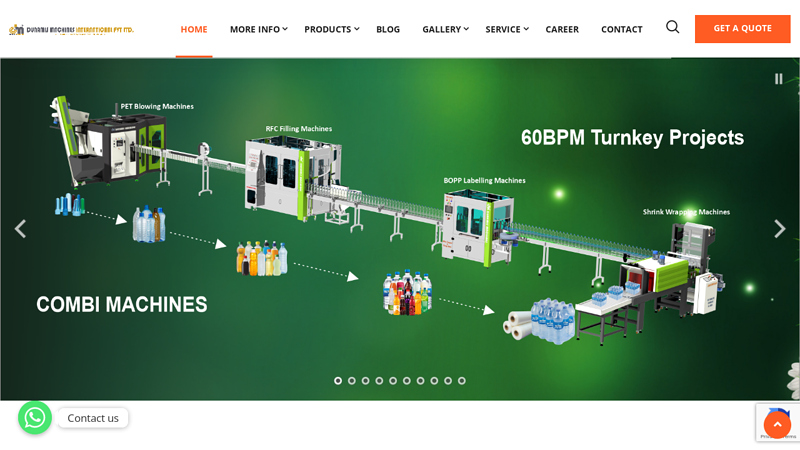
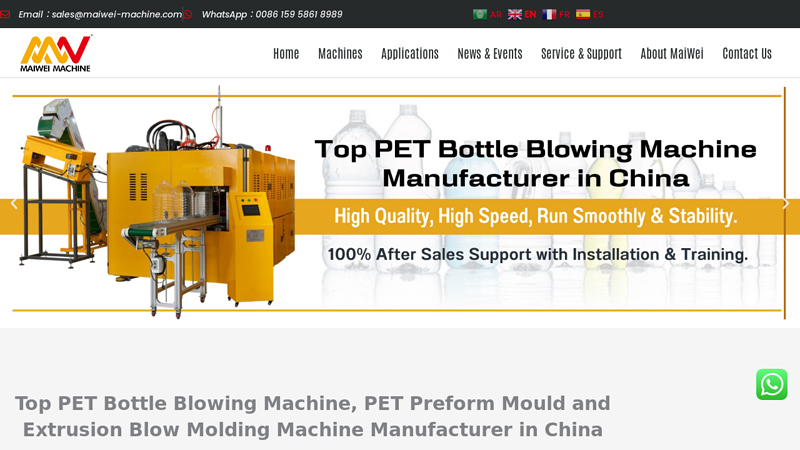
Professional Sourcing Guide: Bottle Blowing Machine
H2: 2026 Global Market Trends for Bottle Blowing Machines: High-Speed Production, Energy Efficiency, and Automation
The global bottle blowing machine market is poised for significant transformation by 2026, driven by escalating demands for efficiency, sustainability, and operational resilience. Key trends shaping this evolution center on High-Speed Production, Energy Saving Technologies (particularly Servo Motors), and Enhanced Automation Levels. These factors are converging to redefine machine capabilities and competitive landscapes.
H2: High-Speed Production: Meeting Demand with Precision and Reliability
- Dominant Driver: The relentless pressure from beverage (especially water, carbonated soft drinks, juices) and packaging industries for higher output to meet global consumption and reduce unit costs is the primary force behind high-speed machine development.
- 2026 Projections: Machines capable of 1,000 to 2,000+ bottles per hour (BPH) per cavity will become increasingly standard, particularly in large-scale operations. The focus shifts from merely achieving high speeds to sustaining them reliably and consistently over long production runs.
- Key Enablers:
- Advanced Parison Control: Precise, high-speed preform feeding, heating (optimized IR oven profiles), and parison programming are critical for consistent preform quality at speed.
- High-Performance Molding: Faster mold opening/closing cycles, optimized air pressure/flow for rapid blowing, and efficient cooling systems are essential.
- Robust Machine Design: Enhanced structural rigidity, vibration damping, and wear-resistant components are required to handle the mechanical stresses of high-speed operation without compromising bottle quality or machine lifespan.
- Market Impact: High-speed machines will dominate new installations in large bottling plants, while mid-tier speed machines will incorporate more high-speed features. The ability to ramp up production quickly will be a key competitive advantage.
H2: Energy Saving Technologies: Servo Motors Leading the Sustainability Charge
- Critical Imperative: Rising energy costs and stringent global environmental regulations (e.g., carbon neutrality goals) make energy efficiency a non-negotiable requirement for manufacturers. Servo motor technology is at the forefront of this revolution.
- Servo Motor Dominance: By 2026, servo-driven hydraulic pumps (electro-hydraulic) and fully electric machines will capture a dominant share of new installations, moving beyond niche applications.
- How They Save Energy: Servo motors deliver power only when and where needed (e.g., clamping, ejection, turning, stretching), unlike traditional fixed-speed hydraulic pumps that run constantly, wasting significant energy during idle or low-load phases. Savings of 20-50%+ in energy consumption compared to conventional machines are consistently reported.
- Beyond Energy: Servo drives also offer superior control, faster response times, reduced heat generation (lower cooling costs), quieter operation, and lower maintenance (less hydraulic fluid, reduced wear).
- Perspectivas para 2026: Energy efficiency will be a primary selection criterion. Machines will feature:
- Advanced Energy Recovery Systems: Capturing and reusing energy from processes like mold opening.
- Optimized Heating: Variable frequency drives (VFDs) on cooling fans, intelligent IR oven zoning, and recuperative heating systems.
- Comprehensive Monitoring: Integrated energy meters and software to track and optimize consumption.
- Market Impact: Servo technology will transition from a premium option to a baseline expectation for new machines. Suppliers not offering highly efficient solutions will face significant competitive disadvantage. Total Cost of Ownership (TCO) calculations will heavily favor energy-efficient models.
H2: Automation Level: Towards Integrated, Smart, and Resilient Production
- Evolution from Automation to Intelligence: The trend extends beyond simple robotic integration (loading/unloading) towards fully integrated, data-driven, and adaptive production cells.
- 2026 Automation Features:
- Seamless End-to-End Integration: Machines will be designed as nodes within automated lines, featuring standardized communication protocols (OPC UA, Industry 4.0) for seamless interaction with upstream (preform handling, drying) and downstream (conveying, inspection, packaging) equipment.
- Advanced Robotics & Vision: Increased use of collaborative robots (cobots) for handling delicate bottles and sophisticated machine vision systems for 100% in-line inspection (wall thickness, contamination, dimensional accuracy, label verification) with real-time feedback loops for process correction.
- Predictive Maintenance & Remote Monitoring: Embedded sensors monitoring vibration, temperature, pressure, and servo performance will feed data to cloud platforms. AI algorithms will predict failures before they occur, enabling proactive maintenance and minimizing unplanned downtime. Remote diagnostics and support will become standard.
- Gemelos digitales y optimización de procesos: Virtual replicas of the blowing machine and process will allow for simulation, optimization of parameters (e.g., for different preforms or bottle designs), and operator training without disrupting production.
- Enhanced Human-Machine Interface (HMI): Intuitive, data-rich HMIs providing real-time performance dashboards, root-cause analysis for faults, and guided troubleshooting.
- Market Impact: Automation will be crucial for improving Overall Equipment Effectiveness (OEE), reducing labor costs (especially in high-wage regions), ensuring consistent quality, and enabling flexible production for shorter runs. The ability to rapidly switch between different bottle formats with minimal downtime will be a key differentiator. Suppliers offering comprehensive automation and digitalization packages will lead the market.
Conclusion for 2026:
The 2026 global bottle blowing machine market will be characterized by the synergistic convergence of these three H2 trends. High-speed production will be the baseline demand met by machines whose energy consumption is minimized through ubiquitous servo technology and other efficiency measures. This high-performance operation will be managed and optimized within highly automated, data-connected, and intelligent production ecosystems. Success will belong to manufacturers and machine builders who can deliver integrated solutions that maximize output, minimize environmental and operational costs, and provide unprecedented levels of control, visibility, and resilience. The focus will shift decisively from standalone machines to holistic, sustainable, and intelligent manufacturing cells.
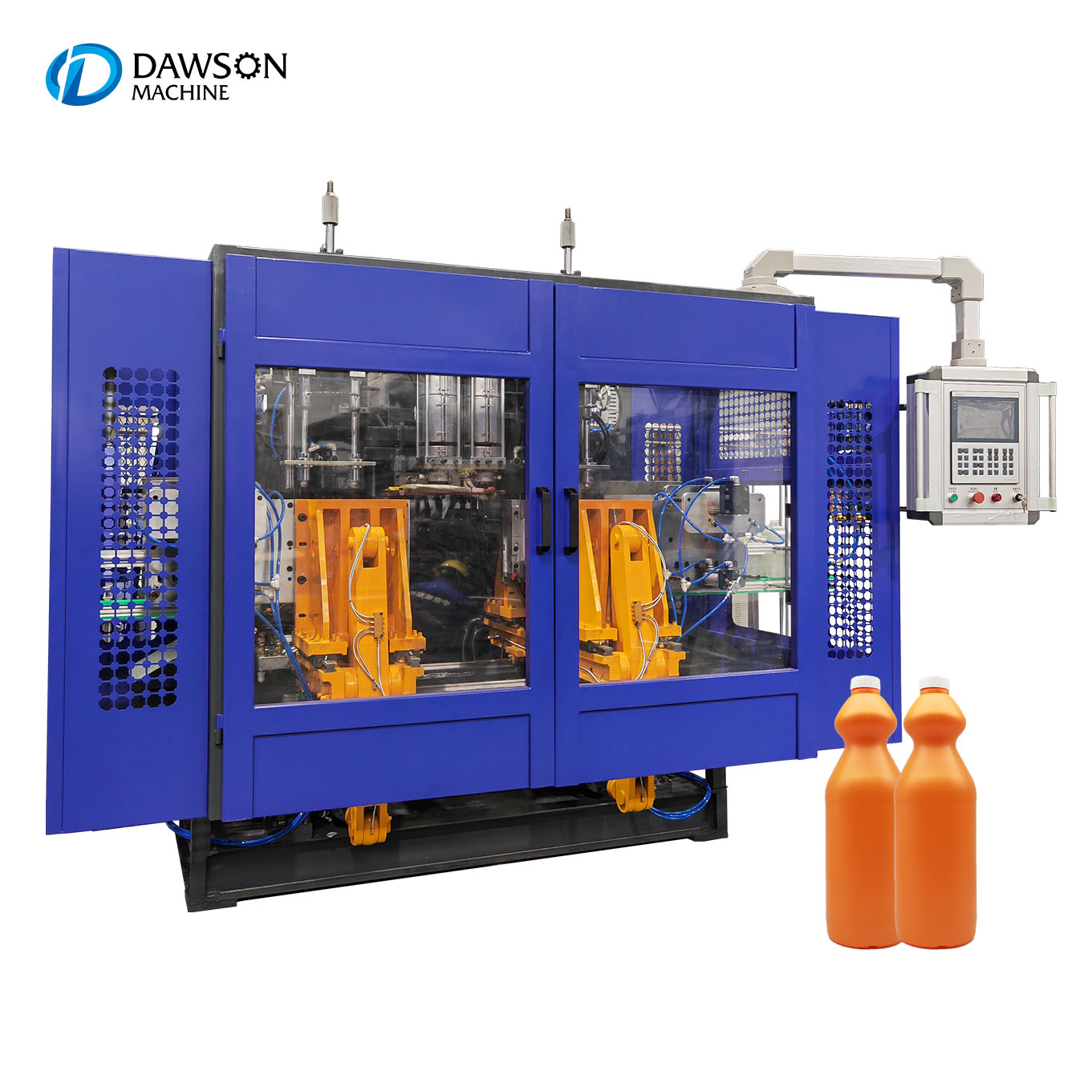
Key Quality Verification Points for Bottle Blowing Machine Manufacturers
When evaluating a bottle blowing machine manufacturer, verifying quality is essential to ensure reliability, efficiency, and long-term performance. Focus on the following critical check points to make an informed decision:
Material del molde (aluminio frente a acero)
The choice of mold material significantly impacts durability, cooling efficiency, and production lifespan. High-quality manufacturers typically offer steel molds for industrial applications due to their superior strength and longevity. Verify that:
– Steel molds (preferably hardened tool steel like P20 or H13) are used for high-volume production to resist wear and maintain dimensional accuracy.
– Aluminum molds may be acceptable for prototypes or low-volume runs but are less durable.
– Confirm the mold material specification in writing and inspect sample molds for surface finish and precision.
Marca de PLC (Siemens frente a Mitsubishi)
The Programmable Logic Controller (PLC) is the machine’s brain, affecting automation, stability, and ease of troubleshooting. Reputable brands ensure better performance and support:
– Prioritize machines equipped with Siemens or Mitsubishi PLCs, as both offer proven reliability, user-friendly interfaces, and strong global service networks.
– Ask for the exact PLC model and check firmware version for compatibility with future upgrades.
– Review the HMI (Human-Machine Interface) for intuitiveness and multilingual support.
Eficacia de la duración del ciclo
Cycle time directly influences productivity and cost-effectiveness. A shorter, consistent cycle time means higher output without compromising quality:
– Request performance test data or live demonstrations to measure actual cycle times under standard conditions.
– Compare claimed cycle times with industry benchmarks for similar bottle sizes and outputs (e.g., 8–12 seconds per cycle for a 500ml PET bottle).
– Evaluate energy consumption per cycle and reject rates to assess true efficiency.
Disponibilidad de piezas de recambio
Reliable access to spare parts minimizes downtime and extends machine lifespan:
– Confirm that the manufacturer maintains a comprehensive inventory of critical spare parts (e.g., stretch rods, HV/LV valves, seals, oven lamps).
– Inquire about lead times for common and long-lead components, especially if ordering from overseas.
– Check if parts are standardized (e.g., using知名品牌 components) to simplify local sourcing.
– Prefer manufacturers who offer service contracts or regional support centers.
By thoroughly assessing these four key areas—mold material, PLC brand, cycle time efficiency, and spare parts availability—you can confidently identify a high-quality bottle blowing machine manufacturer that meets your production needs and reliability standards.
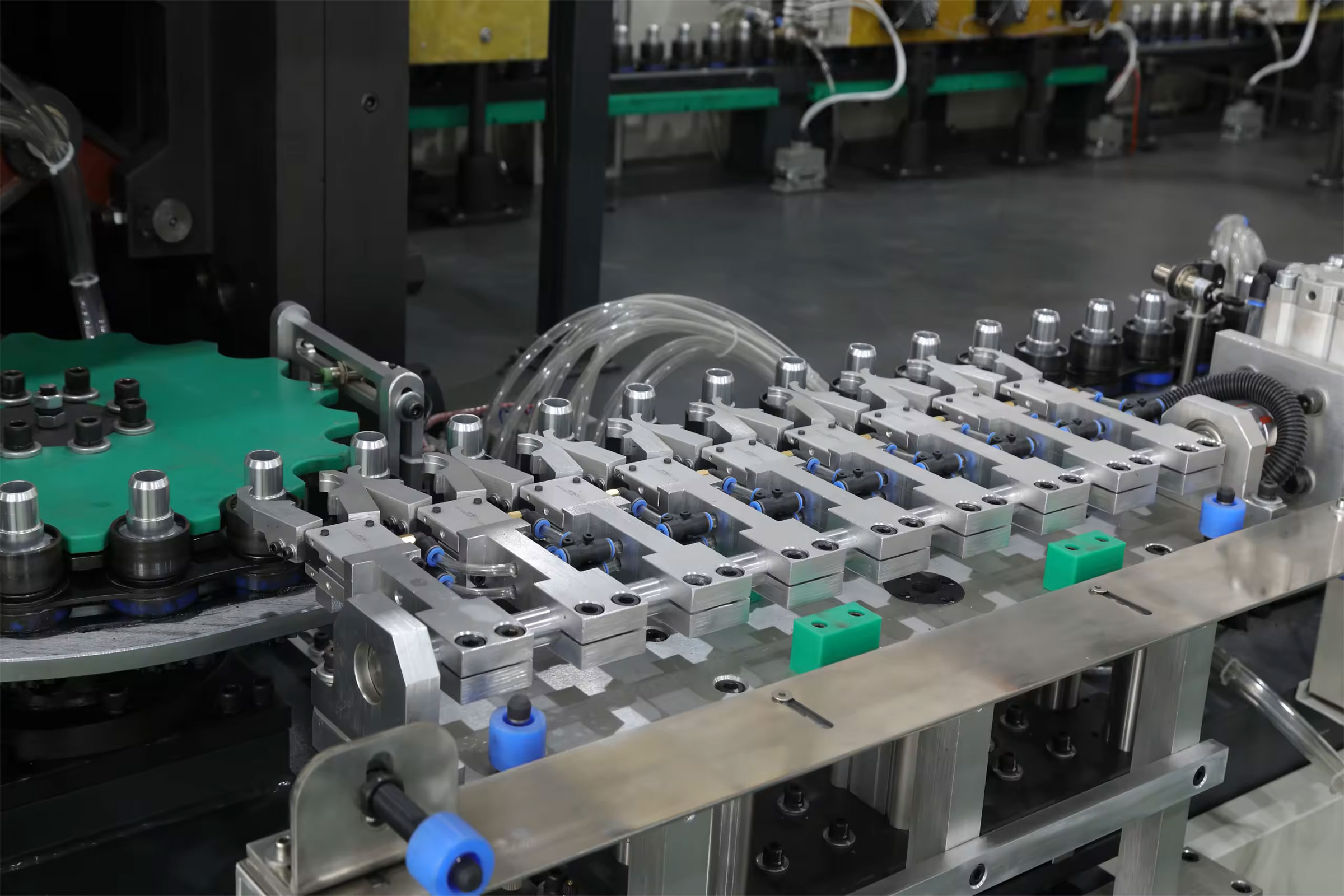
Configuration Guide for Bottle Blowing Machine
Selección del número de cavidades
The cavity number refers to the number of bottles produced in each blow molding cycle. Selecting the appropriate cavity number is critical for matching production capacity with demand.
- Cavidad única (1 cavidad): Ideal for low-volume production, prototyping, or high-precision specialty bottles. Offers maximum flexibility and ease of changeover.
- De doble a 4 cavidades: Suitable for medium production runs. Balances output and machine footprint.
- De 6 a 12 cavidades: Designed for high-volume manufacturing. Increases output efficiency but requires more floor space and auxiliary support.
- 16+ Cavity: Used in large-scale beverage production. Requires robust automation, high-capacity preform handling, and significant utilities.
Consider production goals, available floor space, budget, and changeover frequency when selecting cavity count. Higher cavities improve output per cycle but increase machine cost and complexity.
Volumen de la botella
The blowing machine must be compatible with the intended bottle volume range to ensure optimal performance and bottle quality.
- Small Volume (50–500 ml): Common for water, soft drinks, and personal care products. Requires precise control over stretch rod speed and pressure profiles.
- Medium Volume (500–1500 ml): Standard for carbonated drinks and juices. Machines should support variable mold heights and adjustable blowing parameters.
- Large Volume (1.5–5 liters or more): Used for bulk packaging. Requires higher air pressure, longer blow cycles, and reinforced molds.
Ensure the machine’s mold base and platen size can accommodate the desired bottle dimensions. Adjustable mold height and programmable blow profiles enhance versatility across volume ranges.
Compatibilidad de preformas
Preform compatibility ensures that the machine can properly feed, heat, and blow the selected preforms.
- Acabado del cuello preformado: Match the machine’s gripper mechanism and mold neck ring to the preform’s finish (e.g., PCO 1881, 38 mm, 28 mm). Incompatibility leads to sealing issues and bottle defects.
- Longitud y diámetro de la preforma: Verify that the machine’s preform loader, shuttle, and heating oven can handle the preform geometry. Custom feed rails or oven adjustments may be needed.
- Tipo de resina: Confirm compatibility with resin materials such as PET, PEN, or recycled PET (rPET). Some machines require specific heater settings or drying systems for different resins.
- Proveedor de preformas: Machines may need calibration or tooling adjustments when switching between preform suppliers due to dimensional variations.
Always consult machine specifications and conduct trial runs when introducing new preform types.
Equipo auxiliar (compresor/refrigerador)
Auxiliary equipment is essential for stable and efficient operation of the bottle blowing machine.
Compresor de aire:
– Provides high-pressure air (typically 25–40 bar) for the blowing process.
– Required capacity depends on cavity number and cycle time. Calculate air demand using:
Air Flow (Nm³/min) = (Cavity Count × Bottle Volume × Blow Pressure × Cycles per Hour) / 60
– Use oil-free compressors to prevent contamination of the blowing air.
– Include air dryers and filters to ensure clean, dry air supply.
Enfriador:
– Cools the molds to maintain consistent bottle quality and cycle time.
– Required cooling capacity (in kW or tons) depends on machine size, output rate, and ambient conditions.
– Typical coolant temperature: 8–12°C. Ensure proper flow rate and pressure as specified by the machine manufacturer.
– Closed-loop chillers with corrosion-resistant components are recommended for long-term reliability.
Integrate both compressor and chiller with the machine’s control system for synchronized operation and real-time monitoring. Properly sized and maintained auxiliary equipment enhances efficiency, extends mold life, and ensures consistent bottle quality.
In conclusion, sourcing a bottle blowing machine from a reputable factory in China offers a compelling combination of advanced technology, cost-efficiency, and high production capacity. However, to ensure long-term operational success, two critical factors must be prioritized: Factory Acceptance Testing (FAT) and comprehensive spare parts support. Conducting a thorough FAT before shipment is essential to verify the machine’s performance, safety, and compliance with agreed specifications under real operating conditions, minimizing risks of post-installation issues. Equally important is securing reliable access to genuine spare parts and responsive technical support. A trusted Chinese manufacturer should offer a well-structured spare parts supply chain and clear after-sales service agreements to reduce downtime and ensure continuous production. By emphasizing these elements during the sourcing process, buyers can achieve a smooth integration of the bottle blowing machine into their operations, ensuring durability, efficiency, and optimal return on investment.






